Protect Your Class A Motorhome Investment in Denver
Did you know that UV intensity increases by approximately 4% for every 1,000 feet of elevation gain? In the Denver area, this means your coach faces radiation levels significantly higher than those at sea level. Your Class A motorhome is a six-figure investment. Leaving it exposed to Colorado sun and volatile weather patterns is a decision that directly impacts your asset's long-term value. You likely recognize the constant anxiety of summer hail storms or the frustration of seeing window seals crack prematurely. It's difficult to maintain a pristine finish when the environment is working against you.
This article provides a data-driven analysis of how Colorado's environmental factors impact luxury RVs and the financial benefits of enclosed storage ownership. We'll examine the specific mechanics of high-altitude degradation, compare local storage costs, and detail how a climate-controlled environment secures your investment. You'll gain a clear understanding of how to eliminate seasonal maintenance headaches while maintaining maximum resale value for your motorhome. By treating your storage solution as a capital preservation strategy, you can protect your lifestyle and your portfolio simultaneously.
Table of Contents
The Financial Reality of Class A Motorhome Depreciation in Colorado
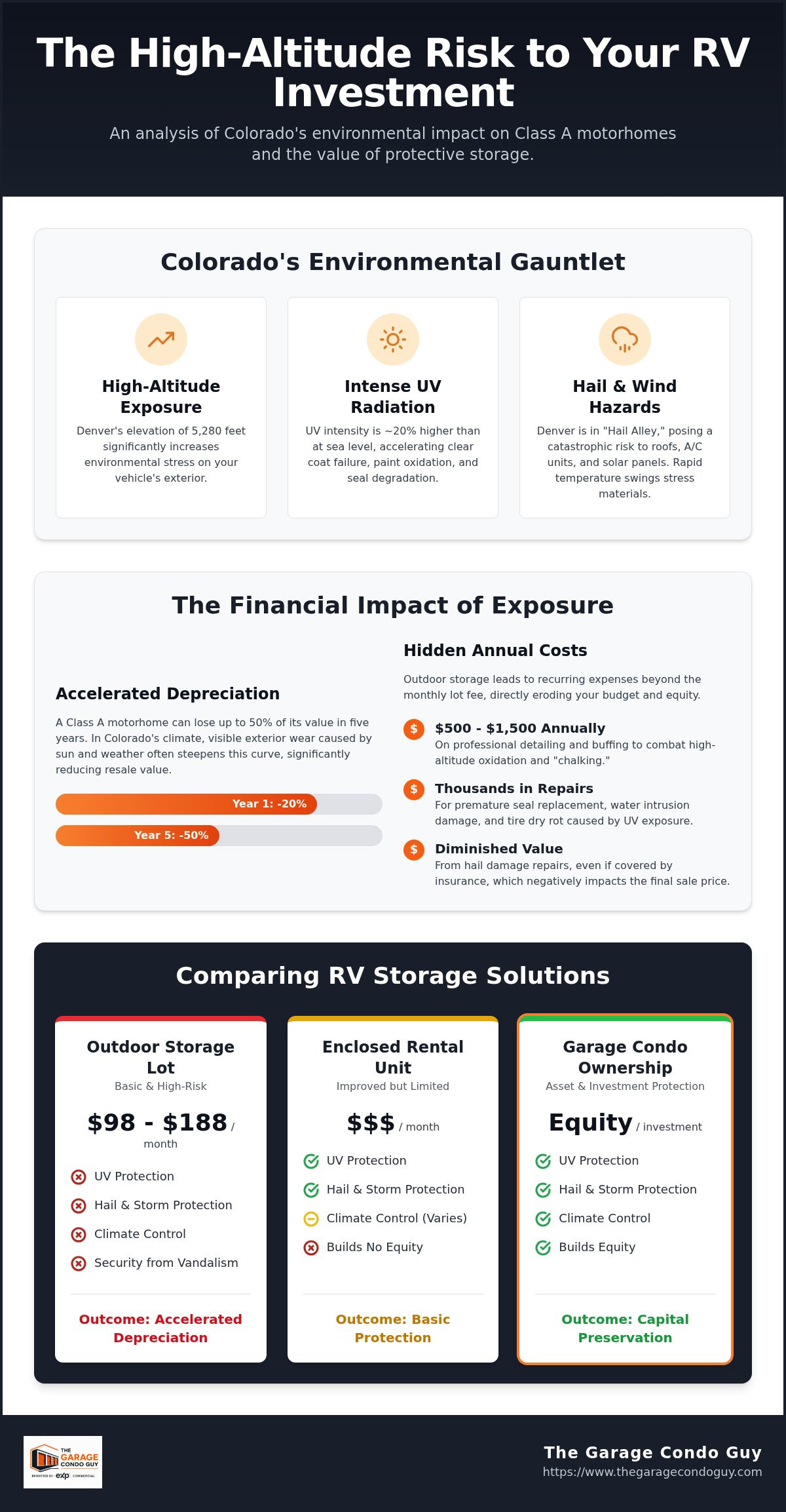
A Class A recreational vehicle (RV) is a significant asset that requires a strategic approach to valuation. It's common for these vehicles to lose 20% of their value in the first year and up to 50% by year five. In Colorado, this curve often steepens due to visible exterior wear that signals age to potential buyers. Your Class A motorhome is a six-figure investment. Leaving it exposed to Colorado sun accelerates the breakdown of clear coats, paint, and decals. Buyers in the luxury market pay a significant premium for vehicles with "stored indoors" status. They look for glossy paint and supple rubber seals rather than the chalky oxidation typical of high-altitude exposure.
Capital Preservation vs. Simple Storage
Storage isn't just about finding a parking spot; it's about protecting equity. A "like-new" finish is the primary requirement for achieving top-tier resale values in the private market. Luxury buyers are driven by psychology and perception. They often associate a faded or oxidized exterior with neglected mechanical maintenance. Enclosed storage ensures the vehicle looks as pristine on day 1,000 as it did on day one. This proactive approach maintains the vehicle's aesthetic integrity, which is the first thing a surveyor or professional appraiser evaluates during a sale.
The Hidden Costs of Outdoor Exposure
Outdoor storage creates recurring expenses that quickly erode your ownership budget. Owners often spend between $500 and $1,500 annually on professional detailing and buffing to combat high-altitude oxidation. Seal replacement costs can reach several thousand dollars if UV damage leads to roof leaks or water intrusion. Environmental depreciation is the loss in asset value directly attributable to climate exposure. You also face the unpredictable cost of hail damage repairs. Even if insurance covers the work, the diminished value of a repaired roof impacts your final bottom line.
Technical Risks: Colorado Sun and High-Altitude UV Damage
Atmospheric thinning in Denver results in approximately 20% more UV intensity compared to sea-level coastal cities. This radiation penetrates clear coats and disrupts the chemical bonds in fiberglass resins. Leaving it exposed to Colorado sun triggers photodegradation, where polymers in the exterior finish break down and lose their structural integrity. This process isn't just cosmetic; it's a fundamental breakdown of the vehicle's protective layers.
UV Index and Material Degradation
High-altitude UV exposure is the primary driver of gel coat "chalking." This occurs when the resin binder erodes, leaving behind loose pigment and glass fibers. While a coastal RV might maintain its luster for a decade, Colorado's sun can dull a finish in less than five years. This exposure also targets tire sidewalls. UV rays and high-altitude ozone cause "dry rot," creating microscopic cracks that compromise safety during highway travel. Tires often time out due to sidewall degradation long before the tread wears down.
The Front Range is known for rapid thermal cycling. Materials like aluminum, fiberglass, and rubber expand and contract at different rates. This stress leads to adhesive failure in roof membranes and the hardening of slide-out seals. Once these seals lose their elasticity, they no longer provide a watertight barrier against Colorado's intense summer thunderstorms.
Front Range Hail and Wind Hazards
Denver sits within "Hail Alley," where summer storms frequently produce large-diameter hail. These events pose a catastrophic risk to roof-mounted air conditioners, skylights, and solar panels. Fiberglass shells are also prone to "spider cracking" upon impact. Enclosed storage provides a physical shield that eliminates the risk of storm-related insurance claims. If you are evaluating properties to house your coach, consulting with a specialist can help you identify units with the structural ratings needed for local weather extremes.
Comparing RV Storage Solutions: Outdoor, Rental, and Ownership
Choosing a storage method involves balancing monthly costs against the long-term preservation of a high-value asset. Outdoor storage in the Denver area is the most common choice, with rates averaging between $98 and $188 per month. However, these facilities offer no protection from the atmospheric risks discussed previously. Leaving it exposed to Colorado sun in an open lot leads to inevitable finish degradation and potential storm damage.
The Limitations of Rental Storage
Enclosed rental units provide a physical barrier but often lack the specialized infrastructure required for Class A maintenance. Many standard facilities in the Front Range do not offer dedicated 30-amp or 50-amp power circuits. This makes it impossible to run climate control systems or maintain battery health during the off-season. Additionally, rental rates are subject to annual increases, and availability for 45-foot units remains extremely tight across the metro area. Understanding Denver motorhome storage: Why ownership beats renting helps clarify these operational constraints.
Garage Condos as a Specialized Real Estate Asset
A garage condo is a deeded real estate asset that provides a permanent, secure home for your coach. Unlike a rental, ownership allows for customization, such as mezzanine levels, custom flooring, and dedicated plumbing. These units are built with specialized dimensions, including 14-foot door heights and wide turn radii, specifically for Class A dimensions. Owners benefit from a private, climate-controlled environment where security is managed by the individual rather than a third-party facility manager. For a detailed look at regional availability, consult the RV Storage Condos Front Range: The 2026 Ownership & Location Guide. If you are ready to evaluate specific inventory, contact a specialized advisor to review current market options.
Securing Specialized RV Storage in the Colorado Front Range
Leaving it exposed to Colorado sun is a risk that requires a permanent, engineered solution. Transitioning from a rental lot to a deeded garage condo involves more than just selecting a location. You must verify that the facility's technical specifications accommodate the unique footprint of a luxury coach. This includes analyzing ingress and egress patterns to ensure safe operation for drivers of all experience levels.
Critical Specifications for Class A Units
A 14-foot door height is the standard requirement for enclosed Class A storage. Most modern coaches stand between 12 and 13.5 feet high once you account for roof-mounted air conditioning units and satellite arrays. A 12-foot wide door is also preferred to provide a safety margin for mirrors and awnings. Beyond the unit itself, the site's drive aisles must support a wide turn radius. Large coaches often require 60 to 70 feet of clearance for backing maneuvers. Facilities designed without these considerations can lead to accidental tail swing damage or curb strikes.
Navigating the Colorado Market
The Front Range market currently experiences high demand for specialized units in specific geographic corridors. Key hotspots include Denver, Longmont, and Commerce City. Navigating these transactions requires understanding local zoning and association bylaws. This is why you need a Front Range garage condo specialist to identify off-market opportunities or upcoming developments. If you are specifically looking in the northeast metro area, exploring Commerce City garage condos can provide options with superior highway connectivity. Most transactions take 30 to 45 days to close. Early preparation ensures your asset is protected before the next hail season begins.
Securing Your Asset for the Long Term
Storing a luxury coach in the Front Range requires more than just a parking space. It demands a specialized environment that counters the 20% increase in UV intensity found at 5,280 feet. Leaving it exposed to Colorado sun results in measurable equity loss through "environmental depreciation" and accelerated material failure. By prioritizing deeded ownership with 14-foot door clearances and climate control, you secure both the physical integrity and the resale value of your vehicle.
Finding the right unit amidst limited inventory requires local expertise and deep knowledge of Front Range storage developments. Whether you are targeting Denver, Longmont, or Commerce City, having a specialized advocate ensures you find a unit with the correct turn radius and utility specs for your specific coach. You can schedule a consultation with the Front Range garage condo expert today to review available inventory and upcoming projects. Protecting your asset is a proactive step toward maintaining your mobile lifestyle for years to come.
Frequently Asked Questions
How much does Colorado sun actually damage an RV's resale value?
High-altitude UV radiation causes rapid oxidation and clear coat failure. Buyers in the luxury market often deduct 10% to 15% from the valuation for visible exterior damage. Leaving it exposed to Colorado sun makes it difficult to maintain the "like-new" status required for private sales. Pristine, indoor-stored vehicles consistently command higher price points during the professional appraisal process.
Is climate-controlled storage necessary for a Class A motorhome in Denver?
Climate control is highly recommended to protect sensitive electronics and interior finishes from Denver's extreme temperature swings. Rapid thermal cycling causes materials to expand and contract; this leads to cracked seals and warped cabinetry. A climate-controlled environment maintains a stable humidity level, preventing the drying out of rubber components and leather upholstery. It ensures that your coach remains in a ready-to-use state throughout the winter months.
What are the zoning requirements for garage condos in the Front Range?
Garage condos are typically zoned for light industrial or commercial use, such as Planned Unit Developments (PUD). These designations allow for the storage of large vehicles, trailers, and personal property that residential HOAs often prohibit. While specific regulations vary between Denver, Longmont, and Commerce City, most developments require that owners adhere to strict usage rules. This usually excludes living in the unit or running heavy manufacturing businesses.
Can I customize the interior of a garage condo for my RV?
Yes, deeded ownership allows for significant customization that rental units cannot offer. Owners frequently install mezzanine levels for office space, epoxy flooring for easier maintenance, and custom cabinetry for gear storage. Many units also support the addition of specialized climate control systems, custom lighting, and high-voltage power outlets. These upgrades improve the utility of the space and can increase the property's market value over time.
What is the typical door height required for a Class A motorhome?
A 14-foot door height is the standard requirement for most Class A coaches. This height provides enough clearance for roof-mounted air conditioners and satellite domes. Most luxury motorhomes stand between 12 and 13.5 feet tall, leaving a narrow margin for error with shorter doors. It's also important to look for 12-foot widths to accommodate wide mirrors and prevent accidental damage while backing into the unit.


Comments