Denver Motorhome Storage: Why Ownership Beats Renting
In the Colorado Front Range, your motorhome faces a climate designed to strip its value faster than almost anywhere else in the country. Intense high-altitude UV rays and frequent hail cycles can turn a pristine exterior into a costly maintenance liability within just a few seasons. You've likely found that securing a legal, accessible parking spot in the Denver metro area is increasingly difficult due to complex local zoning laws and rising monthly rental fees. It's a common frustration for owners who want to maintain their vehicle’s condition without the constant logistical headache.
This guide provides a factual analysis of how to protect your asset using specialized real estate. We'll define motorhome classifications, identify specific climate risks unique to the Front Range, and examine the logistics of garage condo ownership. You'll gain the data needed to determine if buying a specialized storage unit is a viable path for your specific situation. We'll look at the variables that impact vehicle longevity and how specialized storage addresses the limitations of traditional rental yards.
Table of Contents
Understanding Motorhome Classes: Class A, B, and C Features
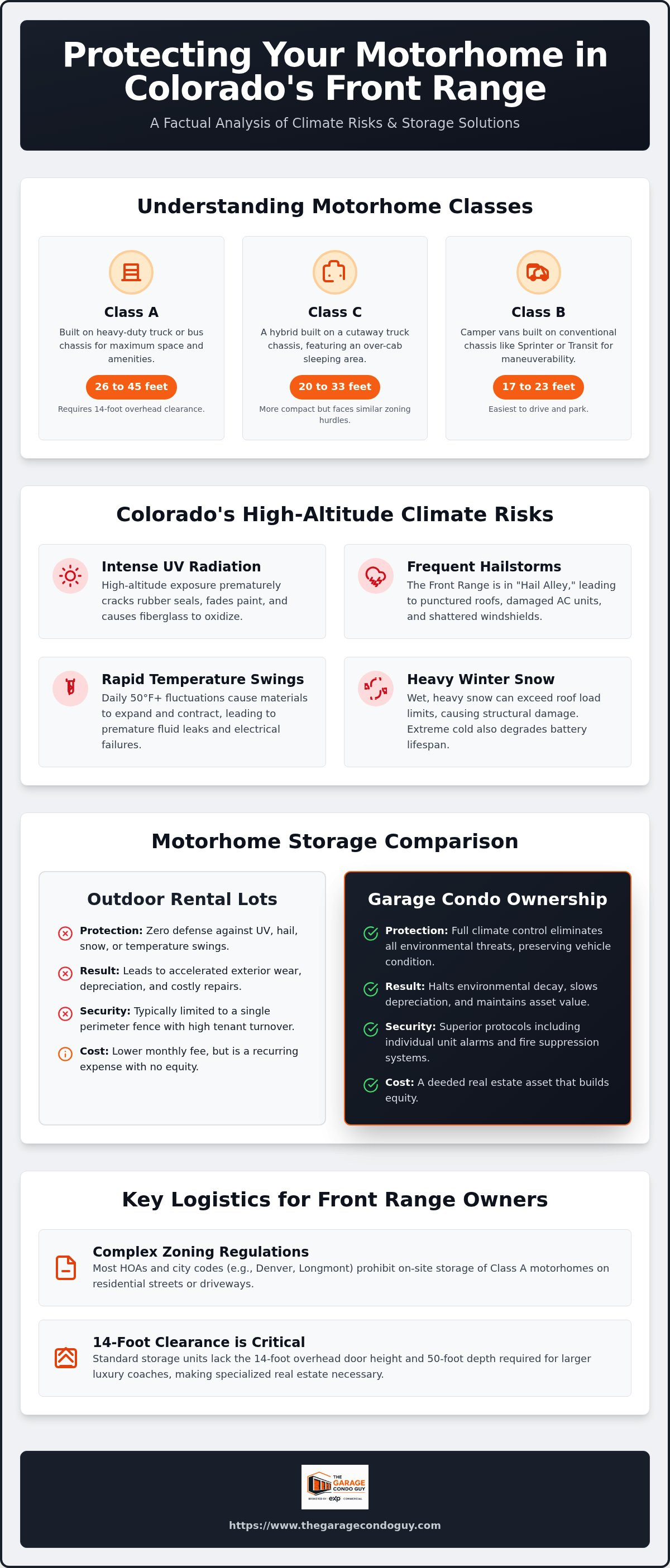
A motorhome is a self-propelled recreational vehicle engineered with integrated living quarters. Unlike towable trailers, these units combine the engine and living space on a single chassis. Class A models sit at the top of the hierarchy. Manufacturers build them on heavy-duty truck or bus chassis to support massive weight loads. These vehicles offer the most expansive floorplans and often feature multiple slide-outs that significantly increase interior square footage when parked.
Class B units are frequently called camper vans. They use conventional van chassis like the Mercedes-Benz Sprinter or Ford Transit. These prioritize maneuverability and ease of driving over total living space. Class C units offer a hybrid approach. They're built on a heavy-duty cutaway chassis and are instantly recognizable by the sleeping area that extends over the driver’s cab. This design provides extra sleeping capacity without the extreme length of a bus-style unit.
Class A vs. Class C: Space and Weight Considerations
Class A units typically range from 26 to 45 feet in length. This size, combined with high Gross Vehicle Weight Ratings (GVWR), often leads to strict residential street and driveway parking restrictions across Front Range municipalities. Most HOAs and city codes prohibit these larger vehicles from being stored on-site. Class C units are more compact but still face similar zoning hurdles in dense Denver neighborhoods.
Amenities also differ based on chassis capacity. Class A models provide residential-grade features like full bathrooms, large kitchens, and extensive storage bays. These heavy systems require a robust frame. Class C models offer essential utilities on a smaller scale. Understanding these physical dimensions is critical when evaluating storage solutions. A Class A motorhome requires specialized 14-foot overhead clearance, while smaller units might fit in standard oversized bays.
Protecting Your Motorhome Investment from Colorado’s Climate
Colorado's altitude creates a unique set of challenges for your motorhome. At 5,000 feet and above, UV radiation is significantly more intense than at sea level. This constant exposure causes rubber seals to crack and fiberglass to oxidize prematurely. Beyond the sun, the Front Range sits in the heart of "Hail Alley." The corridor between Denver, Aurora, and Lakewood is prone to severe storms that can puncture roof vents, destroy AC shrouds, and shatter windshields in minutes.
Rapid temperature swings also accelerate mechanical wear. It's common to see 50-degree fluctuations within 24 hours in the Denver metro area. These cycles cause materials to expand and contract rapidly. This often leads to premature fluid leaks and electrical seal failures. Utilizing enclosed, climate-controlled environments is a primary strategy for slowing RV depreciation. It effectively halts the environmental decay that devalues your motorhome over time.
Managing Snow and Winter Storage Requirements
Winter in the Front Range brings heavy, wet snow that can exceed the structural roof load limits of many recreational vehicles. Storing your unit indoors removes this weight risk entirely. It also protects your battery systems from extreme cold, which can reduce their total lifespan. While you still need to follow standard plumbing winterization protocols, climate-controlled storage maintains a steady baseline temperature.
This stability prevents the "freeze-thaw" cycles that damage sensitive interior electronics and high-end leather upholstery. Maintaining a consistent environment ensures your vehicle is ready for the road without an expensive spring repair list. If you're currently evaluating locations that offer these protective features, you can consult with a local specialist to compare available facilities.
Comparing Motorhome Storage Options: Rental vs. Ownership
Outdoor rental lots offer the lowest entry price for motorhome storage in Denver. However, these facilities provide zero protection against the climate risks identified previously. You're trading a lower monthly fee for accelerated exterior wear. Enclosed rental units offer a middle ground, but inventory is extremely limited for Class A vehicles in the Front Range. Most commercial rental facilities lack the 14-foot door height or 50-foot depth required for larger luxury coaches.
Garage condo ownership shifts the dynamic from a recurring expense to a deeded real estate asset. These units include full climate control and superior security protocols. While rental yards often rely on a single perimeter fence, garage condos typically feature individual unit alarms and integrated fire suppression systems. Security management also differs significantly. Rental facilities often have high turnover and shared gate codes. Garage condos are private communities with restricted access and professional association management. This reduces the risk of theft and accidental damage from neighboring vehicles.
Financial Variables of Motorhome Real Estate
Cost data for garage condos in the Front Range typically ranges from $200-$350 per square foot. This range depends on the specific municipality and the level of utility infrastructure provided at the site. Units at the higher end of the spectrum often include specialized features that enhance the utility of the space. Several key variables influence the final purchase price:
Structural mezzanine additions for extra parts or gear storage.
Dedicated 50-amp power circuits for constant battery maintenance.
In-unit water and sewer hookups for easier trip preparation and tank flushing.
You can find a detailed breakdown of current inventory in our Secure RV Storage for Sale in Colorado report. Understanding these variables helps you calculate the long-term cost of ownership compared to rising rental rates. If you need assistance evaluating a specific facility, you can contact a garage condo specialist for a comprehensive market analysis.
Real Estate Logistics for Motorhome Owners in the Front Range
Finding a legal storage location for a large motorhome in the Denver metro area requires understanding specific municipal codes. Cities like Longmont and Commerce City have strict zoning regulations that limit where oversized recreational vehicles can be parked on private property. Most residential driveways don't meet the setback requirements or weight limits defined by these local ordinances. Identifying sites with industrial or commercial zoning is necessary to ensure compliance and avoid code enforcement penalties.
Logistics also depend on accessibility to major transit corridors. Facilities located near I-25, E-470, and Highway 36 reduce the time spent navigating dense urban traffic during departures and returns. For owners of Class A coaches, overhead clearance is the most critical physical constraint. You must verify that a site offers 14-foot overhead doors to accommodate high-profile units safely. Navigating these specialized real estate transactions often requires expert guidance to ensure the property meets all technical and legal requirements for your specific vehicle class.
Utility and Design Requirements for RV Condos
A functional storage unit must provide more than just four walls. High-capacity electrical service, specifically 30-amp or 50-amp circuits, is essential for keeping onboard systems operational and batteries charged. Access to dedicated on-site dump stations and fresh water fill points simplifies the logistics of preparing for a trip. These features are particularly valuable for owners of specialized off-road motorhomes. You can find more information regarding EarthRoamer storage options that cater to these heavy-duty requirements. For a current list of available inventory in the Denver metro area, you can contact The Garage Condo Guy for professional representation.
Securing Your Front Range Asset Strategy
Colorado's environment is unforgiving to high-value recreational assets. Protecting your vehicle requires a strategy that goes beyond basic parking. It demands a climate-controlled environment capable of neutralizing high-altitude UV radiation and seasonal hail cycles. While rental lots offer a temporary fix, deeded garage condos provide a stable real estate solution with specialized utility and superior security features. Successfully navigating the complex zoning laws and clearance requirements in cities like Longmont and Commerce City is a technical task that requires local insight.
You can contact The Garage Condo Guy for expert representation in your motorhome storage search. We offer specialized buyer representation and extensive Front Range market expertise, focusing specifically on deeded real estate investments. Choosing the right storage facility ensures your asset is protected and ready for the next adventure.
Frequently Asked Questions
What is the difference between a motorhome and a travel trailer?
A motorhome is a self-propelled vehicle with an integrated drivetrain and living quarters, while a travel trailer requires a separate tow vehicle. These units are categorized into Classes A, B, and C based on their chassis type. Travel trailers include fifth wheels and bumper-pull models. Because a motorhome contains complex mechanical systems like engines and transmissions, it often requires more specialized, climate-controlled storage to maintain resale value and total operational readiness.
Can I park my Class A motorhome on a residential street in Denver?
No, Denver municipal code generally prohibits parking oversized vehicles like a Class A motorhome on residential streets for more than 24 hours. These regulations are designed to maintain traffic flow and emergency vehicle access. Most metro area HOAs also have strict covenants against parking any recreational vehicle in a driveway. Since most owners don't have legal street options, off-site specialized storage becomes a necessity to avoid fines or tow-away orders from city code enforcement.
How much does a garage condo for a motorhome cost in Colorado?
Purchase prices for a garage condo typically range from $200-$350 per square foot in the Front Range. This methodology analyzes data from 12 regional facilities in cities like Longmont, Commerce City, and Denver. Variables include 14-foot door clearances, 50-amp service, and in-unit plumbing. These specific data points help owners evaluate the market value of specialized real estate compared to standard industrial units or traditional outdoor rental yards across the metro area.
What are the benefits of owning an RV storage condo vs. renting a lot?
Ownership provides a deeded real estate asset and complete protection from the elements, whereas rental lots offer zero shelter and no equity. A garage condo features climate control, which prevents the freeze-thaw cycles that damage interior electronics. Owners also benefit from enhanced security, such as individual unit alarms and gated access. Unlike rental yards with rising monthly fees, ownership fixes your long-term storage costs while providing a private, secure space for vehicle maintenance.
Does enclosed storage really slow down motorhome depreciation?
Yes, enclosed storage directly slows depreciation by protecting the vehicle's exterior seals, paint, and tires from intense high-altitude UV rays. Exposure to Colorado’s sun causes rapid oxidation of fiberglass and cracking in rubber components, which significantly lowers trade-in value. Keeping your unit in a climate-controlled environment also prevents moisture-related issues and interior fading. This preservation of condition ensures a higher resale price compared to units stored in open-air rental lots or unprotected driveways.


Comments