Denver High Winds: Protect Your Assets in a Garage Condo
In the Colorado Front Range, wind isn't just a weather forecast. It's a structural load requirement. It defines the difference between a temporary storage expense and a permanent real estate asset. When gusts exceed 100 mph during Chinook or Bora events, that "affordable" carport often becomes a liability. You've seen the aftermath of Front Range storms. Debris turns into projectiles. Low-quality structures fail. It's a risk your high-profile vehicles shouldn't take.
Protecting a luxury asset requires more than just a roof. You want your investment to survive the next 115 mph event in Denver or a 140 mph gust in Boulder County. This article analyzes how garage condo structural standards, like the ASCE 7-22 code, mitigate these documented hazards. We'll identify high-risk wind belts and provide a technical checklist to evaluate a unit's wind-load rating before you sign. Disclaimer: This information is for general educational purposes only. Buyers must verify property-specific zoning, HOA/COA documents, and legal requirements before purchase.
Table of Contents
Analyzing Colorado Front Range Wind Patterns and Asset Risk
Historical National Weather Service data for the I-25 corridor highlights the extreme volatility of Colorado's climate. Chinook winds occur when air descends the Rockies, frequently resulting in gusts exceeding 100 mph. These events challenge the structural integrity of many storage solutions. While a standard carport might be rated for 75 mph, it often lacks the lateral bracing found in professional wind engineering. We've reviewed historical data to identify the specific risks to high-profile assets.
The Physics of High-Profile Vehicle Exposure
RVs and trailers act as sails due to their large surface area. A 100 mph gust creates significantly more force on a 13 foot tall motorhome than a low-profile car. Canyons along the Front Range accelerate air into high-velocity funnels, increasing the risk for nearby facilities. This pressure can reach a tipping point where the vehicle's center of gravity is compromised, leading to potential rollovers even while parked.
12 Documented Examples of Storage Failures
Roof uplift on metal carports leading to complete panel detachment.
Overhead door "blow-ins" where pressure exceeds the track's holding capacity.
Abrasive paint damage from airborne sand and gravel.
Shattered side windows on RVs due to flying debris impacts.
Structural twisting in fabric shelters during microbursts.
Secondary damage from falling site fences or light poles.
Puncture damage to vehicle shells from flying roof shingles.
Water intrusion forced through door seals by high pressure.
Hinge failure on side-entry doors caught by sudden gusts.
Seal degradation on roof vents due to consistent vibration.
External panel scouring on classic cars from localized dust.
Foundation shifting in unanchored or low-quality sheds.
Remediating cosmetic abrasions on a high-end vehicle can cost $5,000 to $15,000. This often exceeds the cost of the storage structure itself. For more data on protecting your investment, see our Colorado garage condo buyers guide.
Structural Integrity: Wind-Load Ratings for Garage Condos
Building codes in the Front Range have evolved significantly to address local climate volatility. The City and County of Denver currently enforces the 2021 International Building Code (IBC), which references the ASCE 7-22 standard for wind load requirements. In Denver, the ultimate design wind speed is 115 mph. Other jurisdictions, such as Boulder or Dacono, may require structures to withstand up to 140 mph. Professional garage condos utilize steel-frame or masonry construction to meet these rigid standards. This is a significant upgrade from residential garages, which often lack the lateral bracing required for sustained high-pressure events along the I-25 corridor.
Overhead Doors and Wind Resistance
Doors represent the most vulnerable point in any storage structure. A typical 12–14 foot door presents a massive surface area that captures intense pressure. This force is measured in pounds per square foot (psf). Industrial-grade condo doors are engineered to resist these forces with certified ratings, such as +22.4 / -26.2 psf. This performance requires reinforced tracking and horizontal U-bars to prevent the panels from buckling. High-cycle springs and heavy-duty hinges ensure the door remains seated in its tracks even when gusts create a vacuum effect on the building's exterior.
Roofing and Enclosure Systems
Maintaining a sealed building envelope is critical during a storm. If a door or window fails, internal pressurization can occur, leading to roof uplift from the inside out. Metal roofing systems in garage condos are engineered for high-uplift resistance, using specific fastener patterns to secure the deck to steel purlins. Masonry walls provide the necessary mass to dampen vibrations caused by consistent wind-load cycles. We analyze these technical specifications as part of our Colorado garage condo buyers guide. Disclaimer: This information is for general educational purposes only. Buyers must verify property-specific zoning, HOA/COA documents, taxes, financing, and legal requirements before purchase.
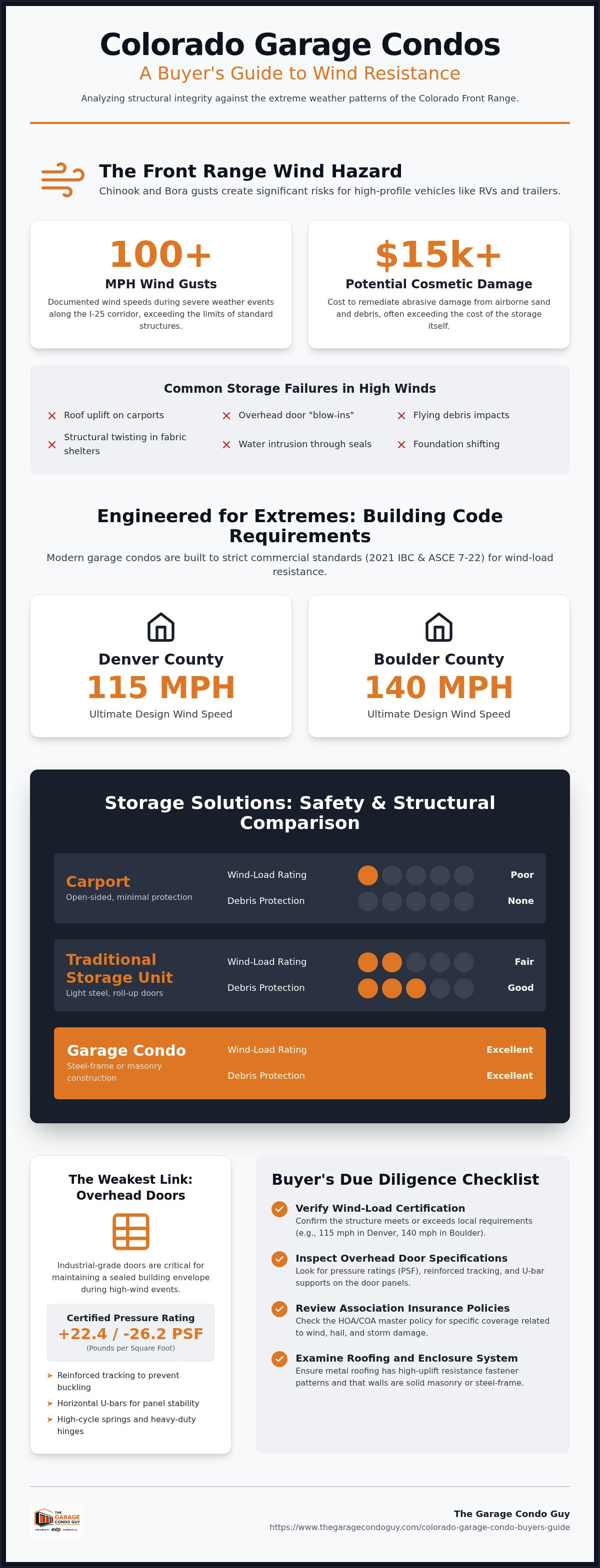
Comparing Storage Solutions: Carports vs. Traditional Units vs. Condos
Choosing the right storage involves balancing monthly costs against long-term asset preservation. Open carports and traditional self-storage units often fall short of the structural requirements needed for the Front Range. We've evaluated three primary storage types across five safety metrics: wind-load rating, debris protection, structural lifespan, insurance premium impact, and resale appreciation. While a metal carport costs between $4,950 and $9,000, it adds only $5,000 to $10,000 in appraised value. Enclosed garages, however, add $20,000 to $30,000. Our 10-year methodology shows that the structural lifespan of a masonry condo far exceeds the 15-year average for light-gauge steel carports.
The Cost of Exposure: A 10-Year Analysis
Over a 10-year period, "cheap" storage yields high hidden costs. Vehicles in carports or non-climate-controlled units face accelerated paint oxidation and seal degradation. Wind-driven debris can necessitate deductible payments ranging from $500 to $2,500 per event. Fee-simple ownership in a condo mitigates these risks. It gives you a direct interest in the common element structural integrity. This ensures the building's envelope remains a high-priority maintenance item for the HOA, protecting your investment from depreciation caused by weather exposure.
Variable Analysis: Location Matters
Geography dictates your structural needs. If you're looking at Longmont garage condos, you're closer to the foothills where Chinook gusts are more frequent. Conversely, Commerce City garage condos sit further east but still face intense microbursts. Proximity to the mountains changes the required engineering specifications from 115 mph to 140 mph in certain zones. You should verify these specific ratings before committing to a unit. Start your due diligence by reviewing our Colorado garage condo buyers guide.
Buyers must verify property-specific zoning, HOA/COA documents, taxes, financing, and legal requirements before purchase.
Due Diligence: Evaluating Wind Resistance Before You Buy
Due diligence for a garage condo requires looking beyond the aesthetics. You're buying into a collective structural entity. Start with the HOA/COA declarations. These documents define who pays when a 115 mph wind event damages the common roof. Review the reserve study carefully. It must show dedicated funds for structural maintenance and roof replacement. If the reserves are underfunded, you face significant special assessments after the next major storm cycle along the I-25 corridor.
Inspect the mezzanine installation within the unit. These structures typically offer 10 to 11 feet of clear height. You must ensure they haven't been bolted to structural bracing in a way that compromises the building's lateral load resistance. Check the concrete slab for hairline fractures near the door tracks. This often indicates excessive vibration from the overhead door opener during high-pressure cycles. Stress at these anchor points can lead to door failure when you need protection most.
Key Questions for the HOA
Does the master insurance policy cover full replacement cost for wind and hail? Some policies utilize "actual cash value" clauses that leave owners with high out-of-pocket expenses. Ask if the HOA restricts external wind-protection modifications. You need to know if you can independently upgrade weather stripping or reinforce door tracks without violating community bylaws.
Professional Inspection Focus Areas
Verify permits for any unit alterations. Unpermitted mezzanines or electrical work can void insurance claims after a disaster. Assess the condition of fire sprinklers and drainage systems. High-wind events often blow debris into gutters and downspouts. This leads to localized flooding during the heavy rains that frequently follow Front Range wind storms.
Disclaimer: General educational information only. Verify property-specific zoning, HOA/COA documents, taxes, financing and legal requirements before purchase.
Securing Your Assets Against Front Range Storms
Selecting the right storage facility in Colorado requires a technical understanding of structural engineering and local building codes. You've seen how 115 mph gusts turn unreinforced structures into liabilities. A professional garage condo offers more than just space. It provides a building envelope that's engineered to withstand the unique pressure of Front Range wind events. By focusing on certified wind-load ratings and robust HOA reserve studies, you protect both your high-profile vehicles and your real estate equity.
We specialize in the specific requirements of RV owners and car collectors across Denver and Boulder. Our expertise ensures you navigate the complex world of fee-simple ownership and structural due diligence with confidence. Use our deep knowledge of the Front Range market to gain access to exclusive listings. Contact The Garage Condo Guy for expert buyer representation and find a unit built to last. Buyers must verify property-specific zoning, HOA/COA documents, taxes, financing, and legal requirements before purchase.
Frequently Asked Questions
What is a standard wind-load rating for a Colorado garage condo?
Standard ratings vary by local jurisdiction across the Front Range. In Denver, the 2021 International Building Code requires structures to withstand an ultimate design wind speed of 115 mph. However, locations like Boulder or Dacono often require ratings up to 140 mph due to proximity to the foothills. You must check the specific certificate of occupancy or local building department records to confirm the exact pressure the unit was engineered to resist.
Does my personal insurance or the HOA insurance cover wind damage to my car?
Your personal auto or inland marine policy typically covers damage to your vehicles, while the HOA master policy covers the building's structural shell. If wind debris penetrates the unit and damages your car, the HOA insurance generally only remediates the building's common elements. You must review the COA declarations to understand the coverage limits. Always verify property-specific insurance requirements with a qualified agent before finalizing your purchase.
Can high winds damage the 12–14 foot doors common in these units?
High-pressure storm events frequently damage oversized doors because of their large surface area. A 12–14 foot door captures significant lateral pressure, which can force the panels out of their tracks if they aren't properly reinforced. Look for industrial-grade doors featuring horizontal U-bars and heavy-duty tracking. These components are essential for maintaining the building's envelope and preventing structural failure during extreme gusts along the I-25 corridor.
Are certain areas of the Front Range 'safer' from wind than others?
Risk levels change based on your proximity to the Rocky Mountain foothills. Areas like Golden and Boulder are more susceptible to intense Chinook gusts, while eastern locations like Commerce City or Aurora might face different microburst patterns. No part of the Front Range is entirely immune to extreme weather. You should prioritize the structural engineering of the specific facility over the general geography when evaluating the safety of your stored assets.
How do I verify the structural integrity of a pre-owned garage condo unit?
Verifying integrity requires a professional inspection and a deep dive into the HOA's financial health. You should inspect the concrete slab for stress fractures and ensure any mezzanines haven't compromised the original structural bracing. Review the association's reserve study to confirm they have adequate funds for roof maintenance. General educational information only. Verify property-specific zoning, HOA/COA documents, taxes, financing and legal requirements before purchase.


Comments