Protect Your Assets from Denver Snow: A Storage Checklist
In Denver, a heavy snow cycle can dump 30 pounds of pressure per square foot on your roof. That is a massive weight for any structure to carry. You've invested in a specialized space to protect your vehicles. The last thing you need is winter weather compromising that investment.
It's stressful to worry about roof integrity or watch corrosive magnesium chloride damage your concrete floor. This guide provides the data you need to ensure your garage condo survives the season. We'll examine the 2025 Denver Building Code requirements, HOA maintenance responsibilities under CCIOA, and the legalities of snow disposal under statute 43-5-301. You'll learn about structural snow load limits, the impact of 12 to 14 foot door clearances on ice formation, and how 10 to 11 foot mezzanine heights affect interior air circulation during heating months. Disclaimer: This information is for general educational purposes only. Buyers must verify property-specific zoning, HOA documents, and legal requirements before purchase.
Table of Contents
Structural Snow Loads and Colorado Building Standards
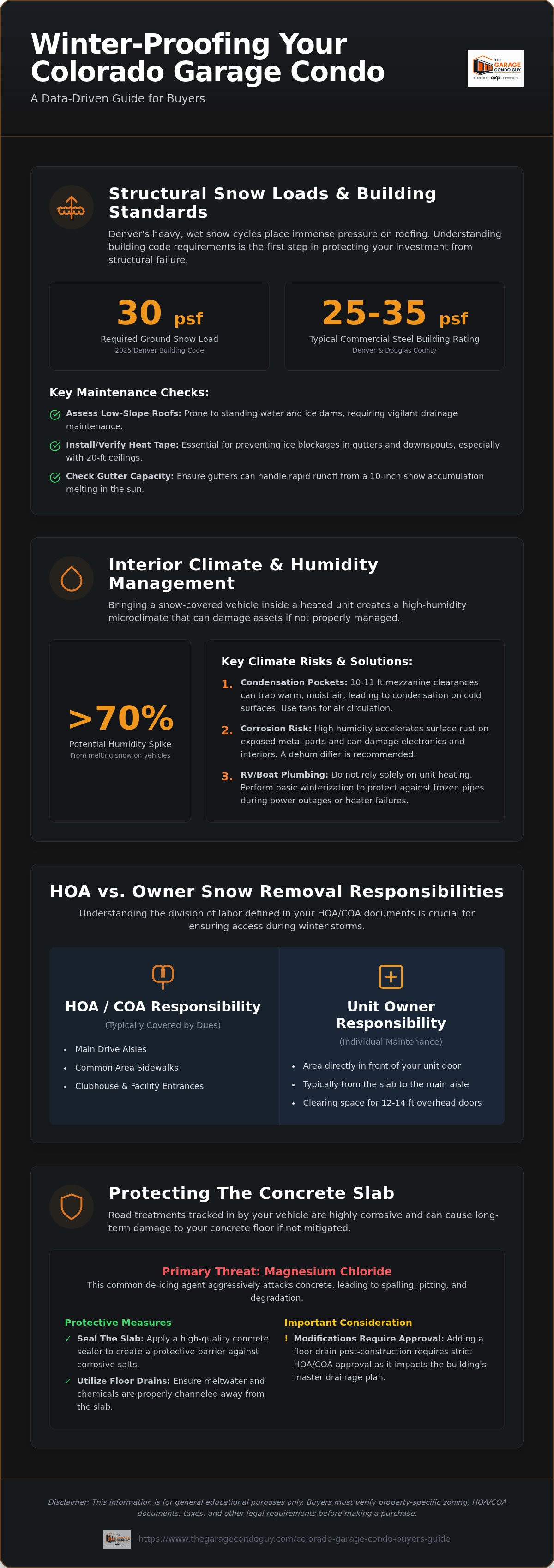
In engineering terms, Structural Snow Loads represent the vertical force exerted on a roof by accumulated frozen precipitation. For Denver and Douglas County, the 2025 Building Code typically requires commercial-grade steel buildings to handle 25 to 35 pounds per square foot (psf). While this baseline works for average winters, Colorado is famous for "heavy" wet snow during spring cycles. This moisture-dense accumulation can quickly exceed design limits if a building lacks proper pitch or efficient drainage. Personal warehouses often utilize low-slope or flat roof designs, which increase the risk of standing water and ice dams if the drainage systems fail.
Roof and Gutter Maintenance for Heavy Accumulation
Ice dams are a primary concern for high-volume storage units. When heat escapes through the roof of a poorly insulated unit, it melts the bottom layer of accumulation. This water runs to the cold gutters and refreezes, creating a block. In units with 20-foot ceilings, heat naturally rises and stays trapped against the roof deck. Installing heat tape and ensuring specialized drainage paths are clear is essential for preventing structural strain. You should verify that your gutters can handle the rapid runoff of a 10-inch accumulation melting in the Colorado sun.
Evaluating the Concrete Slab and Drainage
Managing the melt inside your unit is just as critical as managing the roof. When you pull a vehicle into a heated unit, any snow on the chassis will melt onto your concrete slab. Floor drains are the standard solution for this moisture. However, don't assume you can add a drain after the fact. Modifying the slab or plumbing requires strict HOA or COA approval, as these changes often impact the facility's master drainage plan.
Disclaimer: This information is for general educational purposes only. Buyers must verify property-specific zoning, HOA/COA documents, taxes, and other legal requirements before making a purchase.
Interior Protection: Managing Humidity and Temperature
Colorado's rapid temperature shifts put extreme stress on vehicle seals, rubber components, and paint finishes. Expansion and contraction cycles can lead to cracking and premature aging. For high-value collections, Denver climate-controlled storage benefits include stabilizing these variables to preserve long-term market value. Even in a premium facility, structural features like a mezzanine with 10 to 11 feet of clearance can create stagnant temperature pockets. These zones trap warm air at the top while leaving the slab level freezing. This imbalance leads to condensation on cold metal surfaces. It's preventable.
The Impact of "Snow Melt" on Indoor Humidity
Parking a vehicle covered in snow inside a heated unit causes a rapid spike in moisture levels. As the frozen accumulation melts, humidity can soar past 70%, creating a breeding ground for mold or surface rust on exposed engine parts. Relative humidity is the amount of water vapor present in the air expressed as a percentage of the amount needed for saturation at the same temperature. Without proper ventilation or dehumidification, this moisture clings to your assets. Keep it dry. Monitoring these levels is a key part of the strategy found in the Colorado garage condo buyer's guide for asset protection.
Winterizing RVs and Boats in Enclosed Units
Don't let a "heated" label give you a false sense of security. Power outages or heater malfunctions during a blizzard can lead to frozen pipes in an RV or boat. Basic winterization is still recommended to avoid catastrophic plumbing failures. Scientific research on Protecting the Unit Slab from Magnesium Chloride highlights how chemical runoff from melting snow also introduces corrosive elements into the air; this further emphasizes the need for a clean environment. For more specific location-based advice, consult the RV storage condos Front Range guide.
Disclaimer: This information is for general educational purposes only. Buyers must verify property-specific zoning, HOA/COA documents, taxes, and other legal requirements before making a purchase.
HOA Responsibilities for Snow Removal and Access
Understanding the division of labor between you and the Association is vital for winter access. Typically, your COA dues cover the clearing of main drive aisles, common area sidewalks, and clubhouse entrances. However, most declarations specify that the area directly in front of your 12 to 14 foot overhead door is your responsibility. This ensures that plow contractors can move quickly through the facility without risking damage to individual units. During a heavy snow cycle, 24/7 access rights are standard, but extreme accumulation can create temporary physical barriers in gated communities before contractors arrive.
Due Diligence: Reviewing HOA Financial Health
A healthy reserve fund is your best defense against unexpected winter costs. When performing due diligence, scrutinize the "Snow Removal" line item in the annual budget. Does it align with the actual costs of recent Front Range winters? You should also check for special assessments triggered by past roof repairs or extreme weather damage. For a broader look at regional standards, refer to the Larimer County Structural Design Information to understand the engineering requirements these facilities must meet. Verifying these financial details is a core step in the Colorado garage condo buyer's guide process.
Signage and Outdoor Storage Restrictions
Strict "no outdoor storage" rules aren't just about aesthetics. They are functional requirements for efficient plowing. Leaving a trailer or project car in the drive aisle can block plow routes, leading to fines or entire rows being left uncleared. COA boards often enforce these rules more aggressively during the winter months to prevent liability issues. Ensure your unit remains accessible by keeping all assets inside the footprint of your warehouse.
Disclaimer: This information is for general educational purposes only. Buyers must verify property-specific zoning, HOA/COA documents, taxes, and other legal requirements before making a purchase.
Protecting the Unit Slab from Magnesium Chloride
Magnesium chloride is the standard liquid de-icer on Colorado roads. While effective for safety, it's aggressive toward porous concrete slabs. When you track in slush from a recent snow storm, these chemicals seep into the concrete matrix. This process leads to "spalling," where the surface of the slab pits and flakes away. To prevent this deterioration, apply high-quality epoxy coatings or chemical densifiers. These treatments create a non-porous barrier that stops salt penetration. Always wash your vehicles in the facility's designated wash areas before long-term storage to remove corrosive residue from the chassis.
Your seasonal inspection should be thorough. Use a checklist to verify door seals are tight and heating systems are operational. It's also the ideal time for checking for roof deterioration to identify leaks before the spring melt begins.
Slab Maintenance and Permitted Upgrades
Before applying any slab treatments, verify if your specific HOA requires approval for floor coatings. Some associations have standards for color or slip-resistance. If you're considering installing vehicle lifts, you must confirm the slab thickness and condition after a winter cycle. Salt damage can compromise the structural integrity needed for heavy-duty anchoring.
Conclusion and Expert Guidance
Proactive winter management is the only way to preserve asset value in the Front Range. From monitoring structural snow loads to sealing your slab, small steps prevent expensive repairs. General educational information only. Verify property-specific zoning, HOA/COA documents, taxes, financing and legal requirements before purchase. Ready to find a facility built for the Colorado climate? Contact The Garage Condo Guy for a specialized tour of winter-ready units.
Secure Your Investment Against the Front Range Winter
Owning a garage condo in Colorado requires a proactive approach to seasonal changes. You now understand how structural snow load ratings and HOA maintenance budgets directly impact your unit's safety and accessibility. Protecting your concrete slab from chemical de-icers and managing interior humidity are essential steps for long-term asset preservation. These technical details often separate high-performing facilities from those that struggle with winter wear.
The Garage Condo Guy provides specialized buyer representation backed by expert Front Range market knowledge. We prioritize objective, data-heavy reporting to ensure you have the facts before signing a contract. Our team understands which communities offer the most robust infrastructure for handling heavy moisture and extreme temperature swings. We're dedicated to helping you find a space that protects your vehicles through every cycle.
Ready to dig deeper into the technical specifics of Colorado storage? Download the Colorado Garage Condo Buyer’s Guide for more winter tips. We're here to help you navigate the unique requirements of the local market with confidence.
Frequently Asked Questions
Do garage condos in Colorado have specific roof snow load ratings?
Yes, garage condos must meet local building codes that specify structural snow load requirements. In Denver and Douglas County, commercial-grade steel buildings are typically designed for a ground load of 25 to 35 pounds per square foot. However, elevation changes across the Front Range can push these requirements higher. You should verify the specific rating in the facility's engineering documents during your due diligence process.
Is the HOA responsible for shoveling in front of my unit door?
Typically, the HOA or COA manages removal for common elements like drive aisles and clubhouse walkways. However, owners are generally responsible for clearing the area directly in front of their 12 to 14 foot overhead doors. This allows the association's plow contractors to move efficiently through the facility without risking damage to individual units. Always check your specific governing documents to confirm where the association's duty ends.
Can heavy snow damage the overhead doors of a car condo?
Heavy accumulation can certainly damage overhead doors if not managed properly. Accumulated snow can freeze the bottom seal to the ground; attempting to open the door in this state can burn out the motor or bend the tracks. Additionally, moisture from melting roof cycles can create ice dams that interfere with the door's operation. Maintaining clear drainage and shoveling your unit's entrance helps prevent these mechanical failures.
How does magnesium chloride from Colorado roads affect my garage floor?
Magnesium chloride is a liquid de-icer that causes chemical deterioration in porous concrete slabs. When tracked-in slush melts, the salt penetrates the surface and leads to spalling or pitting. To protect your investment, you should apply a high-quality epoxy coating or chemical densifier. These barriers prevent the salt from reaching the internal matrix of the concrete. Washing your vehicle in a designated wash area also reduces chemical exposure.
Should I keep the heat on in my garage condo during a snowstorm?
Maintaining a consistent temperature is recommended to protect your plumbing and preserve vehicle seals. In Colorado, rapid temperature drops can occur during any winter event. If your unit has a mezzanine with 10 to 11 feet of clearance, ensure your heating system provides adequate air circulation to prevent cold pockets. General educational information only. Verify property-specific zoning, HOA/COA documents, taxes, financing and legal requirements before purchase.


Comments