Denver Garage Condo Workshop Rules: What You Need to Know
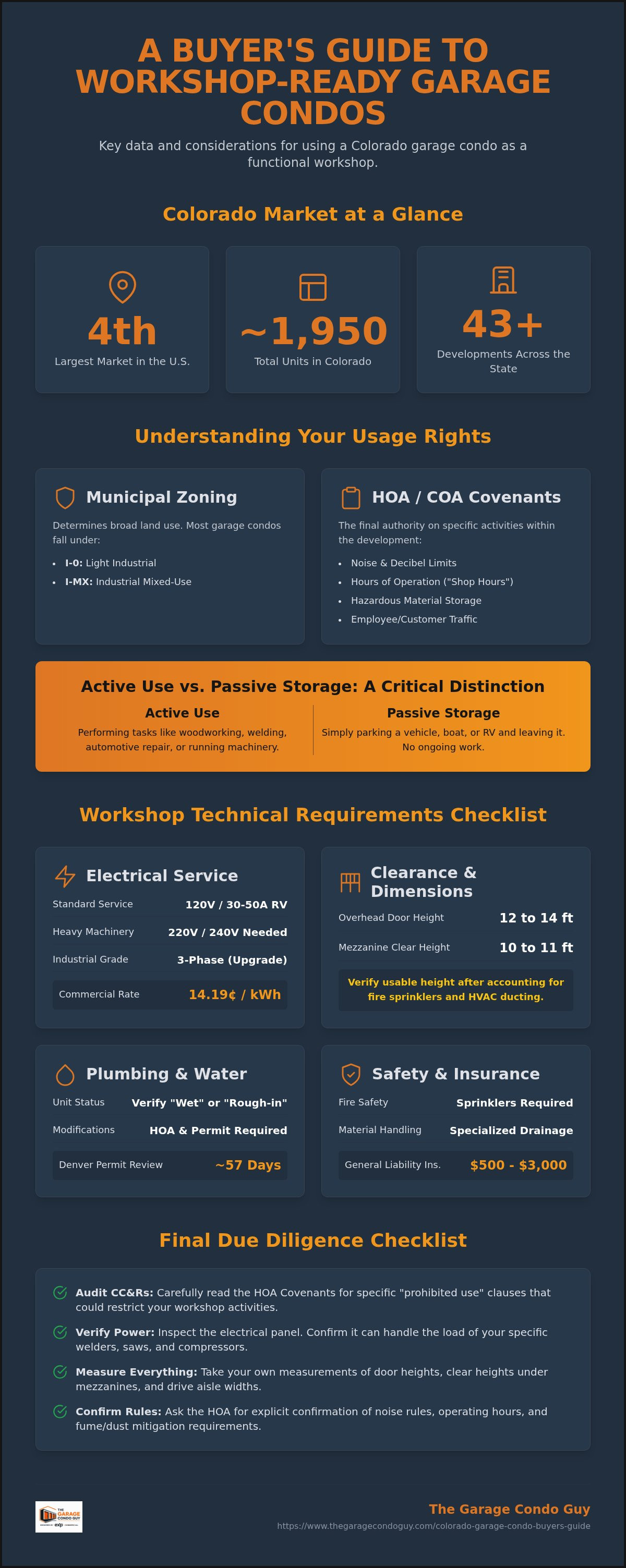
Did you know that Colorado is now the 4th largest market for garage condos in the United States, with nearly 1,950 units across 43 developments? This growth is fueled by people who need more than a standard home garage can offer. You're likely looking at these spaces because your residential HOA won't let you run a table saw after 6:00 PM. You're asking, "Can I Use a Garage Condo as a Workshop?" The answer isn't always simple. Zoning laws and HOA covenants vary significantly across the Denver Front Range.
It's frustrating to find the perfect unit only to realize the electrical panel can't handle a welder. We'll provide the exact data you need to avoid these pitfalls. This guide breaks down the 14.19¢/kWh commercial electricity rates, 12 to 14 foot door requirements, and the 25% to 26% commercial tax assessment rates you'll face. We'll also cover mezzanine clear heights of 10 to 11 feet and how to vet an HOA's noise rules. You'll finish this article knowing exactly how to verify if your saws and machinery are allowed before you make a move.
Table of Contents
Understanding Zoning and HOA Workshop Restrictions
Before you commit to a unit, you must answer one critical question: Can I Use a Garage Condo as a Workshop? Most Denver-area developments are situated in areas zoned for light industrial (I-0) or industrial mixed-use (I-MX). This is fundamentally different from the residential rules you're used to. While Zoning in the United States dictates broad land use, your specific Condo Association (COA) or Homeowners Association (HOA) acts as the final authority on noise, hours of operation, and hazardous materials. Disclaimer: This is general educational information only. Always verify property-specific zoning and HOA/COA documents before purchase.
The Active Use vs. Passive Storage Distinction
In the world of garage condos, "Active Use" refers to performing tasks like woodworking, welding, or automotive repair. "Passive Storage" is simply parking a vehicle and leaving it. Some developments permit 24/7 access for all activities. Others restrict "shop hours" to prevent noise disturbances for neighboring units. If you're a small business owner, look for restrictions on employee presence or customer traffic. With Denver's small-bay industrial vacancy rate sitting at a tight 5%, these spaces are in high demand for active users, but every project has its own set of covenants.
Hazardous Materials and Fire Codes
Active workshops generate sawdust, flammable liquids, and welding gases. These aren't just safety concerns; they trigger specific fire codes and insurance requirements. When asking, "Can I Use a Garage Condo as a Workshop?", you must consider how your materials impact the building's safety profile. Most industrial-zoned units require fire sprinklers and specialized drainage systems to handle potential spills. Sawdust accumulation or compressed gas storage can impact your insurance premiums, which typically range from $500 to $3,000 for general liability. Your HOA documents will outline exactly what volumes of chemicals or gases you can store on-site. Refer to the Colorado Garage Condo Buyers Guide to ensure your specific tools align with these safety standards.
Technical Requirements for a Functional Workshop
A high-performance workshop requires more than just four walls. When asking, "Can I Use a Garage Condo as a Workshop?", the answer depends on the unit’s technical backbone. Most modern Denver units come with standard 120V outlets and 30A or 50A RV service. However, if you're running industrial welders or large compressors, you'll need dedicated 220V/240V lines. Upgrading to 3-phase power is possible in many developments, but it requires formal HOA approval and a professional load calculation. Given Denver’s commercial electricity rate of approximately 14.19¢/kWh, power efficiency is a key consideration for active-use shops.
Climate control is another non-negotiable factor. With Colorado’s temperature swings, you'll need reliable heating and A/C to protect your tools and materials. Proper ventilation is also required to manage fumes and dust. For safety guidance, consult OSHA Small Business Resources to ensure your setup meets basic safety standards for small-scale industrial operations.
Calculating Usable Space for Equipment
Precision matters when placing heavy machinery. While a unit might have high ceilings, you must account for the 10 to 11 feet of clear height available under mezzanines. Fire sprinkler systems and HVAC ducting can further reduce this clearance. Always verify the drive aisle width; you'll need enough space to maneuver 12 to 14 foot tall projects or large CNC machines through the overhead door without obstruction.
Plumbing and Water Access
Don't assume every unit is "wet." While many include a rough-in for a bathroom, installing sinks or floor drains often requires specific HOA approval and municipal permits. In Denver, expect a wait of approximately 57 days for building permit reviews if you plan on adding structural or plumbing modifications. Verifying these utility limits early is part of a smart due diligence process. You can find a full checklist of these technical specs in the Colorado Garage Condo Buyers Guide.
Common Workshop Activities and Mitigation Strategies
Noise management is the quickest way to stay on good terms with your neighbors. While industrial zoning allows for higher decibel levels than residential areas, your HOA will have specific rules for high-impact tools. If you're asking, "Can I Use a Garage Condo as a Workshop?", you must consider how air compressors and power saws affect shared walls. Use vibration dampening pads and internal acoustic insulation to stay compliant. For dust and fume extraction, you'll need permitted ventilation systems. This prevents sawdust or welding odors from entering shared corridors or adjacent units.
There's a clear line between personal hobbyist restoration and unpermitted commercial repair. If you're restoring a classic car, you're usually in the clear. However, running a shop with daily customer traffic often violates active-use covenants. Waste disposal is another critical compliance area. You're responsible for removing workshop-related waste like metal scraps, hazardous chemicals, or sawdust. Communal dumpsters are designed for office trash, not industrial scrap. Managing these logistics effectively is key to long-term success. For a detailed comparison of how these rules differ from traditional industrial spaces, read Smarter Denver Business Storage: Garage Condos vs Warehouses.
Managing Neighbor Relations in a Condo Community
Drive aisles are typically wide enough to facilitate active project loading without blocking neighbors. This is essential when you're moving large materials or equipment. Remember that clubhouse etiquette matters. Shared amenities like luxury bathrooms and high-speed Wi-Fi are communal assets. Keeping your work contained within your unit ensures these spaces remain professional for everyone. To ensure your specific project fits within these community standards, download the Colorado Garage Condo Buyers Guide. It's the best way to verify "Can I Use a Garage Condo as a Workshop?" before you sign a contract.
Due Diligence: Verifying Workshop Compatibility
Success starts with the "Prohibited Uses" section of the Declaration and Covenants. This document is the legal ceiling for your project. When asking, "Can I Use a Garage Condo as a Workshop?", you're looking for specific language that bans active manufacturing or heavy machinery. Beyond the rules, analyze the HOA or COA budget. You want to see healthy reserves dedicated to maintaining shared infrastructure like high-capacity power grids or communal fire suppression systems.
Physical verification is equally vital. Inspect the electrical panel for open breaker slots and check the concrete slab thickness if you plan to bolt down equipment. With Denver's average building permit review taking 57 days, buying a unit that already meets your technical needs is a massive advantage. Don't rely on verbal promises; verify the existing capacity against your project requirements before the objection deadline.
12 Actual Examples of Due Diligence Questions
Is a water rough-in present in the unit?
Can a 220V/240V circuit be added without a variance?
Are there specific restrictions on overnight use?
Does the HOA permit external signage for business workshops?
What is the exact floor load capacity of the concrete?
Are there decibel limits for saws or compressors?
Is hazardous waste disposal managed by the association?
Can I install a through-roof dust collection vent?
Is the mezzanine clear height exactly 10 to 11 feet?
Are 3-phase power upgrades currently available?
Does the reserve fund cover industrial roof maintenance?
Is there a cap on daily employee or customer parking?
The Role of Specialized Representation
General residential agents often miss workshop-specific use restrictions. They might not understand the difference between I-0 and I-MX zoning or the nuances of load-bearing mezzanines. Specialized representation ensures you're looking at the right assets in the Denver Front Range market. To streamline your search, use the Colorado Garage Condo Buyers Guide for a complete due diligence checklist. This resource helps you definitively answer, "Can I Use a Garage Condo as a Workshop?" while protecting your investment.
Finalizing Your Workshop Strategy
Securing a functional workspace requires a clear understanding of the intersection between municipal zoning and specific HOA covenants. You've seen how technical details like 220V power availability, 12 to 14 foot door heights, and 10 to 11 foot mezzanine clearances dictate your equipment layout. Answering the question, "Can I Use a Garage Condo as a Workshop?" isn't just about square footage; it's about verifying active-use permissions and noise mitigation strategies before you close. Our specialized Front Range expertise and backing from Loop Commercial Real Estate provide you with the data needed to vet these assets properly. We even offer access to off-market workshop listings that aren't visible on standard platforms. To ensure your due diligence is complete, download the Colorado Garage Condo Buyers Guide for a full due diligence checklist. Taking these steps now prevents costly operational hurdles later. Your ideal workspace is achievable when you lead with technical data and expert guidance.
Frequently Asked Questions
Can I run a small business out of a garage condo workshop?
Yes, many units in the Front Range are zoned for light industrial or mixed-use, which allows small businesses. However, you must check the specific HOA covenants for restrictions on customer traffic, signage, and employee counts. Some communities prioritize personal hobbyists while others actively support commercial tenants. Always verify the local zoning and governing documents to ensure your business model is a permitted use.
Are there restrictions on noise for woodworking or metalworking?
Yes, noise restrictions are common even in industrial zones. Most associations have quiet hours or specific decibel limits to maintain community harmony. High-impact tools like air compressors or planers might require vibration-dampening pads or acoustic insulation. When asking, "Can I Use a Garage Condo as a Workshop?", remember that being a good neighbor is part of the contract. Review the HOA rules regarding shop hours before starting loud projects.
Can I install a vehicle lift or heavy machinery in my unit?
Yes, most garage condos allow for lifts and machinery, but technical limits apply. You must verify the concrete slab thickness and the clear height available. While ceilings may reach 20 feet, a mezzanine often reduces usable height to 10 or 11 feet. Heavy machinery requires specific electrical loads, so check if the unit supports these upgrades. HOA approval is typically required for bolting equipment to the floor or modifying structural elements.
Is it possible to stay overnight in my workshop if I am working late?
No, garage condos are not residential properties. Most Denver area zoning codes and HOA rules strictly prohibit overnight stays to prevent units from being used as illegal dwellings. While you can work late, you cannot live in the unit. Verify the specific overnight restrictions in the community's governing documents. Disclaimer: General educational information only. Verify property-specific zoning, HOA/COA documents, taxes, financing and legal requirements before purchase.
How do I verify if the electrical panel can handle a 240V welder?
You should inspect the internal panel for open breaker slots and total amperage capacity. While 120V and 30A or 50A RV services are common, a 240V welder requires a dedicated high-amperage circuit. Ask the HOA if the building's main transformer can handle additional load if you need to upgrade. To definitively answer, "Can I Use a Garage Condo as a Workshop?", have a licensed electrician evaluate the panel against your equipment draw.


Comments