Slow RV Depreciation with Enclosed Storage in Denver
A new Class A motorhome can lose up to 35% of its value in just the first twelve months. For Denver owners, this financial hit is often compounded by intense UV exposure and heavy snow loads that degrade seals and roofing. Understanding how enclosed storage can slow RV depreciation is essential for anyone treating their coach as a serious asset. You likely already know that Colorado's climate is relentless. High-altitude sun and rapid temperature swings don't just age the exterior. They accelerate mechanical wear and interior fading.
This article explains how protected, climate-controlled environments mitigate the environmental and mechanical factors that drive value loss. We'll examine the specific costs of Front Range garage condos, which typically range from $250 to $350 per square foot. You'll see how moving your vehicle from an outdoor lot to a secure, temperature-regulated unit impacts your bottom line. We provide factual evidence to justify the investment in a garage condo and detail the variables affecting your long-term maintenance overhead.
Table of Contents
The Mechanics of RV Depreciation: Why Value Drops
RV depreciation is the combined result of age, mileage, and environmental wear. It’s a steep curve that catches many owners off guard. A new motorhome typically loses 20% to 30% of its value the moment it’s driven off the lot. After the first year, you can expect a steady 10% to 15% annual decline. The Mechanics of RV Depreciation are particularly aggressive because these vehicles are complex houses on wheels. Unlike a standard car, an RV has multiple failure points including plumbing, HVAC, and hydraulic slide systems. Every seal and electronic component represents a potential failure point that can drive down your resale value.
Understanding how enclosed storage can slow RV depreciation is critical for protecting your investment. When these complex systems are exposed to the elements, they fail faster. Buyers recognize this risk. That’s why units marketed as "indoor-stored" often command a 10% to 15% pricing premium over identical models kept in outdoor lots. It's a clear signal of quality and longevity that resonates during the appraisal process.
Mechanical Neglect and Resale Perception
Resale value depends on the "proof of care" established through service records and storage history. A documented history of storage in Denver garage condos acts as a powerful appraisal tool. It proves the chassis and house systems haven't endured extreme temperature cycles. This transparency builds trust with potential buyers and justifies a higher asking price during the sale. It shows you haven't just owned the asset; you've preserved it.
Impact of Dormant Systems
Lack of use is a silent killer for luxury coaches. When an RV sits in a poor environment, seals dry out and lubricants settle. This leads to expensive component failure the next time you engage a slide or start an appliance. Enclosed, climate-controlled spaces keep these systems stable. Maintaining a consistent environment ensures that "dormant" doesn't mean "declining." It keeps your mechanical systems ready for the road while protecting your equity.
Environmental Impact on RV Value in the Front Range
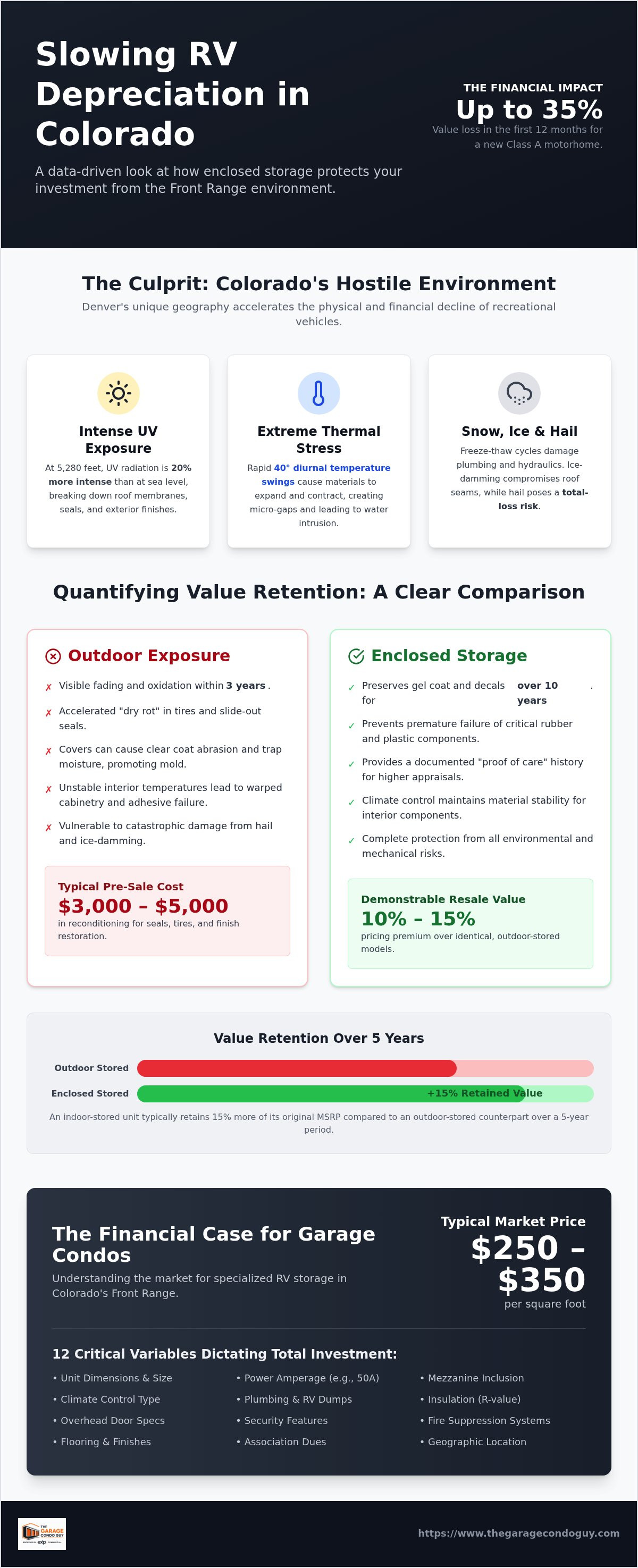
Denver’s geography creates a hostile environment for expensive recreational assets. At an altitude of 5,280 feet, the atmosphere is thinner, resulting in approximately 20% more UV exposure than sea-level locations. This intense radiation doesn't just fade paint; it actively breaks down the molecular bonds in roof membranes and plastic components. Understanding how enclosed storage can slow RV depreciation starts with recognizing that UV damage is a constant, invisible tax on your coach's equity.
Thermal stress is equally destructive. Colorado is famous for 40-degree diurnal temperature swings. These rapid shifts cause fiberglass panels, window seals, and roof seams to expand and contract at different rates. Over time, this cycle creates microscopic gaps that allow water to penetrate the structure. While many owners attempt to use soft RV covers, these often cause more harm. Wind-driven friction turns the cover into sandpaper against your clear coat, while trapped moisture promotes mold growth in areas you can't see.
Colorado Climate Variables
Our winter weather introduces specific mechanical risks. Rapid freeze-thaw cycles can wreak havoc on hydraulic leveling systems and exterior plumbing lines if any moisture is present. Ice-damming on the roof is another major concern. As snow melts and refreezes, it expands in seams, compromising the seal. Additionally, the Front Range is a high-risk zone for hail. An enclosed structure provides a definitive shield against storm damage, helping you avoid total-loss insurance claims that permanently tank a vehicle's history report. If you're ready to protect your asset from these variables, it's worth connecting with a local specialist to discuss your options.
Quantifying Value Retention: Enclosed vs. Outdoor Storage
Storage choice is the single most significant factor in long-term asset health. Enclosed storage preserves gel coats and decals for over 10 years. In contrast, outdoor exposure in the Front Range often leads to visible fading and oxidation within just 3 years. This visual degradation directly impacts the appraisal. By preventing "dry rot" in tires and slide-out seals, you can save between $3,000 and $5,000 in pre-sale reconditioning costs alone. This is a primary example of how enclosed storage can slow RV depreciation by eliminating deferred maintenance before you hit the market.
Interior environments matter just as much. Consistent climate control prevents the off-gassing of adhesives and the warping of wood cabinetry. Maintaining a steady 50 to 70 degree environment ensures materials remain stable. Over a 5-year period, an indoor-stored unit typically retains 15% more of its original MSRP compared to an outdoor-stored counterpart. The difference isn't just cosmetic. It's structural. A coach that hasn't endured 100-degree summers and sub-zero winters simply performs better during a pre-purchase inspection.
The 'Indoor-Stored' Appraisal Premium
Professional appraisers and dealers prioritize vehicles with documented storage in climate-controlled environments. These units often see a reduced "Days on Market" (DOM). Buyers pay a premium for a "turn-key" asset. When you can prove your RV lived in a stable environment, you eliminate the buyer's fear of hidden water damage or mechanical failure. If you want to maximize your resale outcome, contact our advisory team to explore available units that fit your specific coach.
The Financial Case for Colorado Garage Condos
In the Front Range, garage condos generally trade between $250 and $350 per square foot. This pricing varies significantly based on the specific facility and the level of interior finish. Understanding how enclosed storage can slow RV depreciation is only half the financial equation; the other half is the underlying real estate. By owning the unit, you're effectively hedging against your coach's loss in value. While the RV is a depreciating asset, the specialized industrial real estate in Colorado has historically shown strong appreciation. Investing in a climate-controlled unit is a proven way to demonstrate how enclosed storage can slow RV depreciation to future buyers while building property equity.
Twelve specific variables impact the final purchase price of these units:
Square footage
Mezzanine inclusion
Power amperage (30/50 amp)
Climate control type
Floor coatings
Plumbing
Security tech
HOA fees
Location, such as Longmont vs. Commerce City
Ceiling height
Door width
Fire suppression systems
Ownership vs. Rental Financials
Traditional storage facilities are subject to consistent rent-inflation that erodes your long-term budget. Ownership provides a fixed-cost solution that eliminates these annual price hikes. Beyond cost stability, owners benefit from potential tax implications and the high resale demand for specialized industrial assets in Denver. For a deep dive into specific locations and market trends, review our RV storage condos front range guide. This ownership model ensures your storage costs aren't a sunk expense but an investment in a tangible property asset that serves your lifestyle.
Protecting Your RV Equity in the Front Range
Colorado's climate is the primary catalyst for rapid value loss in luxury coaches. High-altitude UV rays and extreme thermal cycles don't just age the exterior; they compromise the complex house systems that buyers prioritize during appraisal. Maintaining a consistent, protected environment ensures your vehicle remains a turn-key asset rather than a project for the next owner. This specialized approach clearly demonstrates how enclosed storage can slow RV depreciation by eliminating the environmental wear that typical outdoor lots cannot prevent.
We provide specialized buyer representation for niche industrial assets and maintain deep knowledge of Front Range resale trends. If you need expertise in Denver garage condos, our team is ready to guide your search based on current market data. Contact The Garage Condo Guy to find your Front Range RV storage solution today. Securing a climate-controlled unit is the most effective way to stabilize your long-term maintenance overhead and maximize your eventual resale value.
Frequently Asked Questions
How much does an RV depreciate if stored outdoors in Colorado?
An RV stored outdoors in Colorado can lose approximately 45% of its original value after five years. While initial first-year drops are standard, the Front Range's extreme weather accelerates the decline in later years. Constant exposure to hail, heavy snow, and high UV levels creates visible wear that professional appraisers use to justify lower trade-in offers compared to vehicles maintained in protective environments.
Does climate-controlled storage actually prevent RV roof leaks?
Enclosed storage prevents roof leaks by shielding the vehicle from ice-damming and the stress of 40-degree diurnal temperature swings. In a climate-controlled unit, the sealant and roof membranes don't experience the constant expansion and contraction that leads to microscopic cracks. This stability is a core reason why enclosed storage can slow RV depreciation, as it maintains a watertight seal that prevents expensive interior rot.
What is the price range for a garage condo in the Denver area?
Denver area garage condos typically range from $250 to $350 per square foot. Total costs are influenced by twelve specific variables: location, square footage, power amperage, climate control, mezzanines, floor coatings, plumbing, security tech, HOA fees, ceiling height, door width, and fire suppression systems. These prices reflect the specialized infrastructure required for preserving luxury coaches in Colorado’s demanding environment.
Is a garage condo a better investment than traditional self-storage?
Owning a garage condo is a strategic hedge because the property is an appreciating real estate asset. Traditional self-storage is an escalating monthly expense with no equity potential. By shifting from a rental model to ownership, you gain control over your storage environment while benefiting from the high demand for industrial space in Denver. It's a method to offset the vehicle's loss in value with the property's market growth.
How does high altitude affect RV tire life and depreciation?
The 20% increase in UV intensity at Denver’s altitude causes tire rubber to oxidize and crack much faster than at sea level. This "dry rot" often forces owners to replace tires based on age rather than tread wear, which can cost $3,000 to $5,000. Using how enclosed storage can slow RV depreciation is effective here because it blocks the radiation that degrades sidewalls, ensuring the chassis remains market-ready.


Comments