RV Storage Condos Front Range: The 2026 Ownership & Location Guide
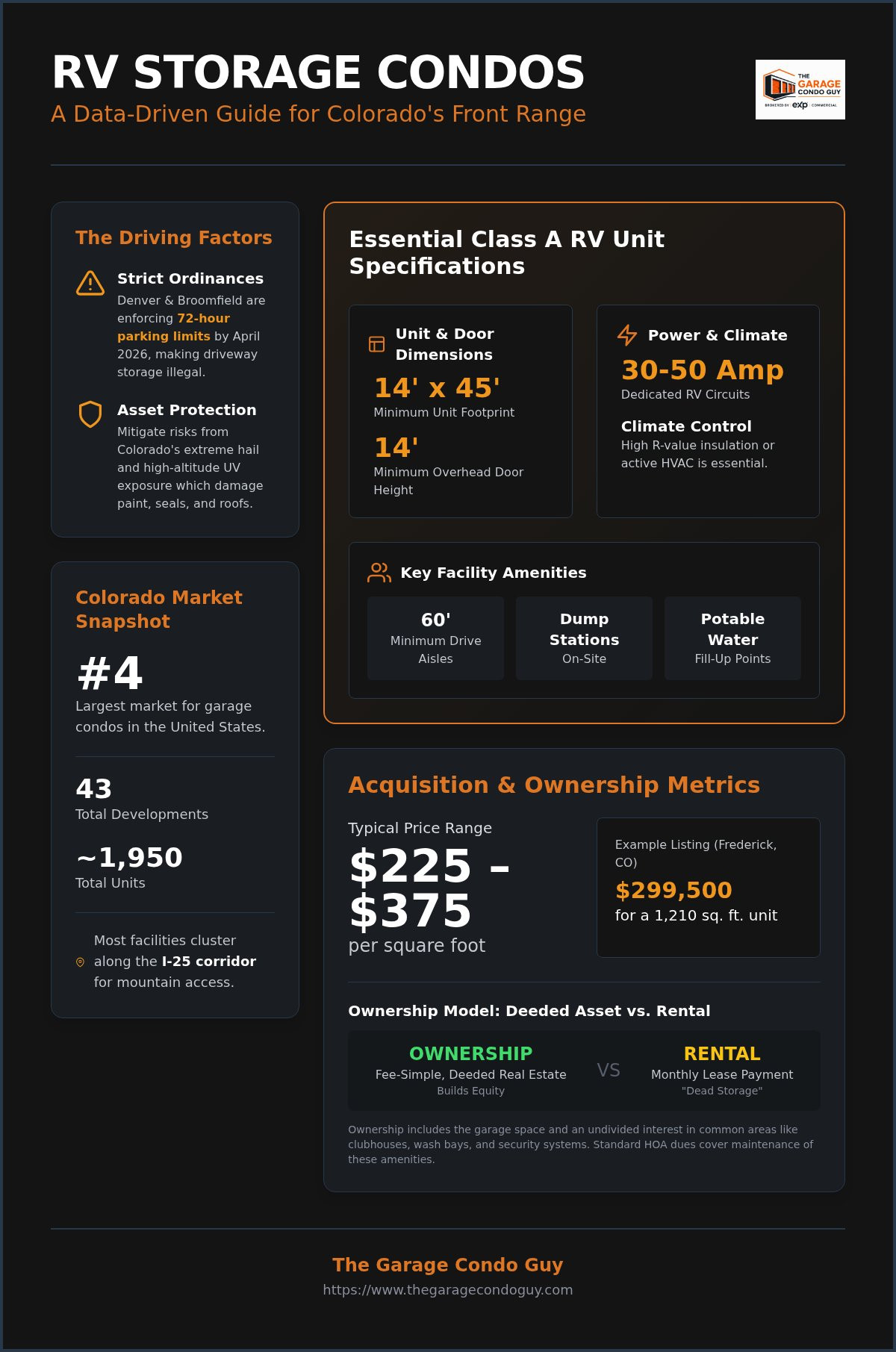
Colorado currently ranks as the fourth-largest market for garage condos in the United States. Despite this, finding a permanent home for your rig is getting harder. With Denver and Broomfield strictly enforcing 72-hour parking limits as of April 2026, the era of driveway storage is ending. You likely recognize that a standard rental lot doesn't offer the security or power your vehicle requires. Finding RV storage condos front range isn't just about avoiding a ticket. It's about protecting a significant asset from Colorado's extreme hail and UV exposure.
We've compiled the most recent data to help you evaluate this specialized market. This guide delivers a transparent breakdown of unit features, current HOA dues, and location-specific availability. You'll see exact pricing examples, such as 1,210 square foot units in Frederick listed at $299,500. We also analyze the 2026 supply gap and the amenities like 50-amp power and climate control that define these facilities. Here is a factual overview of how to secure a private, equity-building space for your RV.
Table of Contents
The Growing Demand for RV Storage Condos on the Front Range
An RV storage condo is a fee-simple, deeded real estate asset. Unlike traditional rental units, you own the garage space and an undivided interest in the common areas. This ownership model has gained momentum as owners seek more than "dead storage." They want specialized environments for high-value rigs. For many, understanding what is a recreational vehicle in the context of modern Class A motorhomes explains why basic outdoor lots no longer suffice. Current market data indicates that prices for these units typically fall between $225 and $375 per square foot.
The shift toward lifestyle communities is evident in new developments across the region. These facilities often include clubhouses, wash bays, and dump stations. Owners aren't just storing a vehicle; they're joining a community of like-minded enthusiasts who value property ownership over monthly rental receipts. This transition reflects a broader trend where the garage becomes an extension of the home rather than a secondary thought.
Zoning Restrictions and HOA Compliance
Municipalities across the Front Range are tightening the screws. Denver and Broomfield now enforce 72-hour limits for on-street parking. Boulder neighborhoods often have strict HOA covenants that prohibit even temporary driveway staging. RV storage condos front range offer a permanent, legal solution. You bypass the risk of municipal fines and neighbor disputes while maintaining 24/7 access to your vehicle. It's a strategic move for those in restricted residential zones who require immediate access to their equipment.
Asset Protection: Weather and Security
Colorado weather is famously volatile. Between May and August, hail damage remains the primary insurance claim for local RV owners. A single severe storm can lead to five-figure repair bills or a total loss. Beyond precipitation, extreme UV exposure at 5,280 feet degrades seals and paint finishes rapidly. RV storage condos front range provide a climate-controlled environment that mitigates these risks. These facilities also feature gated perimeters and site-wide surveillance. You aren't just buying a box; you're securing a fortified home for a six-figure asset.
Essential Features of a Class A RV Storage Unit
Modern Class A motorhomes require specific technical tolerances that standard commercial warehouses rarely provide. For RV storage condos front range, the industry baseline for a single unit is 14'x45'. This footprint accommodates the length of most luxury coaches while leaving room for slide-outs and maneuverability. Equally critical is the overhead door height. A 14-foot door is non-negotiable. Anything lower risks catastrophic damage to roof-mounted AC units and satellite arrays.
Utility integration is another differentiator in the high-end garage condo trend. Units must feature dedicated 30-amp or 50-amp circuits to maintain battery health and run internal systems during storage. To combat Colorado’s 100°F summer peaks, high-level R-value insulation or active climate control is essential. This prevents interior temperatures from reaching levels that can degrade sensitive adhesives and electronics.
Interior Specifications and Customization
Ownership allows for structural and aesthetic upgrades that rentals prohibit. Many owners install mezzanines to create lounge areas or additional parts storage without sacrificing floor space. High-quality units often include industrial-grade epoxy floor coatings for chemical resistance and sand/oil interceptors to manage drainage safely. These features ensure the space remains clean and compliant with local environmental regulations.
Facility Amenities for RV Owners
The site layout is as important as the unit itself. RV storage condos front range must provide wide drive aisles, typically a 60-foot minimum, to allow for the massive turning radius of a 45-foot rig. Essential facility-wide amenities include on-site dump stations and potable water fill-up points. These features allow you to prep or winterize your vehicle without leaving the property. If you need help identifying units with these specific technical specs, reach out for a detailed inventory list.
Regional Roundup: RV Condo Opportunities from Denver to Longmont
Colorado currently hosts 43 developments with approximately 1,950 total units. Most RV storage condos front range cluster along the I-25 corridor for rapid mountain access. Proximity to major arteries like I-70 and I-76 remains the primary driver for site selection. While central Denver locations are scarce, the surrounding municipalities have seen a surge in purpose-built facilities designed for oversized vehicles.
Spotlight on Longmont and Northern Front Range
Longmont has emerged as a premier hub for high-end projects. Its central location between Denver and Fort Collins attracts luxury hobbyists who require specialized technical specs. In nearby Frederick, August 2026 market data shows a 1,450 square foot unit listed for $369,500. These northern facilities often feature the most modern amenities, including expansive turning radii and high-efficiency insulation. You can explore Longmont garage condo opportunities to see current availability in this high-growth sector.
Denver and Commerce City Corridor
The Denver Metro area faces the highest demand but the most limited supply. This scarcity has pushed new development toward Commerce City and Dacono. These emerging markets offer larger footprints and often more competitive pricing than central urban cores. Commerce City serves a dual market of small business owners and RV enthusiasts who need immediate access to the I-76 corridor. To find active units in the metropolitan area, view Denver area garage condo listings.
Your location strategy should account for specific travel patterns. Units in the northern Front Range are ideal for those heading toward Estes Park or Wyoming. If you frequent the Western Slope, focus on the West Denver or Golden corridors to minimize transit time. For a personalized search of available units across these specific regions, contact me for a market consultation.
The Acquisition Process: Pricing and Evaluation Metrics
Acquiring RV storage condos front range requires a shift from residential valuation methods to commercial metrics. Current 2026 data shows pricing ranges between $225 and $375 per square foot. These figures reflect the construction costs of Class A features like 14-foot doors and industrial-grade insulation. Beyond the initial purchase price, you'll encounter monthly COA dues. These fees cover common area maintenance, high-definition security surveillance, and master insurance policies. It's a structured ownership model where costs are transparent and shared across the association.
Financing options vary based on your intended use. Conventional commercial lending is common for hobbyists, while business owners might leverage SBA 504 loans for units used in their operations. Resale trends in the Front Range niche show consistent appreciation. Colorado’s rank as the #4 market for these assets sustains demand even as new inventory enters the pipeline. It's a specialized market where scarcity in the Denver Metro keeps valuations high.
Calculating Total Cost of Ownership
Don't overlook the operational variables. Property taxes are assessed at commercial rates, which differ from residential assessments. You'll also manage metered electricity costs for 50-amp battery maintenance and seasonal heating. It’s essential to review the specific utility sub-metering policies outlined in the facility’s declarations before closing. These costs are predictable but must be factored into your annual budget to understand the full carry cost.
The Role of Specialized Buyer Representation
General residential agents rarely understand the nuances of industrial condo declarations or specific land-use restrictions. A specialist tracks off-market units and identifies upcoming development phases that aren't yet public. They ensure the unit's technical specs align with your specific rig's requirements. Understanding why you need a garage condo specialist is critical for navigating these complex contracts. If you're ready to evaluate current opportunities, contact me for a market analysis.
Securing Your Position in the Front Range Market
The shift toward deeded ownership is a direct response to increasing municipal pressure and the need for climate-controlled asset protection. You now have the data on technical specs, regional availability, and current valuation metrics for RV storage condos front range. These properties offer a permanent solution to restrictive HOAs while providing the high-voltage power and wide drive aisles that standard storage lots lack. It's a strategic move for owners who prioritize security and equity.
Entering this market requires a specialized eye for unit declarations and upcoming development phases. If you're ready to move beyond rental limitations, I provide specialized buyer representation with an exclusive focus on these assets. My deep market knowledge helps you identify off-market units that fit your specific rig's dimensions. Contact The Garage Condo Guy for a personalized Front Range search to find your unit today. Your vehicle deserves a home as secure as your own.
Frequently Asked Questions
Can I live in my RV storage condo on the Front Range?
No, you can't live in your unit. Front Range municipalities zone these facilities for commercial or industrial use, which strictly prohibits residential occupancy. While most developments offer amenities like clubhouses or luxury lounges, they lack the legal certificates of occupancy required for overnight stays. Violating these zoning laws can result in municipal fines or the loss of your use privileges within the owners' association.
What are the typical dimensions for an RV garage condo?
Standard units typically start at 14'x45' to accommodate modern Class A motorhomes. For owners with larger rigs or multiple vehicles, depths often extend to 60 or 75 feet in specialized developments. It’s essential that your unit includes a 14-foot overhead door clearance. This height ensures that roof-mounted air conditioners or satellite dishes enter safely without risk of impact damage.
How do property taxes work for storage condos in Colorado?
Property taxes for RV storage condos front range are assessed at the Colorado commercial rate rather than the residential rate. This percentage is higher than what you pay on your primary home. Taxes are calculated based on the county assessor's valuation of your specific unit and a portion of the common area. Factor these annual assessments into your total cost of ownership alongside COA dues.
Is climate control necessary for RV storage in the Denver area?
Climate control is essential for protecting sensitive components within RV storage condos front range. Denver area summers often see temperatures exceed 100°F, which can degrade adhesives and electronics inside your rig. Similarly, sub-zero winter temperatures can damage plumbing systems if the vehicle isn't fully winterized. Heated units or high-level R-value insulation provide a stable environment that extends the lifespan of your vehicle’s interior finishes.
What is the difference between a storage condo and traditional self-storage?
The primary difference is the ownership model. Traditional self-storage involves a monthly rental agreement for a space you'll never own. A storage condo is a deeded, fee-simple real estate asset that you can sell or lease. Additionally, condos offer specialized utilities like 50-amp power and dump stations that standard rental lots lack. This model allows you to customize the interior while building equity.


Comments