Alternatives to Public Storage in Denver: Garages, Sheds, and Basements
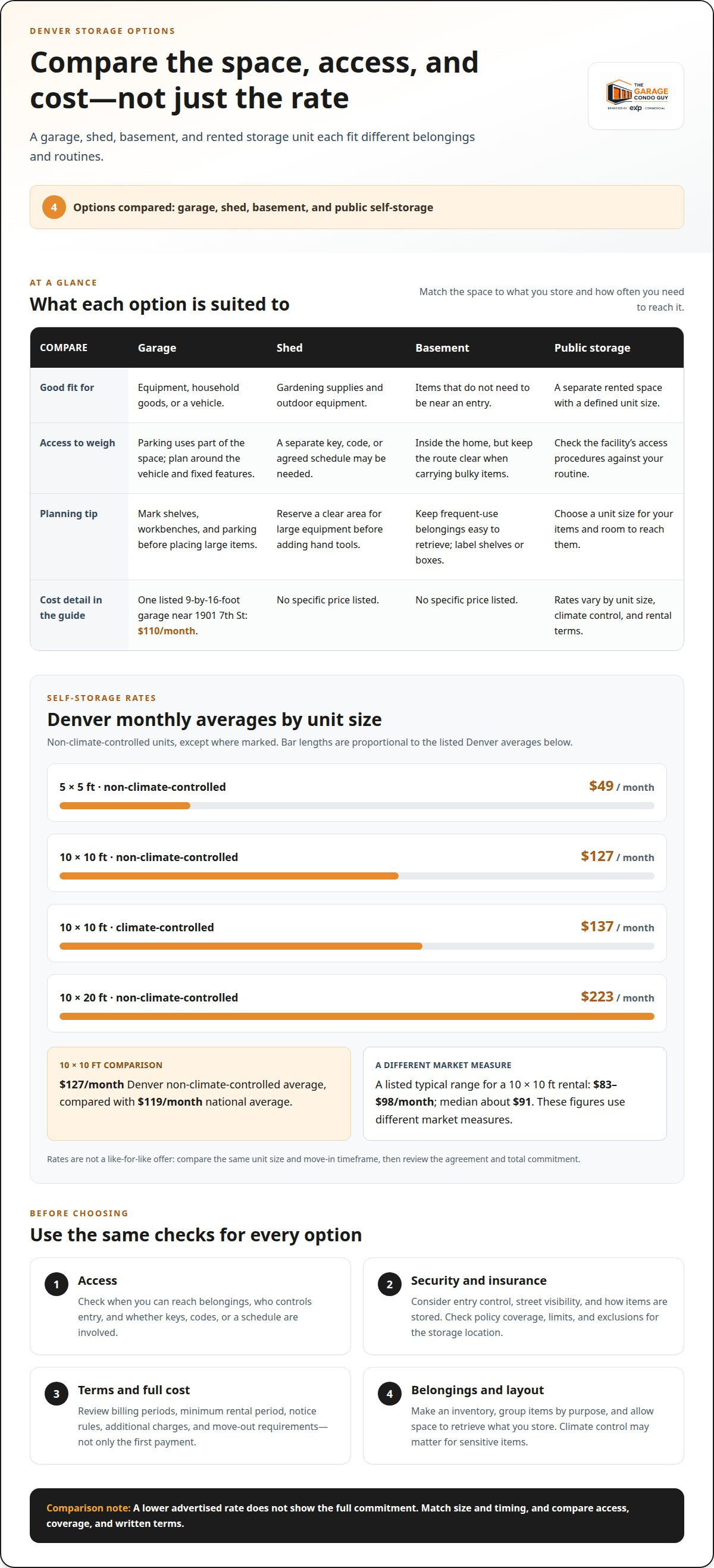
A self-storage unit isn’t the only option: alternatives to renting at a public storage facility in Denver include a garage, shed, or basement. One listed 9-by-16-foot garage near 1901 7th St costs $110 per month. Each option has different trade-offs in access, available space, and ongoing costs.
Compare more than the advertised monthly rate when looking for alternatives to renting at a public storage facility in Denver. Rental terms, access, and whether a space suits the items you need to store all affect the fit. This guide compares public-storage fees and contracts with the practical considerations of using a garage, shed, or basement. You’ll learn what to weigh when deciding whether rented storage or a space you already own or can access better meets your needs, and when a garage condo is a different kind of option.
Table of Contents
Storage alternatives including garages, sheds, and basements
Choose a space based on what you’ll store and how you’ll use it. A garage may accommodate equipment, household goods, or a vehicle. A shed often suits outdoor gear, while a basement can hold items that don’t need to be near an entry. Group belongings by purpose, such as sports equipment, tools, and archived paperwork, to see which space fits each group.
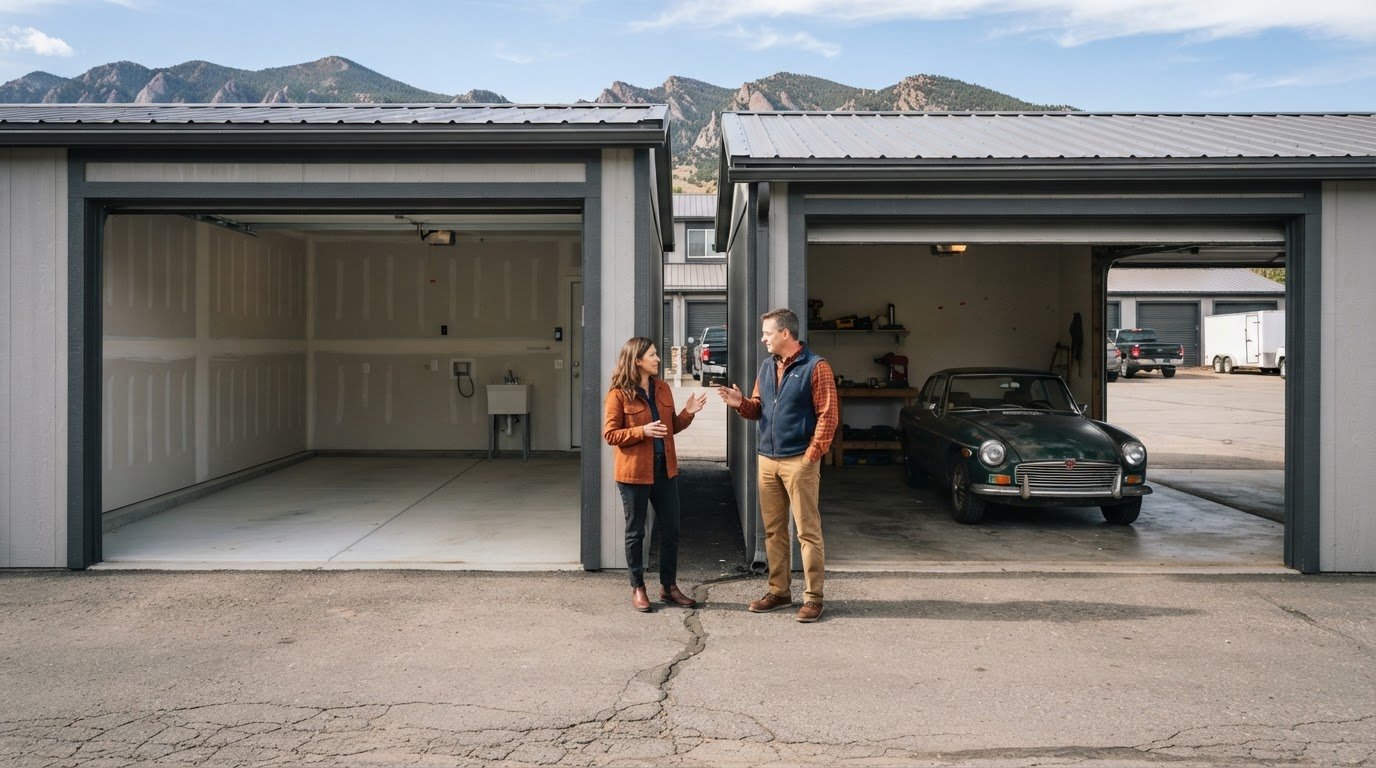
For a garage, sketch the floor and mark fixed features such as shelves, workbenches, and the vehicle’s parking area. Then plan where large items will go. A bicycle rack and lawn mower, for example, can share a wall only if both remain easy to remove. Account for the garage’s primary use: a space used for parking has less storage area than one dedicated to belongings.
A shed can keep gardening supplies and outdoor equipment together. Group items by task, such as planting tools, hoses, and patio accessories, to keep seasonal gear organized. A shed may not suit household furniture that needs frequent rearranging. Reserve a clear area for larger equipment, such as a mower, before filling the remaining space with hand tools.
In a basement, arrange belongings according to how often you’ll retrieve them. Keep archived tax folders or keepsakes separate from items used for weekly hobbies. A simple shelf label, such as “camping gear,” makes a specific box easier to find. Keep the route to the storage area clear when carrying bulky items downstairs.
Before moving anything, make an inventory and assign each group to a space. A Denver household might keep gardening supplies in a shed, seasonal decorations in a basement, and a vehicle in the garage. This makes it easier to spot when one space is being asked to serve too many purposes. These alternatives to renting at a public storage facility in Denver work best when the plan suits the belongings, the layout, and your household routine.
How do Denver storage alternatives compare for access, security, insurance, and minimum rental terms?
Access depends on who controls the door and when you can reach your belongings. A basement inside your home offers direct access, while a detached garage or shed may require a separate key, code, or agreed schedule. Tools used every weekend need different access arrangements from holiday decorations retrieved once a year. Compare a self-storage facility’s access procedures with your actual routine.
Security also varies by location and setup. A locked garage, secured basement door, and shed latch provide different levels of separation from everyday activity. Consider who can enter the property, whether the space is visible from the street, and how items are stored. Keep small valuables out of sight and household goods in sturdy, closed containers. No storage arrangement eliminates every risk.
Compare insurance separately. Homeowners or renters policies and a storage agreement may cover belongings differently. Check where items are stored, which types of loss are covered, and whether limits or exclusions apply. Make an item list and take photographs before moving boxes, including electronics, furniture, and tools. Then review the policy language for those belongings and their storage location.
Minimum rental terms matter most when your storage need has a clear end date. A facility agreement may specify billing periods, notice rules, and move-out steps. A private garage or shed arrangement may have different written terms, while basement storage shared with a household may depend on a direct agreement. If storage is needed during a renovation, compare the full commitment, not just the first payment. Put the start date, end conditions, access terms, and responsibility for keys in writing.
Use the same checklist for each option: access schedule, entry control, coverage, billing period, and move-out requirements. If a garage condo is part of your comparison, the Colorado garage condo buyers’ guide explains that ownership choice separately from short-term storage arrangements.
Self storage
A Denver self-storage facility offers a separate, rented space with a defined unit size. In September 2026, the average monthly street rate for a non-climate-controlled 10-by-10-foot unit was $127. The comparable national average was $119 per month. A typical market range collected on November 4, 2026, for a 10-by-10-foot rental was $83 to $98 monthly, with a median of about $91. These figures use different market measures, so compare actual offers using the same size and move-in timeframe.
Smaller and larger spaces have different rates. In September 2026, a non-climate-controlled 5-by-5-foot unit averaged $49 per month in Denver. A 10-by-20-foot unit averaged $223 monthly. These examples help frame the cost of extra floor space, but the best fit depends on your belongings and how they stack. Measure large items first, then allow room for access rather than filling every corner.
Climate control changes the comparison. Denver’s average monthly street rate for a climate-controlled 10-by-10-foot unit was $137 in September 2026, compared with $127 for a non-climate-controlled unit. Controlled storage can help protect electronics, documents, wood furniture, and upholstered items sensitive to heat, cold, or humidity. Decide based on what you’re storing, not just the difference in listed rates.
Compare the full offer for your intended move-in date. Promotions can change, so match unit size and timing across options. Review the rental agreement for billing frequency, minimum rental period, notice requirements, access rules, and additional charges. Treat the advertised rate as only one part of the decision: a lower initial payment may not reflect the total cost for your planned storage period.
Choose a size based on the items you’ll store and the space needed to reach them.
Compare climate-controlled and non-climate-controlled options according to item sensitivity.
Read the agreement for term, notice, access, and charges before committing.
Storage unit
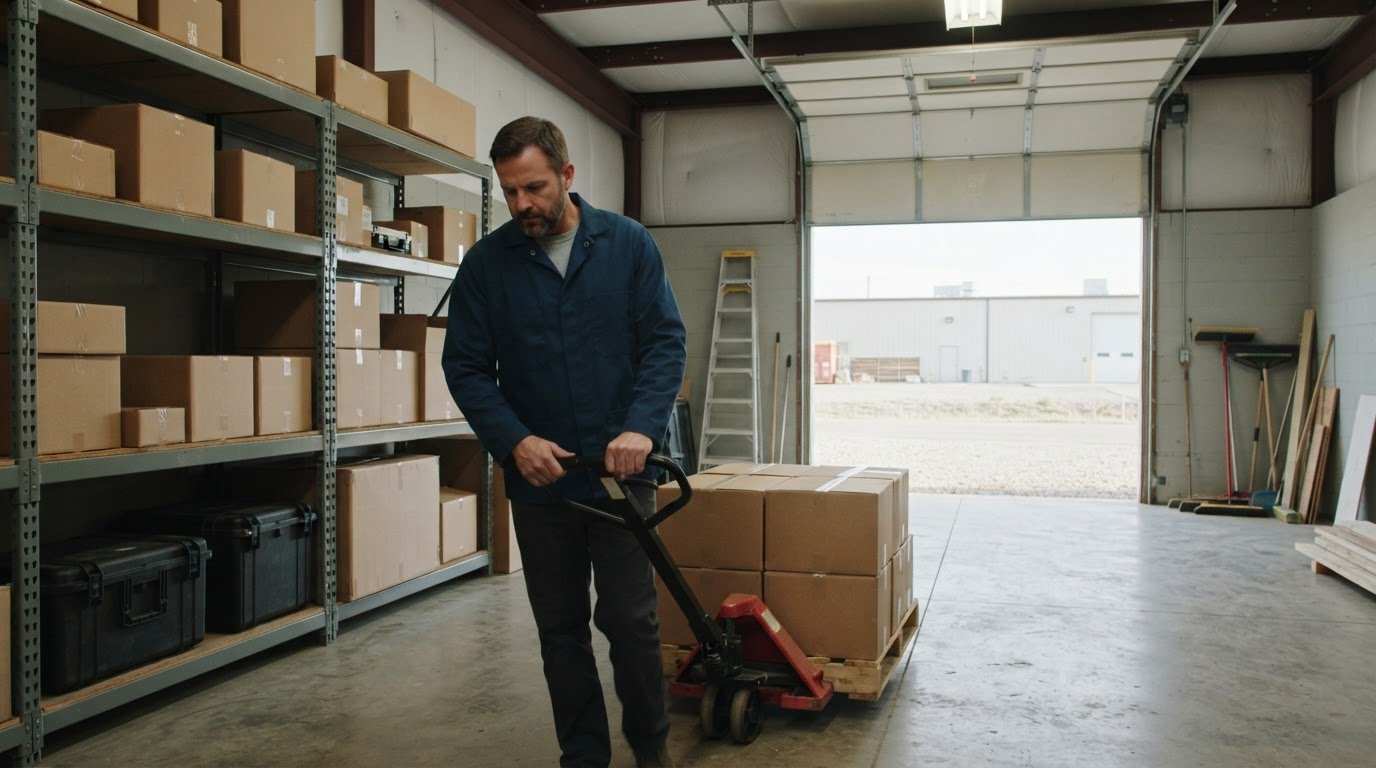
A storage unit’s listed floor area doesn’t show how efficiently your belongings will fit. Loads with similar total volume may need different layouts. Uniform boxes stack neatly, while a sectional sofa, bicycle, and oddly shaped equipment can leave gaps. Start with the largest item, then plan how smaller pieces can fit around it without blocking access.
Sketch the unit as a rectangle and mark items that cannot be stacked. Group furniture by shape and identify which pieces can safely stand upright. A disassembled table may take less floor space than an assembled one, while a mattress needs a position where other belongings won’t compress it. Keep fragile or frequently accessed items easy to reach.
Use these planning checks before choosing a unit:
Separate items that can stack from those needing their own floor area.
Mark a route from the entrance to items you may retrieve later.
Plan where awkward pieces, such as a sofa or bicycle, will sit.
Consider whether shelves or other organizers would reduce usable floor area.
Loading order affects the size you need. Belongings that will remain untouched can go toward the back; items needed sooner should stay near the entrance. When moving, pack by room and label boxes by destination. This reduces searching and helps keep walkways clear. Reassess the layout if your load changes before move-in.
If you need space for a vehicle or equipment, compare the actual opening and interior clearance with the item’s dimensions. A Colorado garage condo buyer’s guide explains property-specific measurements and due diligence for this ownership option. For a rented storage unit, focus on the usable layout and access you need. A workable plan matters more than choosing space based on its label.
The Garage Condo Guy: Garage Condo Buyer Representation
The Garage Condo Guy provides Garage Condo Buyer Representation for people evaluating a garage condo purchase. Buyer representation can help locate properties, assess features, negotiate, and navigate due diligence. For owners preparing to sell, Garage Condo Seller Representation supports the sale process.
Choose the representation that matches your next step: exploring a purchase or planning a sale. Contact The Garage Condo Guy to discuss garage condo buyer or seller representation.
Choose the Next Step That Fits Your Plans
Your next step isn’t necessarily another storage contract. Decide whether your need is temporary, recurring, or tied to a longer-term plan for dedicated space. That distinction changes which questions matter most: how you’ll use the space, how ownership fits your plans, and whether your priority is utility or investment.
Alternatives to renting at a public storage facility in Denver can meet an immediate need for extra capacity, but a garage condo is a property decision. If you’re considering longer-term ownership or investment, weigh how your intended use fits that decision and which trade-offs matter beyond storage convenience. The Garage Condo Guy offers Investment Advisory for Garage Condos to help you assess the investment considerations.
Revisit your plans when your storage timeline, vehicle needs, or workspace priorities change. The right choice should reflect the role the space will play, not only today’s overflow. Explore the Colorado garage condo buyers’ guide as a next step in weighing ownership. A clear purpose makes it easier to move forward with confidence.
Frequently Asked Questions
What are the alternatives to renting a public storage unit in Denver?
Denver residents can use a home basement, detached shed, private garage, or space shared through a peer-to-peer arrangement. The best fit depends on what you’re storing and for how long. A garage may suit bulky sports equipment you retrieve often, while a basement can hold packed boxes during a renovation. For long-term vehicle storage, decide whether you need rental access or are considering ownership.
Where can Denver residents find peer-to-peer storage or garage rental options?
Look for listings in Denver neighborhood groups, community boards, and local classified marketplaces. Search by neighborhood and describe the space you need, such as a locked garage for boxed belongings or room for a motorcycle. Before arranging storage, put the permitted items, access schedule, payment timing, and end date in writing. Clear terms help prevent misunderstandings between the space owner and the person storing belongings.
Can I store belongings in a Denver apartment, garage, or parking space instead of renting a storage unit?
Yes, if the space is available for storage and the property’s rules allow your intended use. An apartment closet can hold a few suitcases, while a garage can accommodate larger household items. A parking space is designed for a vehicle, not automatically for boxes or furniture. Keep belongings within your allotted area, preserve vehicle access, and review your lease, community rules, or written agreement before storing items.

Comments