RV Storage for Rent in Longmont for Short or Long Stays
Short-term RV storage can bridge a gap between trips, while a longer rental can keep a large vehicle off your property between outings. RV storage for rent in Longmont may suit you when the rental term, space, and access match your plans.
It’s reasonable to want a convenient place for your RV without paying for storage longer than necessary. Start with practical details: your vehicle’s dimensions, the weather protection you want, and security features such as cameras or gated entry.
This guide explains when off-site storage may make sense for a short stay or a longer stretch, what to consider when comparing spaces, and how protection and security features can help safeguard your RV. You’ll also see how garage condos differ from storage rentals, so you can understand which option fits your needs.
Table of Contents
Protection from weather and unauthorized access
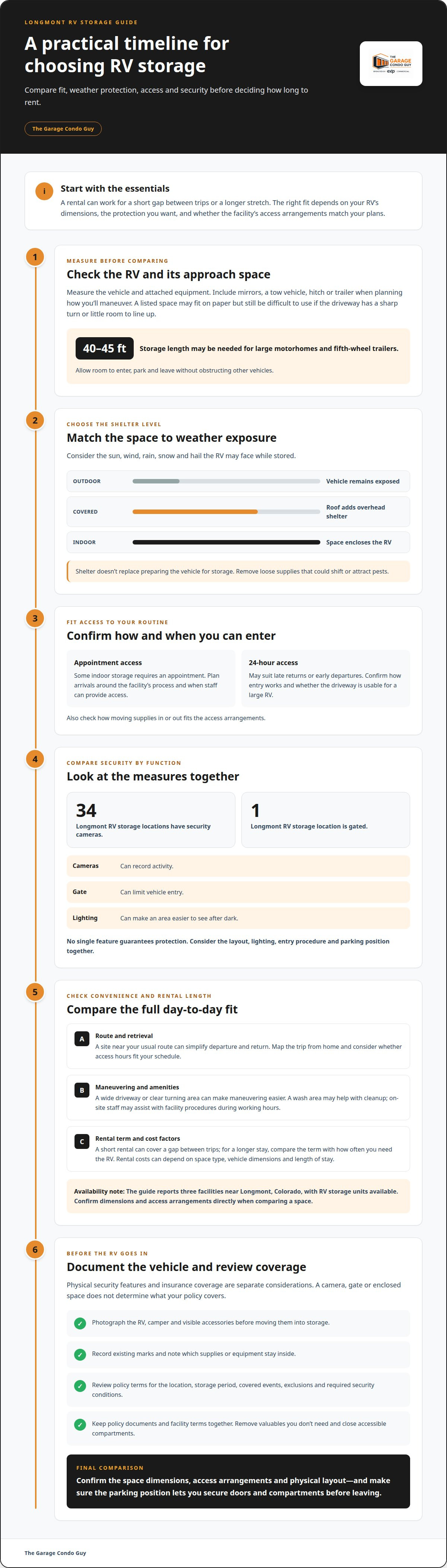
Choose outdoor, covered, or indoor storage based on exposure, access, and your RV’s dimensions. Outdoor parking leaves the vehicle exposed; a roof adds overhead shelter, while indoor storage encloses it. Large motorhomes and fifth-wheel trailers may need 40 to 45 feet of storage length.
When comparing RV storage for rent in Longmont, weigh weather protection against how you use your vehicle. Consider exposure to sun, wind, rain, snow, and hail. Covered parking offers overhead shelter, while indoor space encloses the RV. Neither replaces preparing the vehicle for storage, such as removing loose supplies that could shift or attract pests.
Measure the RV and attached equipment before comparing space. Include mirrors, a tow vehicle, hitch, or trailer when planning how you’ll maneuver. A space may fit on paper but still be difficult to use if the driveway has a sharp turn or little room to line up. Allow enough clearance to enter, park, and leave without obstructing other vehicles.
Access rules affect convenience. Some indoor storage requires an appointment, so plan arrivals around the facility’s process and bring the vehicle when staff can provide access. A facility offering 24-hour access may suit late returns or early departures, but confirm how entry works and whether the driveway remains usable for a large RV. Ask how moving supplies in or out fits those arrangements.
Security features also differ. In Longmont, 34 RV storage locations have security cameras, while one location is gated. Cameras can record activity; a gate can limit vehicle entry, but neither feature alone guarantees protection. Compare the facility layout, lighting, entry procedure, and parking position. Keep valuables and loose supplies organized inside the RV, and choose a spot that lets you secure doors and compartments before leaving.
Three storage facilities near Longmont, Colorado, have RV storage units available. With nearby options limited, prioritize the features that matter most for your routine: shelter from weather, a workable entry process, and room to maneuver. Before choosing, confirm the unit’s dimensions and access arrangements, then consider whether the parking position makes it practical to secure the RV and its compartments whenever you leave.
Reasons to rent off-site RV storage
A rental can free up a residential driveway when a motorhome takes space needed for another vehicle, guests, or household projects. Keeping the RV off-site can make everyday parking easier between trips. For a short gap, a rental avoids paying for a dedicated space once the RV is back in regular use. For a longer stay, compare the rental term with how often you need the vehicle.
Location affects convenience. A facility near your usual route can simplify departure and return, while a distant site adds driving before each trip. Map the route from home and consider when you’ll collect the RV, including whether access hours fit your schedule. If you also store a boat, one facility may make retrieval simpler, provided each space fits the vehicle.
Treat amenities as practical features, not automatic benefits. A wide driveway or clear turning area can make maneuvering a motorhome easier; a wash area may help with cleanup before storage. On-site staff may assist with facility procedures during working hours. Access arrangements, staffing, and amenities each affect convenience differently.
Packing supplies deserve a separate check. Boxes, tape, or protective covers can help organize loose equipment before storing it, but supplies are useful only when they match your packing task. Don’t assume a facility sells them. Rental costs can depend on the space type, vehicle dimensions, and length of stay. If renting seems less suitable for a long stay, the Colorado garage condo buyer’s guide can help you explore ownership as another option.
Security features and protection coverage
Consider physical security separately from insurance. A camera, gate, or enclosed space can affect access and monitoring, but doesn’t determine what your policy covers. Before renting a self-storage space for a camper, review the facility’s security measures and your insurance policy terms.
Compare security features by their function. Cameras may record activity, while controlled entry can limit vehicle access. Lighting can make an area easier to see after dark. No single feature prevents every incident, so consider how the measures work together rather than treating one amenity as complete protection.
Match the type of space to your weather concerns. Outdoor parking leaves the RV exposed; covered parking adds overhead shelter, while indoor storage encloses the vehicle. These are differences in the physical space, not insurance coverage. If you choose covered or indoor storage, make sure there’s room to reach doors, compartments, and stored equipment.
Use this practical review before storing:
Photograph the RV, camper, and visible accessories before moving them into the storage space.
Record existing marks and note which supplies or equipment stay inside.
Read your policy for the location, storage period, covered events, exclusions, and required security conditions.
Keep policy documents and facility terms together, so you can compare the two records quickly.
Allow time to compare options. Facilities only minutes apart may have different access arrangements and security features. Proximity can make visits easier, but it doesn’t tell you what protection a site provides. Review the written terms and physical layout, and consider how you’ll secure the RV each time you leave.
For long-term storage, review the arrangements again if your rental or insurance policy changes. Keep an up-to-date inventory, remove valuables you don’t need, and close accessible compartments. These steps make it easier to document the RV’s condition and storage details.
Which Longmont facilities have 24-hour access, gates, cameras, or on-site staff?
Longmont’s facility counts give a useful starting point: 34 RV storage locations have security cameras, and one location is gated. Those figures describe separate features, not a combined security package. Compare each facility’s access hours, entry process, and on-site staffing before choosing a space.
For 24-hour access, look for that exact term in the facility’s rental details. Then identify how entry works, such as a keypad or another controlled process. Match the hours to your travel pattern. An RV returned late after a trip needs a different access arrangement than one collected during regular daytime hours.
Camera coverage and gated access serve different purposes. Cameras may record activity in monitored areas, while a gate controls vehicle entry. Ask where cameras cover the parking area and whether the route to your space passes through the gate. Local facility data shows gated access at one Longmont facility, making it less common than camera availability.
On-site staffing is a separate consideration. Staff may help with facility procedures during working hours, but their presence doesn’t mean assistance is available around the clock. Read the access information alongside the staffing details, and note any difference between office hours and RV entry hours before planning a pickup.
Use a simple comparison for each Longmont option:
Write down whether RV access is available around the clock or during set hours.
Record whether cameras, a gate, and on-site staff are identified separately.
Compare the entry route and parking location with your motorhome’s size.
Keep the facility’s access terms with your rental documents.
For RV storage for rent in Longmont, these details can matter as much as location. If you’re weighing rented parking against owning a dedicated space, use the Colorado garage condo buyer’s guide to explore the ownership option.
Because Longmont, Colorado, has 1 gated RV storage location, treat that feature as a specific item to verify rather than assuming it comes with camera coverage or staffed entry. Ask the facility to confirm gate operation, your own entry permissions, and what happens if access details change; then compare those terms with your usual pickup and return plans.
The Garage Condo Guy: Garage Condo Buyer Representation
The Garage Condo Guy provides Garage Condo Buyer Representation for those considering ownership instead of recurring RV storage rental. Buying a garage condo differs from renting a storage space: it means evaluating a property purchase against your intended use. Buyer representation can help you assess the purchase and weigh ownership considerations against your storage needs.
If you own a garage condo and are considering a sale, The Garage Condo Guy also provides Garage Condo Seller Representation. Renting is the more direct option when you need temporary RV storage or don’t want to purchase property. The right path depends on whether you need short-term parking or want to own a dedicated space.
Explore the Colorado garage condo buyer’s guide or contact The Garage Condo Guy to discuss buyer representation.
Choose the storage path that fits your next chapter
Your storage needs may change as travel habits or household priorities shift. Renting provides space for a period, while buying involves a property purchase. Consider how often you use your RV, how long you expect to store it, and whether ownership fits your plans.
For RV storage for rent in Longmont, choose an arrangement that fits your current routine. If you’re weighing rental against ownership, the Colorado garage condo buyer’s guide explains the ownership option.
Rental and ownership meet different needs. A temporary storage need may call for a rental; a purchase requires weighing property ownership against your intended use.

Comments