Luxury Car Storage Condos in Denver: Sizes, Doors and Security
For a luxury car storage condo in Denver, usable floor area and clear garage-door opening matter as much as the unit’s listed size. Each condo in the setup covered here has 110v electrical outlets, a dedicated 50-amp electrical circuit and a dedicated 220v electrical circuit. The property also has 24/7 video surveillance, perimeter fencing and an electronic gate.
Those features are a useful starting point, but the right fit depends on your vehicle and how you plan to use the space. A classic, exotic, or race car may need room for access, equipment, or time spent inside the unit, not just parking. This guide explains how to compare layouts and door clearances, assess available electrical service, and weigh security features such as monitored cameras and controlled entry.
Table of Contents
Condo unit sizes and garage doors
These luxury car storage condos feature 110v electrical outlets, a dedicated 50-amp electrical circuit, and a dedicated 220v electrical circuit. For a classic coupe, exotic car, or race car, compare the unit’s usable floor area with the vehicle’s length, width, and room needed to open doors. Measure the garage-door opening, too. A car that fits inside may still be difficult to maneuver through a narrow opening.
Which Denver car storage condos allow owners to work on or customize vehicles? Owners can install custom mezzanines for uses such as an office, lounge, gaming room, or storage. They can also combine adjacent units by removing the interior dividing wall; these options customize the space, while vehicle-work permissions depend on the condo’s rules.
How do car storage condos compare with luxury vehicle storage facilities in Denver? A condo is an owned unit, while a storage facility provides a storage arrangement. Compare the actual space, access, and permitted uses against your plans, such as keeping tools beside a race car or parking an exotic without moving other belongings.
What HOA fees, rules, and restrictions apply to Denver car storage condos? The association’s governing documents set dues and restrictions, including any rules affecting vehicle work or changes to the unit. Review those documents alongside the unit layout before deciding. A mezzanine or removed dividing wall can change how space functions.
What are the purchase prices and monthly costs for Denver car storage condos? Unit size, layout, and location affect purchase price; ongoing costs may include HOA/COA dues, property taxes, insurance, utilities, maintenance, and any land-lease payments. Financing terms also affect your budget. Compare the costs for each specific property, and clarify whether ownership is fee-simple or leasehold, since a land lease can continue after the unit is paid off.
Where are Denver-area car storage condos located, and how far are they from downtown? Locations and travel times depend on the property address and route. Use the Colorado garage condo buyer’s guide from The Garage Condo Guy to explore the market, then compare each address with your regular Denver destinations. For zoning, resale, and HOA-finance risks, examine permitted uses, recent comparable sales, association budgets, and planned assessments before buying.
Gated and monitored security
Garage Den condos combine 24/7 video surveillance with perimeter fencing and an electronic gate controlling access. These features create distinct security layers: fencing marks the boundary, the gate controls entry, and cameras monitor activity. They describe site safeguards, not a guarantee against every risk. For a classic car, the practical question is how access works during visits, deliveries, or vehicle loading.
Assess the approach to the property as well as the unit itself. Note where the gate is, how you reach the unit after entering, and whether shared drive aisles leave enough room to maneuver. If you have a low-clearance exotic or race car, consider the route into the unit and any tight turns. These observations help you evaluate daily access rather than judging security by a single feature.
Video surveillance can support awareness of activity across the complex, while a gate and perimeter fence control physical access. They serve different purposes. A buyer should understand how each feature relates to the unit’s location and regular routines. For example, a unit near a shared drive may involve more vehicle movement than one farther from that route. Think through your own arrival, departure, and guest access needs.
During a property visit, use a simple walkthrough:
Follow the vehicle route from the entrance gate to the unit.
Observe how the perimeter fence and gate shape site access.
Consider where you would safely pause while opening or entering the unit.
Picture a delivery or guest arriving while you’re handling your car.
These steps connect security features to real use, whether you store a collectible coupe or a track-focused car. The Colorado garage condo buyer’s guide can help you compare properties with access and security in mind.
Storage for classic, exotic, and race cars
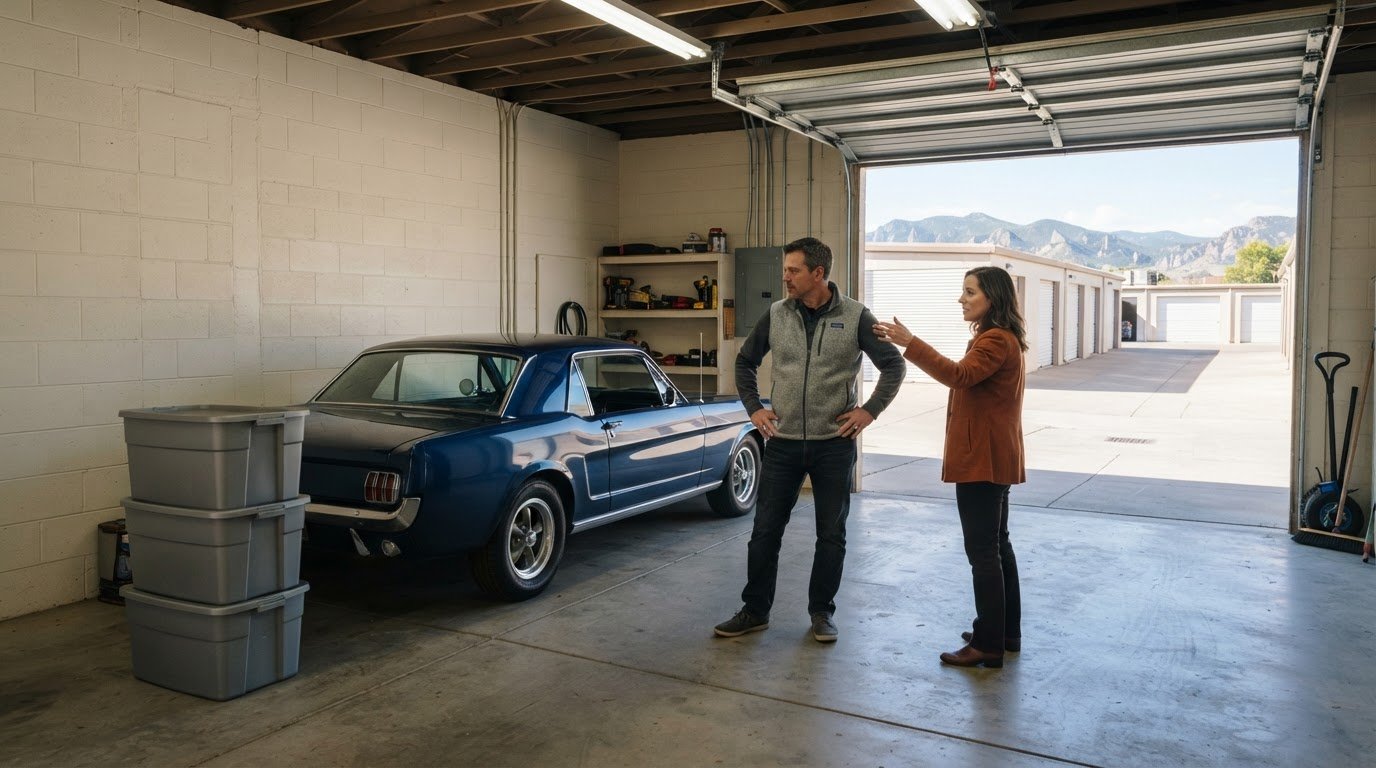
A classic coupe, a low-slung exotic, and a race car have different storage needs. Measure each vehicle, including mirrors, wings, and rooftop equipment, then compare those dimensions with the unit’s interior and door opening. Check the clear height, too, and map the space needed to enter, exit, and reach the car without moving nearby items. A vehicle that fits on paper may leave little room to work around it.
For a classic car, consider how you’ll use the condo between drives. A tool chest, spare wheels, or detailing supplies can reduce clear floor space, so keep a route open to the driver’s door and the areas you inspect most often. For an exotic, check approach angles and turning room at the unit entrance. A low front end can make the route into the space just as important as the interior dimensions.
A race car may arrive with equipment that changes the layout: tires, jack stands, or track gear. Sketch the car’s position first, then place those items around it. The Garage Den condos have 110v outlets, a dedicated 50-amp circuit, and a dedicated 220v circuit. Match any planned equipment to its power needs; the listed circuits alone don’t establish compatibility with every tool.
Measure the car’s full width with mirrors and accessories included.
Mark the door swing and a clear path to the driver’s side.
List equipment, then assign each item a place beside the vehicle.
For multiple vehicles, assess each one separately before choosing a layout. A classic roadster and a track-prepared car may need different access routes and equipment zones. Draw those routes on a simple floor plan. If a unit feels tight, Garage Den owners can combine adjacent units by removing the interior dividing wall. Check condo rules for permitted vehicle activities, then compare the space against your actual storage routine.
What luxury car storage condos are available in Denver and nearby areas?
Denver-area options include garage condos in Denver, Commerce City, and Longmont. Those locations give buyers a practical starting point, but a city name alone doesn’t identify a unit’s layout, access, or ownership terms. Compare individual properties by drive route, unit configuration, and how often you’ll visit. A downtown-based owner may weigh travel differently from someone who regularly drives north or northeast.
A garage condo offers a different ownership structure from storing a vehicle at a facility: you own an individual unit within a shared development. The fit depends on your intended use. One owner may need parking for a single classic car, while another may want space for a vehicle and equipment. Compare usable area, door dimensions, access, and permitted uses with your specific plans.
Build a shortlist by location, then assess each property. Note the address and usual route from home, work, or a preferred driving destination. Next, compare the unit’s dimensions, garage-door opening, available electrical service, and HOA/COA rules. Door sizes and utilities vary by community, so verify the specifications for each unit. A condo that suits a weekend roadster may not work for a race car and its related gear. Location and layout both matter.
Nearby communities can broaden your search without making their locations interchangeable. Commerce City and Longmont, for example, are distinct choices within the Denver-area search. Consider the route and drive time to each property, then weigh them against the unit’s features. Do not choose from a map pin alone; an in-person visit shows how the entrance, drive aisles, and unit work together.
Use the Colorado garage condo buyer’s guide to compare Denver-area options and focus your search on location, ownership structure, and vehicle fit.
Denver-area car storage condos are located in Denver, Commerce City, and Longmont. How far they are from downtown depends on the specific property and route.
The Garage Condo Guy: Garage Condo Buyer Representation
The Garage Condo Guy provides Garage Condo Buyer Representation for people comparing Colorado properties, including options in Denver and across the Front Range. If you’re weighing layout, vehicle access, location, and ownership details, buyer representation can help bring those factors together during a purchase. It is a useful next step when you have defined your priorities and want guidance evaluating garage condo options and the transaction.
For owners preparing to sell, The Garage Condo Guy also provides Garage Condo Seller Representation. The right service depends on whether you’re buying or selling and on the decisions involved in that transaction.
Explore the Colorado garage condo buyer’s guide, or contact The Garage Condo Guy to discuss buyer representation for your search.
Choose a Condo That Fits Your Next Chapter
Before pursuing a property, define whether you’re buying for personal storage, permitted workspace, or investment. That purpose helps identify which layouts and locations warrant closer review. A luxury car storage condo in Denver should fit your intended use and ownership plans, not just appear suitable during a walkthrough. Verify permitted uses in the HOA/COA documents and local zoning.
If investment potential is part of your decision, The Garage Condo Guy offers Investment Advisory for Garage Condos. Consider how your intended use, ownership goals, and property selection align before proceeding.
Review the Colorado garage condo buyer’s guide for information to help assess your Denver-area options.
Frequently Asked Questions
What unit sizes, vehicle capacities, and amenities do Denver storage condos offer?
Denver-area units vary by community, and vehicle capacity depends on clear dimensions, not floor area alone. Standard doors are typically 12 feet wide, with options from 10 to 18 feet; larger RVs often need 14 feet of height. Most units have heat, and some developments offer clubhouse amenities such as a bathroom, fridge, sink, TV, and lounge chair. Confirm usable clearance and permitted additions for the specific unit.
What security, climate control, and maintenance features are included?
Most units have heat; mini-split HVAC may be added where the HOA allows it. Security and climate features differ by property, so assess the specific unit rather than assuming a standard package. For maintenance planning, inspect the overhead door and opener, electrical system, heating or A/C, drainage, and structure. Review HOA/COA documents to identify insurance responsibilities and planned maintenance obligations.
How can I buy or rent a luxury car storage condo in the Denver area?
Buying starts with selecting a unit, reviewing title and HOA/COA documents, and completing due diligence. The Garage Condo Guy offers Garage Condo Buyer Representation. Cash closings may take 10-14 days; financed purchases may take 30-60 days, depending on the lender. Renting is possible only where community rules allow it. General educational information only: verify property-specific zoning, HOA/COA documents, taxes, financing, and legal requirements before purchase.

Comments