Workshop Rentals in Lakewood for Space and Lease Options
Rent alone won’t tell you whether a workshop fits. When comparing a workshop for rent in Lakewood, look at the space, lease terms, loading access, climate control, power, and security. The right choice depends on your work and what the lease includes.
It’s easy to focus first on square footage or monthly rent. But a space that looks suitable may fall short if deliveries are difficult, the power won’t support your equipment, or the lease doesn’t fit your plans.
This guide explains how to compare Lakewood workshop rentals by size, lease structure, loading access, climate control, power, and security. Use these criteria to focus on the features that matter to your operation before signing.
Table of Contents
What is the average monthly rent for a workshop in Lakewood?
Workshop rent in Lakewood varies by property, so a single average can hide important differences in space and lease terms. To estimate rent, compare current units with similar sizes, access, and permitted uses. Rather than rely on an unsupported dollar figure, focus on comparable listings and the terms they state.
Start by defining what kind of workshop you need. A private work bay, a light-industrial unit, and a studio-style space serve different purposes. A maker using hand tools may need a smaller, simpler setup than a business storing materials and operating larger equipment. Combining these properties into one average would obscure the differences that affect rent.
Build a comparison set of properties suited to similar uses and layouts. For each listing, note the stated area, whether the space is private or shared, and what the advertised rent includes. Keep unlike properties separate. For example, a shared studio with common work areas is not directly comparable to a private unit with dedicated access.
Separate advertised base rent from total monthly occupancy costs. A lease may list additional charges, such as utilities or building expenses. Record these only when the listing or lease specifies them. If a cost is not included in the advertised amount, don’t assume it is zero. This prevents a low headline rent from appearing equivalent to a quote that includes more.
Features also affect whether two rents are comparable. Loading access may matter to a workshop receiving bulky materials, while a studio handling small projects may need a different layout. Climate control, electrical service, and security can also affect how useful a space is. Include these features in your comparison, but don’t assume they explain a particular rent without evidence.
Organize the search by distinct types of space instead of blending them into one average:
Maker space: Compare shared access and common work areas with other shared spaces.
Private project bay: Compare dedicated units with similar layouts and access.
Business workshop: Compare spaces suited to the same operational needs and lease structure.
Once comparable listings are gathered, calculate an average from their stated monthly rents only when the properties genuinely match. Keep the sample size and property type consistent, and exclude listings whose rent basis or included charges can’t be compared. If the set mixes shared studios, private bays, and business units, report those categories separately instead of presenting one misleading market-wide figure.
For a workshop for rent in Lakewood, compare similar listings rather than relying on an unsupported citywide rent figure. Match each space to its intended use, separate base rent from stated additional charges, and keep different property types in separate groups. That gives you a more useful estimate without treating unlike spaces as equivalent.
What should I check in a Lakewood workshop lease before signing?
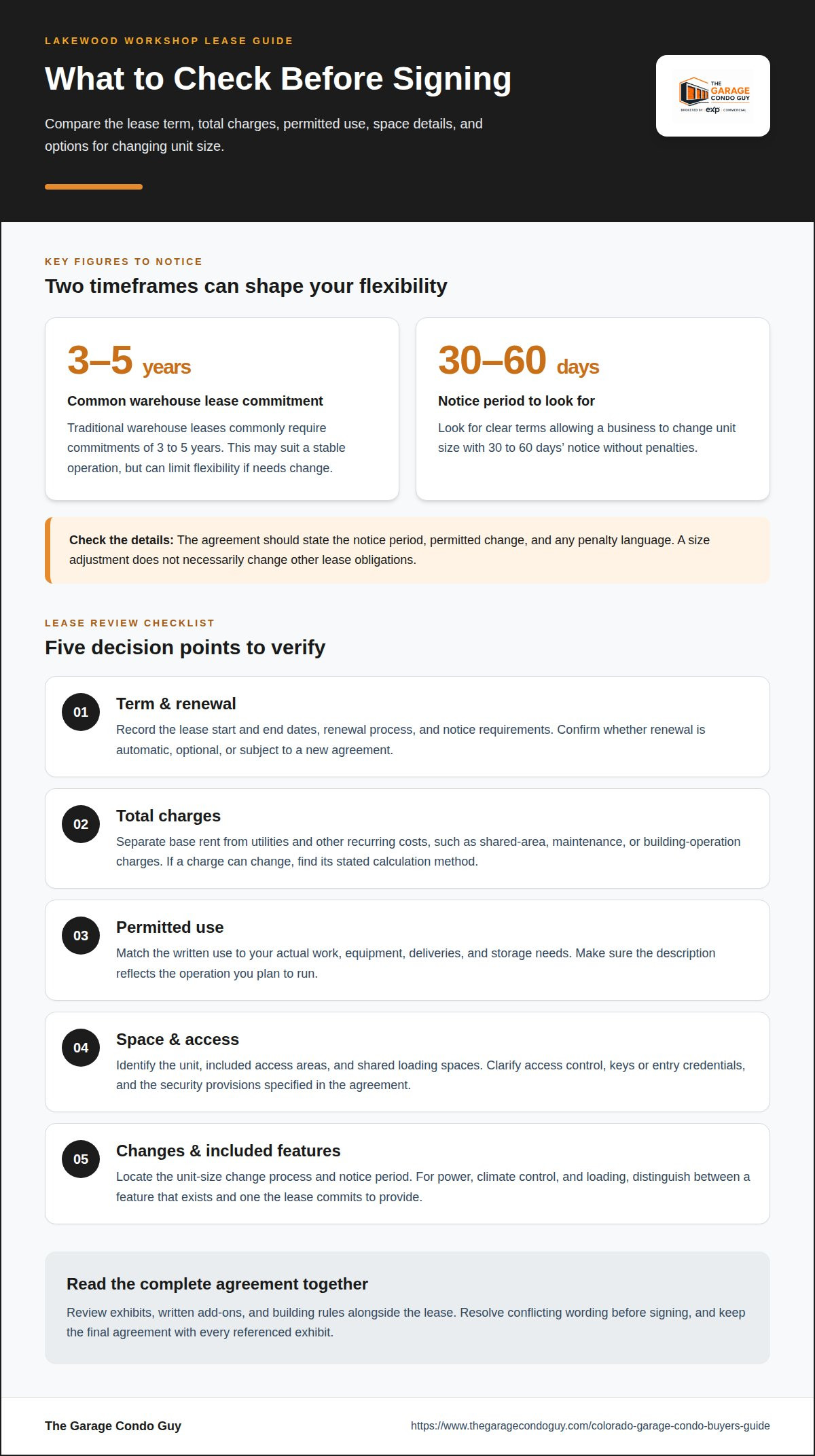
Start with the term, total charges, permitted use, and the conditions for ending or changing the agreement. Traditional warehouse leases commonly require commitments of 3 to 5 years. That length can suit a stable operation, but it can limit flexibility if your workload, equipment, or space needs change. Read the full agreement alongside any exhibits or written add-ons, so the lease and attachments describe the same arrangement.
Check the lease start and end dates, renewal process, and notice requirements. A renewal option is useful only when its timing and terms are clear. Note when and where written notice must be delivered, then compare those dates with your business plans. If your production needs may change, clarify whether renewal is automatic, optional, or subject to a new agreement.
Review the rent structure beyond the base amount. The lease should identify how rent is paid and which costs are billed separately. Look for charges related to utilities, shared areas, maintenance, or building operations. If a charge can change, find the stated calculation method. List each recurring payment, when it is due, and the lease clause that describes it to build a clearer monthly cost picture.
Match the permitted use to the work you plan to do. A broad description of the space may not clarify whether your specific activities are allowed. Write down your core work, equipment, deliveries, and storage needs, then compare them with the permitted-use language. Assembly work with frequent material deliveries, for example, may need different access from quiet bench work. Make sure the written description reflects your intended operation.
Include physical features in your lease review. Identify the unit, any included access areas, and shared loading spaces. Clarify who controls access, how keys or entry credentials are handled, and what security provisions the agreement specifies. For power, climate control, and loading, distinguish between a feature that exists and one the lease commits to provide. Read any referenced exhibit or building rule as well.
Pay close attention to flexibility. Look for terms that allow a business to change unit size with 30 to 60 days’ notice without penalties. The notice period, permitted change, and penalty language should appear clearly in the agreement. This option can matter when inventory grows, equipment changes, or a smaller footprint becomes practical. Compare the flexibility clause with the lease term, since a size adjustment does not necessarily change other obligations.
Before signing, organize your review around a short set of decision points:
Term: Record the start, end, renewal, and notice dates.
Costs: Separate base rent from utilities and other recurring charges.
Use: Match the written permitted use to your actual work.
Space: Identify the unit, access rights, and any shared areas.
Changes: Locate the size-change process and its notice period.
Resolve conflicting wording before signing. For example, if the main lease describes one use but an attached rule narrows it, treat that difference as a key decision point. Keep the final agreement and every referenced exhibit together. If a long commitment makes ownership worth comparing, the Colorado garage condo buyer’s guide can help frame that alternative.
Treat the estimate that traditional warehouse leases add 30 to 50% in NNN/CAM charges, utilities, equipment, and other costs beyond the base rate as a prompt to test the full cost of occupancy. Ask the landlord to explain each pass-through charge and identify which expenses are included, how they are allocated, and whether the lease permits them to change. Compare the answers with the written terms rather than relying on an informal summary. If an expense is unclear, request a written explanation before signing.
Check what happens when a system, fixture, or piece of equipment needs repair. The agreement should define the landlord’s responsibilities and yours, explain how to report a problem and obtain approval for work, and specify how costs are handled. Review any duties to maintain or replace equipment, and find out whether installed improvements must be removed when the lease ends. Keep the signed lease, exhibits, building rules, and written clarifications together. Resolve conflicting language before committing, and ensure agreed changes are included in the document. Reviewing costs, responsibilities, access, and exit terms helps you assess whether the space supports your operation.
The Garage Condo Guy
The Garage Condo Guy helps you assess whether leasing or owning better fits your workshop plans. If a rental lease’s term, operating costs, or limits on modifying the space make ownership worth considering, Garage Condo Buyer Representation can guide your garage condo purchase decision. Garage Condo Seller Representation can help if you already own a garage condo and are considering a sale.
The right choice depends on your intended use, desired flexibility, and willingness to own rather than rent. A focused conversation about these priorities can help clarify which option to explore.
Contact The Garage Condo Guy to discuss your garage condo plans.
Choose the Space That Fits Your Next Move
Choosing between renting and owning comes down to how you want your workspace to support your plans. If flexibility matters most, renting may suit you. If you’re considering a garage condo for the longer term, weigh ownership against your intended use and investment goals. A workshop for rent in Lakewood is one option, but it isn’t the only way to secure dedicated space.
The Garage Condo Guy offers Garage Condo Buyer Representation, Garage Condo Seller Representation, and Investment Advisory for Garage Condos. These services can help you evaluate a purchase, plan a sale, or consider a garage condo investment in light of your priorities.
Review the Colorado garage condo buyer’s guide to learn about ownership structures, due diligence, and ongoing costs before weighing a purchase against a rental.
Frequently Asked Questions
Are there shared workshops, maker spaces, or studios available to rent in Lakewood?
Shared workshops, maker spaces, and studios differ from private workshop units, and availability varies among Lakewood facilities. Shared spaces may offer common work areas or equipment, while a private unit gives you dedicated space. Compare access hours, storage arrangements, equipment rules, and permitted activities to find the format that fits your project.
What utilities, insurance, security deposits, and additional fees are required for Lakewood workshop rentals?
Check the lease for separately billed utilities and other costs, including charges for shared areas, maintenance, or building operations. It should also explain how variable charges are calculated.

Comments