Garage Condos for Denver Plumbers: Elevate Your Business
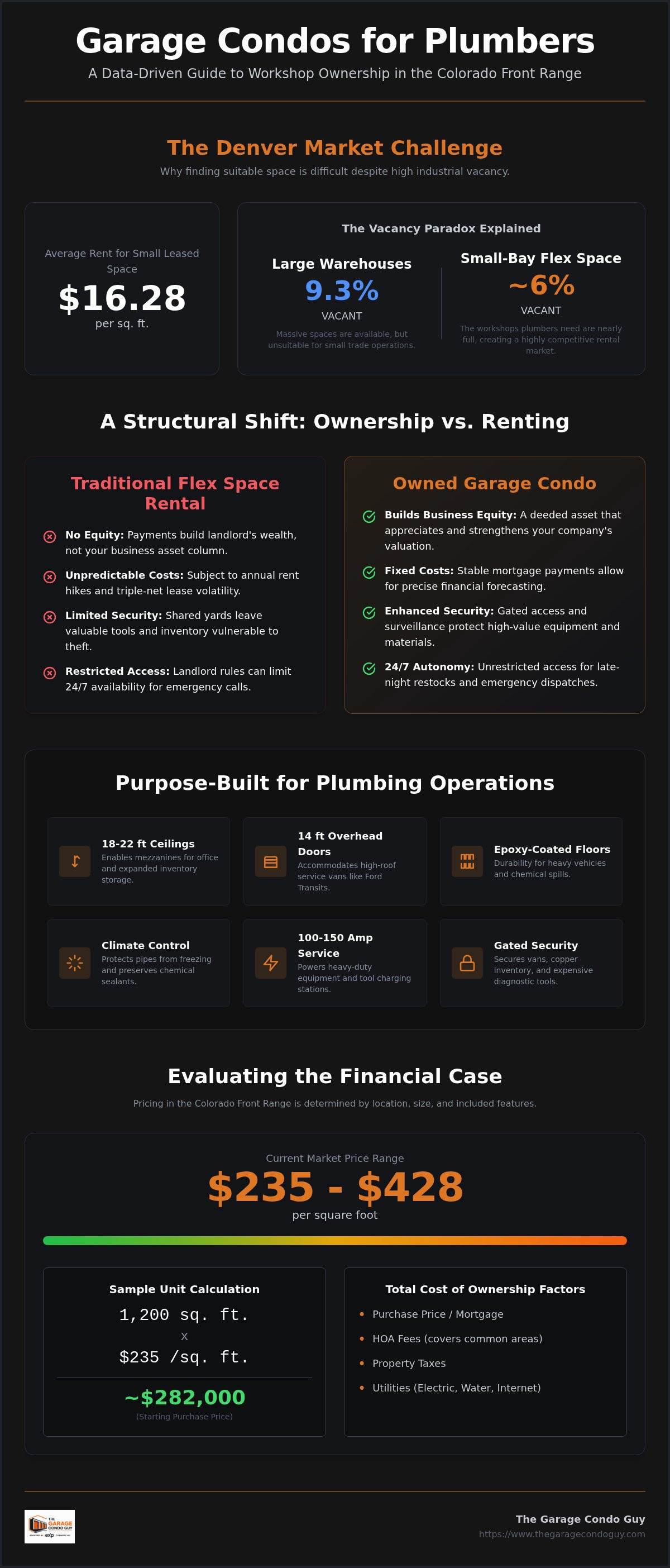
Why are Denver plumbers struggling to find secure workshop space when the city's industrial vacancy rate hit a two-decade high of 9.3% in 2026? The reality is that while massive warehouses sit empty, small-bay flex spaces remain tight with average asking rents reaching $16.28 per square foot. You likely deal with the daily stress of unpredictable rent hikes, equipment theft from outdoor lots, and frozen inventory during Front Range winters. Garage condos for plumbers provide a specialized solution by offering climate-controlled, deeded property designed for active trade use. This article explores how these units provide long-term cost stability and secure storage for your trucks and materials. You'll discover current price data across the Colorado Front Range, ranging from $235 to $428 per square foot, and learn how owning your workshop builds business equity. We'll also break down 12 specific location examples and examine the methodology behind these valuations to help you evaluate if this model fits your operational needs.
Table of Contents
Why Plumbers are Moving from Traditional Warehouses to Garage Condos
A garage condo is a deeded, industrial-zoned property that serves as a permanent workshop and storage hub. It isn't a rental. It's a professional asset you own. The Front Range market is currently experiencing a divergence. While large-scale logistics vacancy sits near 30%, small-bay flex spaces under 50,000 square feet are much tighter at mid-6%. High demand for these smaller footprints pushed flex space rents to an average of $16.28 per square foot in early 2026. Garage condos for plumbers solve this availability crisis by providing dedicated units in key hubs like Denver and Longmont. These units offer the structural integrity of industrial builds with the autonomy of private ownership.
The End of the Rent Trap for Small Trades
Ownership eliminates the unpredictability of triple-net lease renewals. Fixed costs allow for better financial forecasting. When you own the real estate, the property becomes a core component of your business's valuation. It's a strategic move for your eventual exit. Instead of leaving with nothing but old equipment, you have a deeded asset to sell or lease back. You also get 24/7 access, which is critical for emergency plumbing calls and late-night restocks.
Security and Asset Protection
Theft of copper inventory and specialized tools from outdoor parking or low-security units is a constant threat. Shared yards often lack the perimeter defenses required for high-value trade assets. Colorado developments typically feature gated entry and comprehensive surveillance. Garage condos for plumbers provide gated access and surveillance so you can safely house your most expensive equipment:
Advanced pipe cameras and electronic leak detectors
High-pressure hydro-jetters
Bulk copper pipe and brass fitting inventory
This private environment ensures your service vans are ready for dispatch every morning without the risk of overnight tampering. You get a secure, climate-controlled hub that protects your physical assets and your operational timeline.
Essential Features for a Plumbing Workshop and Inventory Hub
Standard industrial units often fail to meet the specific requirements of a high-volume service business. Garage condos for plumbers are designed to function as active workshops rather than passive storage. These units provide the infrastructure necessary for heavy daily use, from specialized electrical systems to climate-controlled environments that protect your inventory and equipment.
Maximizing Square Footage with Mezzanines
With ceiling heights typically ranging from 18 to 22 feet in Front Range developments, verticality is your biggest asset. Mezzanine integration allows you to utilize this vertical space for bulk pipe and fitting inventory without sacrificing the floor area needed for vehicle parking. You can also create a dedicated office or dispatch desk on the upper level. This separation of administrative work from the workshop floor optimizes your daily workflow.
Climate control is an operational necessity in Colorado. It prevents chemical sealants from degrading and keeps inventory pipes from freezing during the winter. Units should also feature floor drainage and direct plumbing access to facilitate shop cleanup and equipment testing. To keep your fleet moving, look for 100-150 amp electrical service. This ensures you can simultaneously charge cordless tool batteries and run heavy-duty shop equipment without tripping breakers.
Industrial Grade Construction
The physical specifications of your condo determine which vehicles you can store. High-roof plumbing vans like Ford Transits or Mercedes Sprinters require 14-foot overhead doors for safe clearance. Inside, epoxy-coated concrete floors provide the durability needed for heavy vehicle traffic and chemical spills. If you need help identifying units with these specific technical specs, you can reach out for a consultation to see current availability in the Denver metro area.
Evaluating the Business Case: Costs and Logistics in Colorado
Evaluating the financial viability of garage condos for plumbers requires looking beyond the sticker price. In the Denver metro area, a typical 1,200 sq. ft. unit starts around $282,000 based on current market averages of $235 per square foot. Total cost of ownership involves a methodology that factors in HOA fees, property taxes, and utilities. Prices fluctuate based on proximity to the I-25 corridor, total unit size, and whether a mezzanine is pre-installed. Larger units often have a lower price per square foot, while premium locations near major highways command higher valuations.
Real-World Pricing Examples in the Front Range
Current data from early 2026 shows a broad range of valuations across the region. While established Denver Garage Condos often command competitive rates, newer developments in Commerce City offer alternative entry points. Here are 12 examples of asking prices per square foot:
Denver: $235/SF
Commerce City: $240/SF
Parker: $242/SF
Centennial: $256/SF, $302/SF, $332/SF
Highlands Ranch: $264/SF, $385/SF
Broomfield: $315/SF
Golden: $340/SF
Arvada: $350/SF
Englewood: $428/SF
Zoning and Use Restrictions
Not every unit supports active trade operations. You must distinguish between 'storage only' and 'light industrial' zoning. While some developments permit light manufacturing and assembly, others restrict units to personal vehicle storage. Verifying these bylaws is crucial. If your business requires customer-facing office space or frequent dispatching, the condo association's rules on commercial traffic will dictate your operational limits. For help analyzing a specific unit's zoning or to request a market valuation report, consult with a specialist who understands the garage condos for plumbers niche.
Securing Your Plumbing HQ in the Colorado Front Range
General residential agents often miss the critical nuances of industrial property transactions. They prioritize residential comps and school districts. You need to prioritize floor load capacities and phase-3 power availability. Transitioning from a lease to a deeded headquarters requires a search focused on utility. High-growth hubs like Longmont and the Northern Front Range have become central logistics points. These locations provide strategic access to expanding residential corridors where service call volume is highest.
Navigating the Front Range Market
Identifying the right unit involves evaluating upcoming inventory in Superior, Dacono, and Golden. New construction projects offer the latest energy efficiencies but involve longer lead times. Resale units provide the benefit of immediate occupancy. Each municipality maintains specific zoning regulations regarding active trade work versus simple storage. You must verify these local codes to ensure your plumbing operations are compliant before closing.
Why Expert Guidance Matters
Technical vetting is a mandatory step in the acquisition process. The Garage Condo Guy specializes in identifying units that meet the 14-foot overhead door clearances and 150-amp power requirements essential for plumbing fleets. A generalist agent might not check the clear height against your highest service van. Expert buyer representation focuses on these functional specs to ensure the unit supports your daily workflow. For a deeper look at regional availability, the 2026 Ownership Guide provides essential market context. Garage condos for plumbers represent a permanent operational shift. The process moves from an initial technical search to a final closing on a deeded asset that builds your business equity.
Establishing Your Permanent Operations Base
Transitioning to a deeded workshop provides your plumbing business with long-term financial predictability that traditional flex space leases cannot match. You've seen how specific technical requirements, like 14-foot overhead doors and mezzanine inventory hubs, transform a simple unit into a functional operations center. Garage condos for plumbers offer more than just storage. They provide a climate-controlled environment that protects your tools and inventory from Colorado's extreme weather. Navigating the Front Range market requires a deep understanding of local zoning and unit specifications to ensure your operations remain compliant.
The Garage Condo Guy provides specialized buyer representation for trade professionals, leveraging expertise in industrial condos to find the right fit for your fleet. If you're ready to move beyond the constraints of unpredictable rent hikes, contact The Garage Condo Guy for a specialized search of plumbing-ready units. Establishing a permanent home for your business is a decisive step toward long-term growth and operational security.
Frequently Asked Questions
Can I run my plumbing business out of a garage condo in Colorado?
Yes, provided the zoning is 'light industrial' or 'flex' rather than 'storage only'. Trade professionals use garage condos for plumbers as headquarters for inventory, dispatch, and administrative tasks. You must verify local municipal codes in cities like Longmont or Denver. Some associations prohibit heavy customer traffic but allow for trade operations. It's essential to check the specific bylaws of the condo association before purchasing to ensure your business activities are permitted.
What is the typical price per square foot for an industrial garage condo in Denver?
In early 2026, the average asking price for a garage condo in Denver is approximately $235 per square foot. Prices vary across Front Range communities, with Englewood units reaching $428 per square foot and Commerce City units averaging $240 per square foot. These figures reflect the market for deeded industrial units. Total costs depend on unit size, mezzanine inclusions, and proximity to major transit corridors like the I-25 highway.
Are garage condos in the Front Range climate-controlled?
Modern garage condos for plumbers in the Front Range include insulated walls and individual HVAC or radiant heating systems. This is standard for units designed for active trade use. Climate control is necessary to prevent chemical sealants from degrading and to keep inventory from freezing. While basic storage might lack these features, professional-grade condos prioritize thermal regulation to protect high-value business inventory and specialized plumbing equipment from extreme Colorado temperature swings.
Do garage condos for plumbers include water and drainage hookups?
Many industrial-zoned units come with rough-ins for a bathroom and a utility sink. Floor drains are also common in units designed for vehicle storage and active workshop use. You should verify if the specific development includes these connections as standard or as an upgrade. Having direct water access and drainage is vital for shop cleanup and testing plumbing fixtures. These features support daily operational efficiency for trade professionals at their headquarters.
How do HOA fees for garage condos work for a small business?
Owners pay monthly or quarterly HOA fees that cover collective expenses. These typically include property insurance, exterior maintenance, snow removal, and security gate operations. For a small business, these fees provide cost predictability compared to triple-net leases where maintenance costs can spike. You should review the association's budget to understand how much is allocated to reserve funds for long-term repairs like roof replacement or pavement resurfacing in the complex.


Comments