Superior Climate Controlled Garages: Unit Size and Location
The floor footprint of a 5x5 unit tells only part of the story: ceiling height also affects how much you can store. If you’re considering a climate-controlled garage for sale in Superior, the key is matching the space to what you plan to keep and how you’ll use it.
A 5x5 unit can suit a few boxes and smaller furniture pieces, while taller ceilings may add useful vertical capacity. But dimensions alone don’t tell you whether a particular garage condo fits your needs. You’ll also want to understand how its location relates to nearby communities around Superior, Colorado. This guide explains what a 5x5 space can hold, how to think about ceiling height and usable storage, and which nearby communities to consider when comparing locations. You’ll get a clearer basis for judging whether a compact unit works for your belongings and whether a Superior-area location makes sense for your plans.
Table of Contents
Location and nearby communities
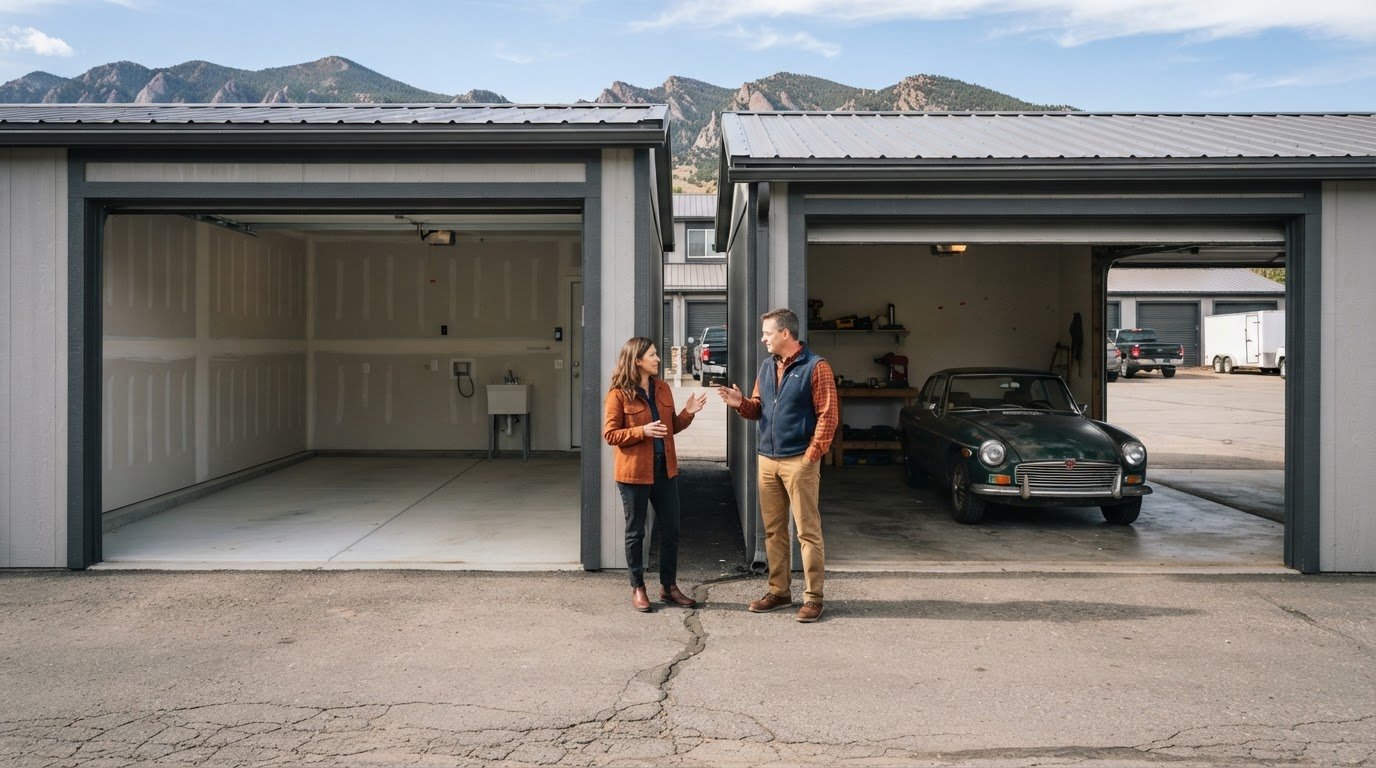
Superior, Colorado, sits within a regional market that includes Boulder, Louisville, and Broomfield. Those communities give buyers useful reference points when comparing garage-condo locations. A property’s address affects the daily trip, access to belongings, and convenience during moving or regular use. Map the route from home, work, or a planned outdoor destination before weighing a unit’s size. Highway access can also shape how practical a location feels for frequent visits.
Separate this search from results for Superior, Wisconsin. The city name is shared, but the relevant location here is Superior in Colorado. Search results for self storage units or a storage facility may describe rental storage, not a garage condo for sale. Those are different property types. A climate-controlled garage for sale in Superior should be assessed as a real estate purchase, with its location considered alongside the building and unit.
Use a consistent location comparison. Start with the Superior address, then compare it with Boulder, Louisville, and Broomfield. For each option, consider:
Access: Note the highway routes and whether regular visits fit your usual travel patterns.
Purpose: Consider whether storing furniture, an electronic collection, or other belongings requires frequent access.
Setting: Distinguish an outdoor-access facility from an enclosed garage-condo property.
Use: Consider whether the unit supports storage, hobby use, or another intended purpose.
A size guide can help you compare floor area, but location affects how conveniently you can use that space. A larger unit farther from your usual route may be less practical than a smaller, accessible option. Treat “units in Superior” as a location filter, not proof that a listing offers climate control or ownership. First identify whether it is a purchase or rental, then compare its address and permitted use with your needs. Nearby communities are comparison points, but each property still needs its own evaluation.
A storage property in Magnolia, Texas, is located off Superior Road, so the road name alone does not identify a property in Superior, Colorado. The page lists 2 self-storage facilities in Superior, Wisconsin. Check the full location and property type when reviewing search results, especially when a shared place name or road name could point to a different market.
What temperature and humidity controls do these garages offer?
“Climate controlled” can refer to different systems, so the label alone does not establish a garage’s indoor conditions. Temperature regulation and humidity management are distinct: heating and cooling affect air temperature, while moisture control addresses dampness. Before considering a climate-controlled garage for sale in Superior, identify which functions the specific property provides and whether they suit what you plan to store.
Start by identifying the equipment. A thermostat controls heating or cooling according to its settings and sensor location. Ventilation moves air, but it is not the same as active humidity control. A dehumidifier removes moisture, while insulation slows heat transfer through walls and ceilings. These features serve different purposes, so a temperature-controlled space may still experience moisture changes if its system does not manage humidity.
Match the system to what you plan to store. Wood furniture can respond to changes in temperature and moisture, while paper documents, electronics, and collectibles have their own storage sensitivities. Make an inventory and group items by their environmental needs. This gives you a practical basis for evaluating the controls instead of assuming all climate-controlled garages maintain the same conditions.
Temperature: Identify whether the system heats, cools, or both.
Humidity: Determine whether equipment actively removes moisture or only circulates air.
Monitoring: Review thermostat placement and how indoor readings are tracked.
Operation: Understand which equipment serves the unit and how its settings are managed.
These details help distinguish a temperature-controlled garage from one that also manages humidity. They also clarify whether the system aligns with your intended use, such as protecting furniture or keeping an electronic hobby collection in a more stable environment. The Colorado garage condo buyer’s guide offers broader purchase context alongside these system-specific considerations.
For items vulnerable to temperature and humidity changes, use climate control as a starting point, not a guarantee of suitability. Confirm the specific garage’s equipment and operating arrangements before deciding whether it meets your needs. Ask what temperature and moisture controls are present and how they are monitored. Clear information can help you assess the protection the space offers for your belongings.

What garage features and utilities are included, such as electricity, water, and insulation?
Features vary among garage condos. Consider electricity, water, and insulation separately rather than treating them as automatic parts of a “climate-controlled” description. When comparing properties in Superior, connect each feature to your intended use. Storing furniture, for instance, involves different practical considerations from using a garage for a hobby workspace.
Start with the electrical service. Identify the outlets and lighting in the unit and whether climate-control equipment uses the same supply. This helps you assess the space for lighting, charging equipment, or appliances. A written feature description can clarify what comes with the property; purchase documents can also distinguish unit-specific equipment from shared building systems.
Review water access separately. A listing may mention plumbing, a sink, or water access, but these terms do not mean the same thing. Determine whether the unit has an interior connection or access elsewhere in the building. If water matters for your intended use, check how the feature is described in the property documents. Do not assume a fixture in a common area belongs to the unit.
Electricity: Record the outlets, lighting, and equipment serving the garage.
Water: Identify whether access is inside the unit or in a shared area.
Insulation: Review which walls, doors, and ceiling areas are insulated.
Climate equipment: Match the system serving the unit to the stated controls.
Insulation slows heat transfer through building surfaces and can support indoor temperature management. Its coverage matters: an insulated ceiling paired with an uninsulated garage door is different from insulation across both areas. Consider how the building envelope and climate equipment work together, especially if you want to protect belongings through seasonal temperature changes in Superior.
Compare the features with your intended use. For a vehicle, check that the space suits your access and equipment needs. For furniture or electronics, consider insulation and environmental controls alongside utilities. This review helps separate documented features from assumptions based on a listing label.
How does a buyer representative inspect and verify climate-control systems before buying a garage?
A buyer’s representative can help compare climate-control descriptions with available property information. For a Superior garage, review the listing, seller disclosures, and equipment records, then compare them with the system serving the unit. A building-wide system and a unit-specific system may involve different responsibilities and operating arrangements.
During a property review, identify the heating, cooling, and humidity-control equipment. Note visible equipment, thermostat placement, and accessible controls, and flag conditions that may warrant specialist attention, such as visible moisture near equipment or damaged insulation. These observations can guide further evaluation, but they do not replace a technical inspection.
Review available service records, equipment information, and warranty documents. They can clarify the system’s history and identify maintenance or coverage terms. If humidity control is claimed, look for information distinguishing active moisture removal from ventilation or temperature regulation.
Compare claims: Match listing language against disclosures and equipment records.
Identify the system: Establish which equipment serves the garage and its controls.
Review condition: Record visible concerns and note questions for technical evaluation.
Assess documents: Review service history, warranty details, and operating information.
If records or visible conditions raise technical questions, a buyer’s representative can help coordinate an appropriate specialist evaluation as part of the purchase process. The assessment can examine equipment operation and condition, and whether the described controls match what is installed. Its findings can help you evaluate the property for your intended use.
A buyer representative also tracks unresolved system questions alongside other purchase considerations. For example, the representative can distinguish a documented feature from a seller’s general description, then carry that distinction into discussions and transaction review. Use the Colorado garage condo buyer’s guide to understand the broader purchase process.
Evaluating Documented Property Features
For a property described as climate controlled, the key consideration is whether its documented features suit your intended use.
Use the property’s documentation and stated features to frame your evaluation. Keep the distinction clear between what a listing describes and what the property’s records establish. This approach helps organize relevant questions about the individual garage condo.
Compare stated features with available property records and documentation.
Key considerations when choosing a garage
Choosing a climate-controlled garage for sale in Superior is a real estate decision. Start by defining how you plan to use the space and which features are essential for that purpose.
Organize the property details around those priorities. A clear comparison separates essential requirements from preferences and keeps your evaluation focused on the specific garage condo.
These priorities provide a practical basis for evaluating the garage condo.
Frequently Asked Questions
Are any climate-controlled garages for sale in Superior, Colorado?
Superior is part of Colorado’s Front Range garage-condo market, but sale availability depends on active listings. A garage condo is a property purchase, not a self-storage rental. Evaluate each listing by its address, ownership documents, unit features, and intended use. A climate-control description alone does not establish what equipment serves the unit or how the system operates.
Where are available climate-controlled garages located near Superior, Colorado?
Relevant nearby communities for a Superior-area search include Boulder, Louisville, and Broomfield. These locations provide geographic comparison points, not confirmation of active listings. Focus on the specific property’s address and travel route, then assess its unit and community details. A location in the Front Range doesn’t by itself establish that a garage is for sale or has climate-control features.
Comments