Lakewood Personal Warehouse Space for Tools and Inventory
The right Lakewood personal warehouse space should suit both what you store and how you use it. For tools, equipment, or business inventory, assess security, access rules, and whether the layout fits your needs. Consider how you’ll move items in and out and organize them inside. A space that looks suitable at first may not work for your daily operations.
It’s reasonable to want protection for valuable equipment and dependable access to the items your work relies on. This guide explains how to assess security and access, determine whether a space suits your tools or inventory, and evaluate practical details that affect usability. Start by listing what you’ll store and how often you’ll need to retrieve it. The focus is on making an informed choice in Lakewood.
Table of Contents
Prohibited items in Lakewood self-storage units
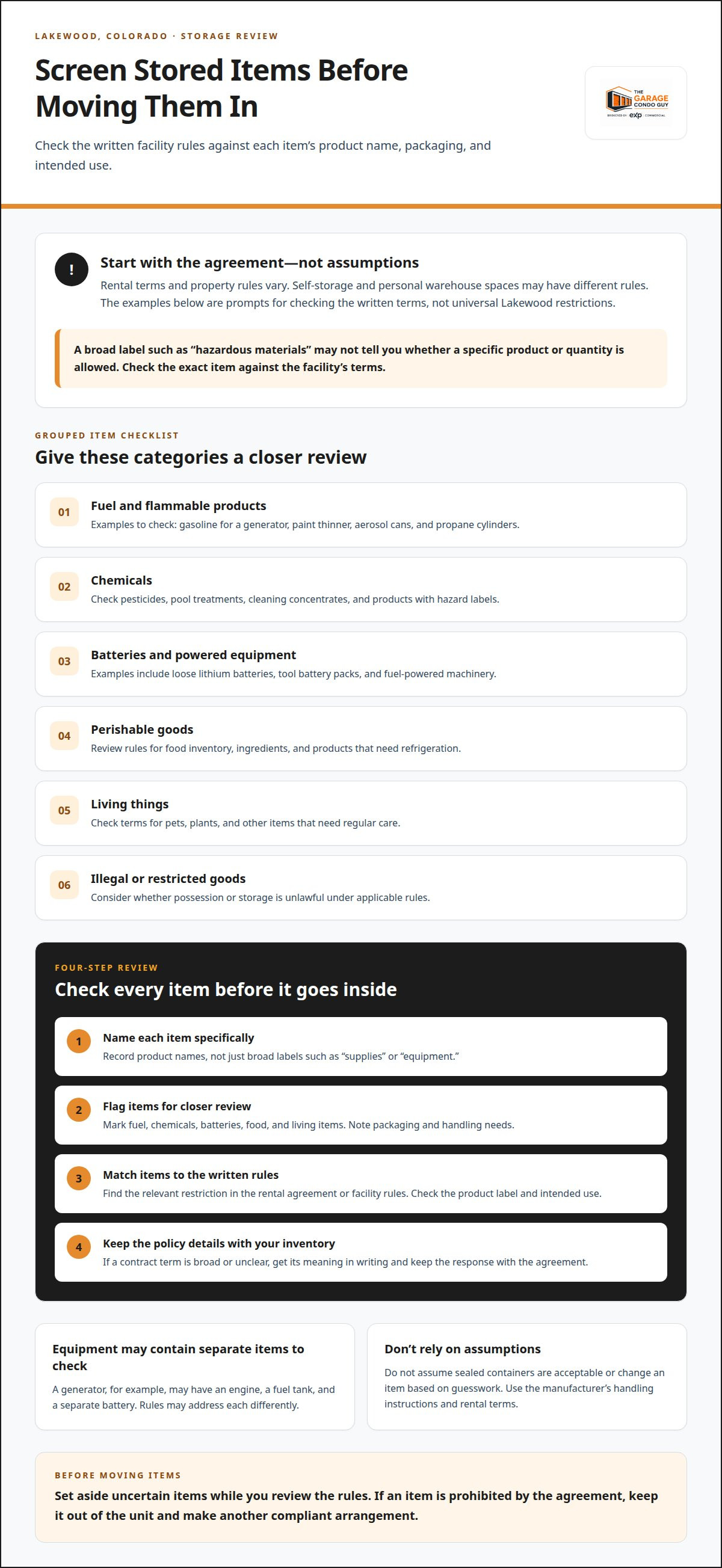
For a unit in Lakewood, Colorado, the rental agreement and property rules specify what you may store. Terms vary by facility, and a self-storage unit may have different rules from a personal warehouse. Before moving tools or inventory, review the clauses on restricted goods, access, and permitted use.
Look for specific examples, not just broad terms such as “hazardous materials.” A contractor’s supplies might include paint, solvents, fuel cans, or pesticides. A landscaping business might store fertilizers and weed-control products. These items have different properties, so a general category may not tell you which products or quantities are allowed. Follow the written terms for each item, and don’t assume sealed containers are acceptable.
Review the agreement for clauses covering these categories. The examples below are prompts for finding relevant terms, not a universal Lakewood restriction:
Fuel and flammable products: gasoline for a generator, paint thinner, aerosol cans, and propane cylinders.
Chemicals: pesticides, pool treatments, cleaning concentrates, and products with hazard labels.
Batteries and powered equipment: loose lithium batteries, tool battery packs, and fuel-powered machinery.
Perishable goods: food inventory, ingredients, and products that need refrigeration.
Living things: pets, plants, and other items needing regular care.
Illegal or restricted goods: products whose possession or storage is unlawful under applicable rules.
Match each item to its exact product label and intended use. “Tool supplies” might mean hand tools, sealed lubricant, or flammable solvent, which can have different storage requirements. Make an inventory that includes product names and packaging, then compare each entry with the agreement’s definitions of hazardous, combustible, or perishable goods.
Pay particular attention to equipment containing fuel or batteries. A generator, for example, may have an engine, a fuel tank, and a separate battery, and the rules may address each differently. Don’t drain, dismantle, or repackage an item based on assumptions about storage policy. Use the manufacturer’s handling instructions and the rental terms to determine what is permitted.
Commercial inventory raises a separate question: whether the agreement allows the goods and use you have in mind. Packaged hardware differs from cleaning chemicals or temperature-sensitive stock. Note each product category, its packaging, and any handling needs. If the contract uses a broad term, get its meaning in writing before placing goods inside, and keep the response with the agreement.
Use this review sequence before moving anything into a Lakewood unit:
List each item by product name, not just “supplies” or “equipment.”
Mark fuel, chemicals, batteries, food, and living items for closer review.
Find the matching restriction in the rental agreement or facility rules.
Keep written policy details with your inventory and signed terms.
Set aside uncertain items while you review the rules. A wrench set is easy to identify; a partly used solvent can requires checking its label and the storage terms. Don’t move an item in first and interpret the rules later. If the agreement prohibits it, keep it out of the unit and make another compliant arrangement.
For readers comparing storage with garage-condo ownership in Colorado, the Colorado garage condo buyer’s guide covers a different property decision. Either way, define the intended use and the items involved before committing. A clear inventory and a careful reading of the facility’s written restrictions can prevent a mismatch between your stored goods and the space’s rules.
Are there local zoning, business-use, or vehicle-storage rules for renting warehouse space in Lakewood?
Yes. For a Lakewood, Colorado, warehouse, intended use matters as much as the lease. Zoning and property approvals govern how a site may be used, while the rental agreement sets terms between owner and tenant. Storing boxed inventory differs from running a shop, receiving customers, or repairing vehicles. Consider each activity separately before choosing a space.
Start with the property’s location and proposed use. A warehouse may suit tool storage, but that does not automatically mean every business activity is allowed. List what would happen there: storing equipment, assembling products, shipping orders, meeting customers, or making repairs. Use that list to review permitted-use information and lease terms. When evaluating Lakewood personal warehouse space, describe the actual activities rather than relying on the property’s general label.
A contractor might store ladders and boxed fasteners, then load them into a work vehicle. Another tenant might use a similar space to fabricate metal parts with powered equipment. These activities differ in noise, deliveries, utility needs, and on-site operations. Review the property’s zoning and approval documents, along with its lease, to determine whether the proposed use fits.
Distinguish storage from regular business operations. A unit used only for inventory has a different practical profile from a place where customers visit or employees work daily. If you plan to display products or complete transactions on-site, include that activity in your proposed use. Don’t assume “warehouse” means retail, production, or customer access is permitted.
Vehicle storage requires the same distinction. Parking a work truck between jobs differs from storing vehicles for sale, keeping a collection, or conducting repairs. A vehicle kept indoors as stored property has different operational needs from a repair bay with tools and frequent vehicle movement. Specify whether vehicles will be parked, loaded, displayed, serviced, or moved often.
Use this sequence to evaluate a candidate property:
List each activity, including storage, shipping, customer visits, and repairs.
Identify the specific parcel and the property’s stated or approved use.
Compare your activity list with applicable zoning information and property documents.
Read the lease for permitted use, vehicle limits, deliveries, and access conditions.
Resolve differences between the planned use and the written terms before signing.
Details matter. A lease may describe a space as storage-only, while your plan includes packing orders and daily carrier pickups. A property may allow vehicle parking but not ongoing mechanical work. Treat each activity separately, and match it to the relevant property information and lease clause rather than relying on a broad label such as “commercial space.”
Lakewood business use also depends on practical site conditions. A delivery van needs a usable route and loading area, while bulky equipment needs a clear path through entrances. Customer visits can affect parking and access. These details don’t replace zoning or lease review, but they help show whether the property suits your actual plans and distinguish storage from a workspace with regular activity.
Keep a written description of your proposed use with the property records you review. Include inventory type, vehicle activity, customer access, and any production work. If plans change later, such as adding repairs to a storage arrangement, reassess the property’s approved use and lease terms before making that change. Clear use definitions reduce the risk of choosing a space that cannot support daily operations. Define these details before committing to Lakewood personal warehouse space.
The Garage Condo Guy
If renting storage no longer fits your plans, The Garage Condo Guy helps buyers and sellers evaluate garage condo transactions. Buyer representation can help you assess a property’s intended use, layout, and suitability for your equipment or inventory. Seller representation supports owners preparing to bring a garage condo to market. These services focus on garage condo transactions, not warehouse rentals or management.
Use the earlier checks on zoning, permitted activities, and vehicle storage to clarify what you need from a property. Then consider whether buying or selling a garage condo is relevant to your situation. For help with that transaction, contact The Garage Condo Guy.
Assessing Space and Ownership Options
Your storage needs may change as your work, equipment, or inventory changes. Before committing to another rental, decide whether you need space only for storage or are considering ownership of a garage condo. That distinction shapes the options to evaluate: continue renting, explore a purchase, or prepare a property for sale.
Garage condos are a different property type from warehouse rentals. When comparing them, consider how you plan to use the space and whether ownership fits your plans. These factors can help clarify which option to evaluate.
If you’re weighing Lakewood personal warehouse space against garage condo ownership, clarify your intended use and long-term plans first. Then review information relevant to that property decision. The Colorado garage condo buyer’s guide covers the topic. A clear comparison can help you understand the options.
Frequently Asked Questions
What should I look for when evaluating a warehouse in Lakewood?
Prioritize usable dimensions, loading access, utilities, and suitability for your inventory or equipment. Measure your largest item, including handles or rooftop equipment, and compare it with the doorway and interior clearance. A tall storage rack, for example, may fit inside but be difficult to move through a low entrance. Consider how often you’ll retrieve items and whether the layout allows safe, practical access.


Comments