Denver RV Owners: Why Garage Condos Are the Best Choice
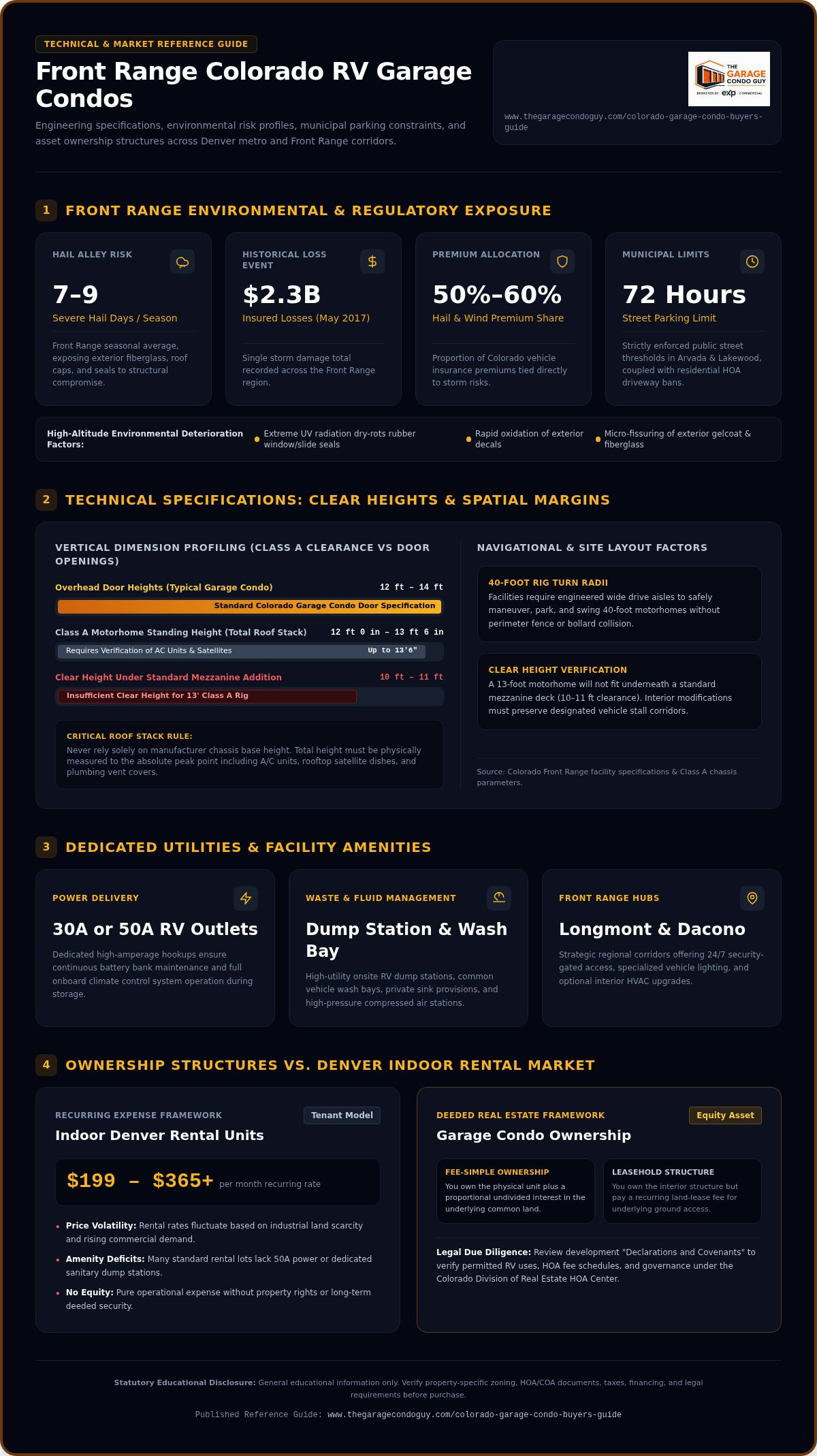
Colorado's Front Range averages 7 to 9 severe hail days every season, and the 2017 storm alone resulted in $2.3 billion in insured losses. If you're managing a high-value motorhome in Denver, you're likely facing more than just weather risks. Strict 72-hour parking ordinances in Arvada and Lakewood make driveway storage nearly impossible. You're searching for a permanent, secure home for your vehicle that offers more than a simple rental lot. Garage condos for RV owners provide the technical specifications and climate-controlled environment necessary to stop rapid depreciation caused by high-altitude UV rays and extreme storms.
It's frustrating to pay monthly fees for facilities that lack 50A power or dump stations. This article delivers a data-heavy look at why owning a specialized unit is the most effective way to protect your investment. We'll analyze door height requirements, fee-simple ownership, and specific amenities found in Front Range developments. General educational information only. Verify property-specific zoning, HOA/COA documents, taxes, financing and legal requirements before purchase.
Table of Contents
Why Traditional RV Storage Falls Short in the Front Range
Traditional storage in the Denver metro area is no longer a viable long-term strategy for high-value vehicles. Municipalities like Arvada and Lakewood strictly enforce 72-hour parking limits on public streets. Even on private property, residential HOAs are tightening "no-RV" driveway policies. This leaves owners with few choices beyond crowded, unmonitored gravel lots. Garage condos for RV owners provide a technical match for these challenges. They offer 24/7 gated access and a secure environment that standard industrial storage often lacks. Owning one of these units ensures your vehicle is ready for the road without the constant threat of municipal fines or residential complaints.
The Impact of Colorado Climate on RV Depreciation
The Front Range sits in North America’s "Hail Alley." We average 7 to 9 severe hail days every season. The May 2017 storm alone generated $2.3 billion in insured damage across the region. In Colorado, 50% to 60% of vehicle insurance premiums are tied directly to hail and wind risk. High-altitude UV radiation also accelerates the deterioration of rubber seals, decals, and fiberglass. You can slow RV depreciation with enclosed storage in Denver by removing these environmental variables entirely. Enclosed units prevent the rapid weathering that occurs in open-air or canopy-only lots.
Renting vs. Owning: The Long-Term Financial Shift
Indoor rental rates in Denver often range from $199 to over $365 per month. These prices fluctuate based on industrial land scarcity and rising demand. Moving your vehicle into a condominium real estate framework changes the dynamic. You transition from a monthly tenant to a deeded owner of a specific unit. This ownership structure provides a permanent, fixed-cost home for your motorhome. It eliminates the risk of sudden rent hikes or facility closures. For long-term travelers, garage condos for RV owners offer a level of stability that rental agreements can't match. It’s a shift from a recurring expense to a tangible asset.
Technical Specifications: Door Heights, Clearances, and RV Utilities
Success starts with the door. Typical overhead door heights for Colorado garage condos for RV owners range from 12 to 14 feet. This is a critical specification. Most Class A motorhomes stand between 12 feet and 13 feet 6 inches. You must account for the highest point on your roof, including AC units, satellite dishes, and vent covers. Don't rely on the manufacturer’s base height. Get a physical measurement before committing to a unit.
Measuring for Your Rig: Clearances and Turn Radii
Vertical space isn't the only variable. You need wide drive aisles to maneuver a 40-foot motorhome safely. Many Front Range facilities design their layouts with these turn radii in mind. Be careful with internal modifications. While a mezzanine adds storage, it often reduces the usable space below the deck to just 10–11 feet. If your rig requires 13 feet of clearance, it won't fit under a standard mezzanine. Always cross-reference your rig's dimensions with the facility’s clear-height specs.
Available Utilities and Customization Options
Modern units offer more than just four walls. You'll find 30A or 50A dedicated RV outlets for climate control and battery maintenance. Some facilities include private sinks or access to common wash areas and dump stations. If you plan to add specialized lighting or HVAC, you'll need to consult the association’s rules. The Colorado Division of Real Estate HOA Information & Resource Center provides guidance on navigating these types of covenants. Understanding these technical nuances is vital for long-term satisfaction. For a deeper dive into due diligence, review our Colorado Garage Condo Buyers Guide to ensure your unit meets every mechanical requirement. General educational information only. Verify property-specific zoning, HOA/COA documents, taxes, financing and legal requirements before purchase.
Navigating HOA Documents and Ownership Costs
Understanding the legal structure of your unit is the first step in a successful purchase. Most garage condos for RV owners are sold as fee-simple real estate. This means you own the unit and a proportional interest in the land. However, some developments use leasehold or land-lease provisions. In a leasehold, you own the structure but pay a recurring fee for the land underneath. This distinction significantly affects your long-term equity and resale potential. You must review the "Declarations and Covenants" to confirm which structure applies to your specific location in the Front Range.
Common Use Restrictions for RV Owners
Association rules often dictate how you use your space. Most Colorado facilities are non-residential. Zoning laws and HOA documents strictly prohibit permanent living or continuous overnight stays. You'll also find specific regulations regarding hazardous materials, noise levels, and outdoor storage. For example, some associations ban parking your RV outside the unit for more than 24 hours. Always verify these rules before signing a contract. It's better to know the limitations on maintenance and hobby work early in the process.
Understanding HOA/COA Financial Health
Due diligence requires a deep dive into the association's books. Review the current budget, meeting minutes, and the reserve study. Healthy reserves prevent surprise special assessments for roof repairs or pavement resurfacing. If the facility sits on leased land, check the escalation provisions. Rising land-lease costs can erode the value of your asset over time. Ownership costs include property taxes, insurance, and metered utilities. For a detailed breakdown of these variables, consult our Colorado Garage Condo Buyers Guide. General educational information only. Verify property-specific zoning, HOA/COA documents, taxes, financing and legal requirements before purchase.
Selecting the Right RV Garage Condo Location in Colorado
Location determines how often you actually use your rig. Strategic hubs like Commerce City, Longmont, and Dacono are popular because they offer immediate access to major transit arteries. You want to be near I-25, I-70, or E-470 to minimize city traffic before your trip even begins. Garage condos for RV owners that prioritize these corridors tend to hold higher resale value due to their logistical convenience. Beyond the map, look for onsite management and high-definition security monitoring to ensure your asset is protected while you're away.
Front Range Geographic Strategy
Evaluate peak-hour drive times from your primary residence. A 20-minute drive on a Saturday morning might become a 60-minute crawl on a Friday afternoon. Proximity to your home is vital for prep work and loading. For those specifically looking at the central corridor, Denver Garage Condos offer a variety of layouts near major industrial hubs. Focus on locations that provide onsite amenities like RV dump stations, wash bays, and compressed air. These features save hours of transit time and keep your maintenance routine efficient.
The Inspection and Closing Process
Due diligence doesn't end with the paperwork. You must inspect the physical unit with a focus on RV-specific needs. Check the concrete slab integrity for any structural cracking that could affect heavy Class A motorhomes. Test the overhead door openers and verify the fire sprinkler system meets local codes. A specialist can help identify unpermitted mezzanine additions or electrical upgrades that might cause issues with the COA later. Resale value is often tied to these technical details, alongside door dimensions and the financial health of the community. General educational information only. Verify property-specific zoning, HOA/COA documents, taxes, financing and legal requirements before purchase.
Protecting Your Investment in the Colorado Front Range
Securing a permanent home for your motorhome requires matching technical specifications with long-term financial goals. Traditional rental lots often fail to provide the 12 to 14 foot door clearances and 50A power necessary for modern Class A rigs. By transitioning to fee-simple ownership, you eliminate the risk of rising industrial rents and municipal parking fines. Garage condos for RV owners offer a climate-controlled environment that mitigates the average of 7 to 9 severe hail days Colorado faces annually. Choosing a strategic location in Longmont or Commerce City ensures you're always minutes away from major transit arteries like I-25 and I-70.
Expert guidance is essential when navigating complex HOA due diligence and clear-height requirements. You can Download the Colorado Garage Condo Buyers Guide to start your search with specialized knowledge of the Front Range market. General educational information only. Verify property-specific zoning, HOA/COA documents, taxes, financing and legal requirements before purchase. It's time to give your rig a secure, professional-grade home that stands up to the Colorado climate.
Frequently Asked Questions
What is the typical door height needed for a Class A motorhome in a garage condo?
Typical overhead door heights for garage condos for RV owners in the Front Range fall within the 12 to 14 foot range. This is essential for Class A motorhomes, which often stand between 12 feet and 13 feet 6 inches. Always verify the clear height if a mezzanine is installed, as this can reduce usable vertical space to just 10 or 11 feet below the deck. Physical measurements are mandatory before purchase.
Can I live in my RV while it is parked in a garage condo?
No, garage condos are strictly non-residential properties. Local building codes, zoning designations, and HOA covenants in cities like Lakewood and Arvada prohibit permanent living or continuous overnight stays. While you can perform maintenance or prep your rig for a trip, these units are not legal dwellings. General educational information only. Verify property-specific zoning, HOA/COA documents, taxes, financing and legal requirements before purchase.
What are the main differences between fee-simple and leasehold garage condos?
Fee-simple ownership means you deed the specific unit and a proportional interest in common elements. In a leasehold or land-lease structure, you own the building but pay recurring fees for the underlying land. Leaseholds often include escalation provisions that can impact your long-term equity and future resale value. Financing through local Denver banks or credit unions may also vary significantly depending on which legal ownership framework is in place.
Are RV dump stations and wash areas standard in Colorado garage condo communities?
While many premier facilities in Commerce City and Dacono offer onsite RV dump stations, wash areas, and compressed air, they are not universal. Availability depends on the specific project's infrastructure and association approvals. Some communities feature high-end clubhouses and bathrooms, while others focus purely on secure storage. You must verify the specific amenity list for any Colorado unit to ensure it matches your maintenance needs for a large motorhome.
How do property taxes and HOA dues work for garage condo owners?
Owners are responsible for property taxes based on commercial valuations and monthly HOA or COA dues. These dues typically cover master insurance policies, security, and common area maintenance. Utilities like electricity for your 50A service are often metered individually for each unit. It is vital to review the association's financial health and reserve study to avoid surprise special assessments for major repairs like roof work or pavement resurfacing.
Comments