Commercial Storage for Lease in Dacono for Business Needs
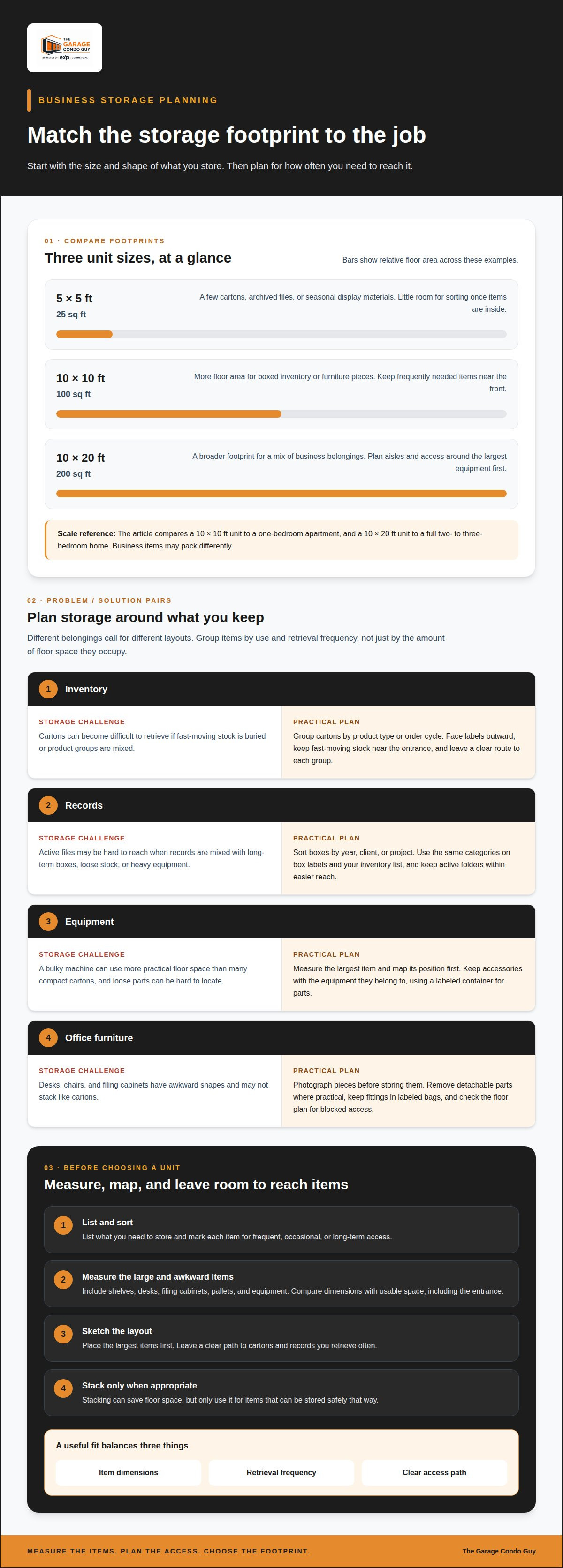
More square footage isn’t automatically a better fit for business storage. In Dacono, listings show 223 available business storage units, with rentals offered month-to-month. For a size reference, a 5-by-5-foot unit has 25 square feet for a few boxes or seasonal items, while a 10-by-10-foot unit has 100 square feet and can fit a one-bedroom apartment.
Choosing commercial storage for lease in Dacono starts with matching the space to what you need to store and how you’ll use it. Inventory, records, equipment, and office furniture each require a practical plan for packing, access, and organization.
This guide explains how to estimate your business’s storage needs, compare unit sizes, and identify features that matter for your belongings. It also covers when a storage unit may not fit the job, such as when you need workspace or a larger property for business operations.
Table of Contents
Storage unit sizes and typical uses
Start with the footprint of your business items, not a guessed unit size. A 5-by-5-foot unit provides 25 square feet of floor area. It can hold a few boxes or seasonal items. A 10-by-10-foot unit provides 100 square feet and can fit a one-bedroom apartment. These examples offer scale, but business inventory may pack differently.
A 10-by-20-foot unit has 200 square feet and suits a full two- to three-bedroom home. For business use, that area might hold boxed stock, office furniture, or equipment, depending on item dimensions and arrangement. A single bulky machine can occupy more usable floor space than many compact cartons.
5 by 5 feet: Consider this footprint for a few cartons, archived files, or seasonal display materials. It offers little room for sorting once items are inside.
10 by 10 feet: This size gives more floor area for boxed inventory or furniture pieces. Arrange frequently needed items near the front.
10 by 20 feet: The larger footprint can suit a broader mix of business belongings. Plan aisles and access around the largest equipment first.
Before choosing a unit, list what you need to store and measure each large item. Include shelves, desks, filing cabinets, pallets, and equipment in your floor plan. Sketch where each item will go, leaving a clear path to cartons or records you retrieve often. Stacking can save floor space, but only for items that can be stored safely that way.
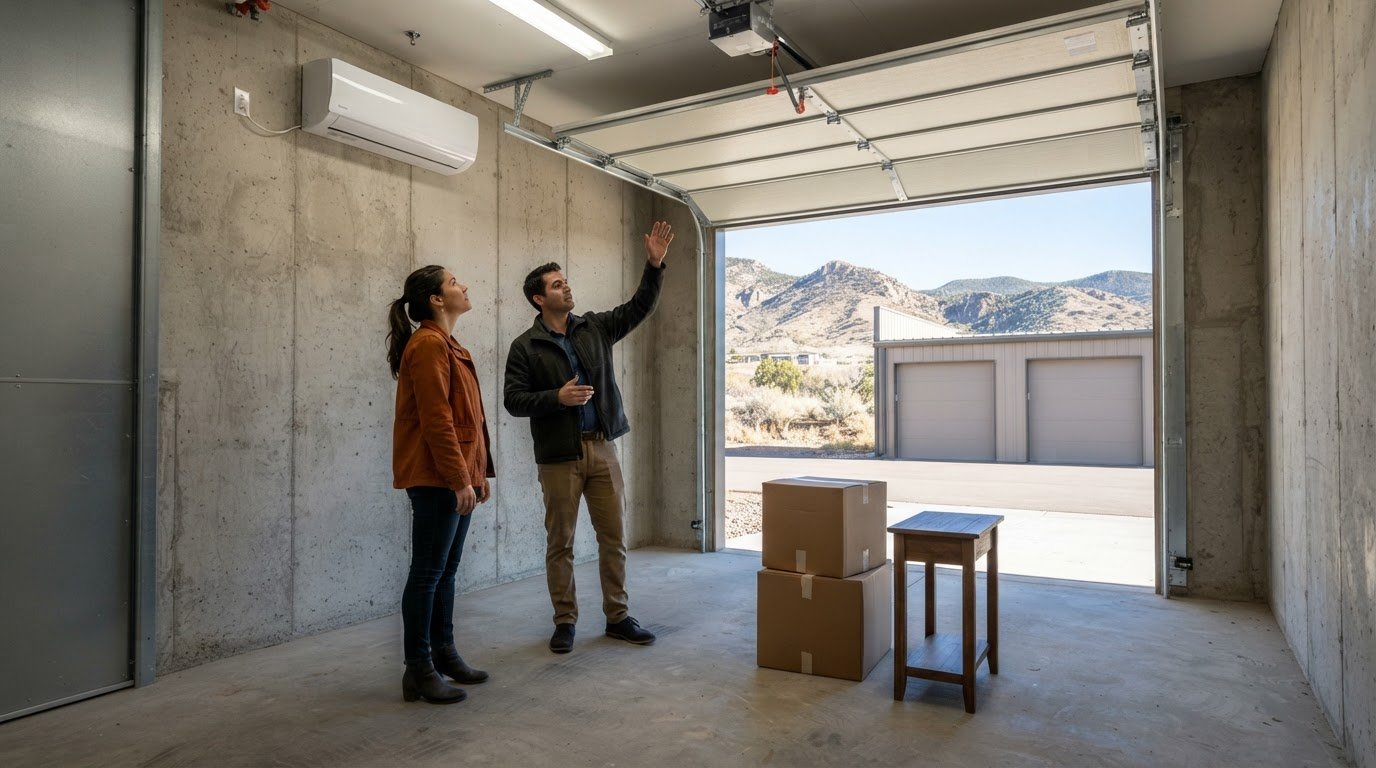
Floor area alone won’t tell you whether a unit will fit. A tall cabinet, long table, or machine may require a particular doorway or interior layout. Compare each item’s dimensions with the unit’s usable space, including the entrance. For commercial storage for lease in Dacono, consider both your current inventory and retrieval habits. Avoid paying for unused space, but don’t pack items so tightly that routine access becomes difficult.
Storage space for inventory, records, equipment, and office furniture
Sort business belongings by how often you use them. A retailer’s boxed stock, an accountant’s archived files, and a contractor’s equipment create different storage needs. Make an item list and mark each entry for frequent, occasional, or long-term access. This helps you plan the layout, not just choose a unit size.
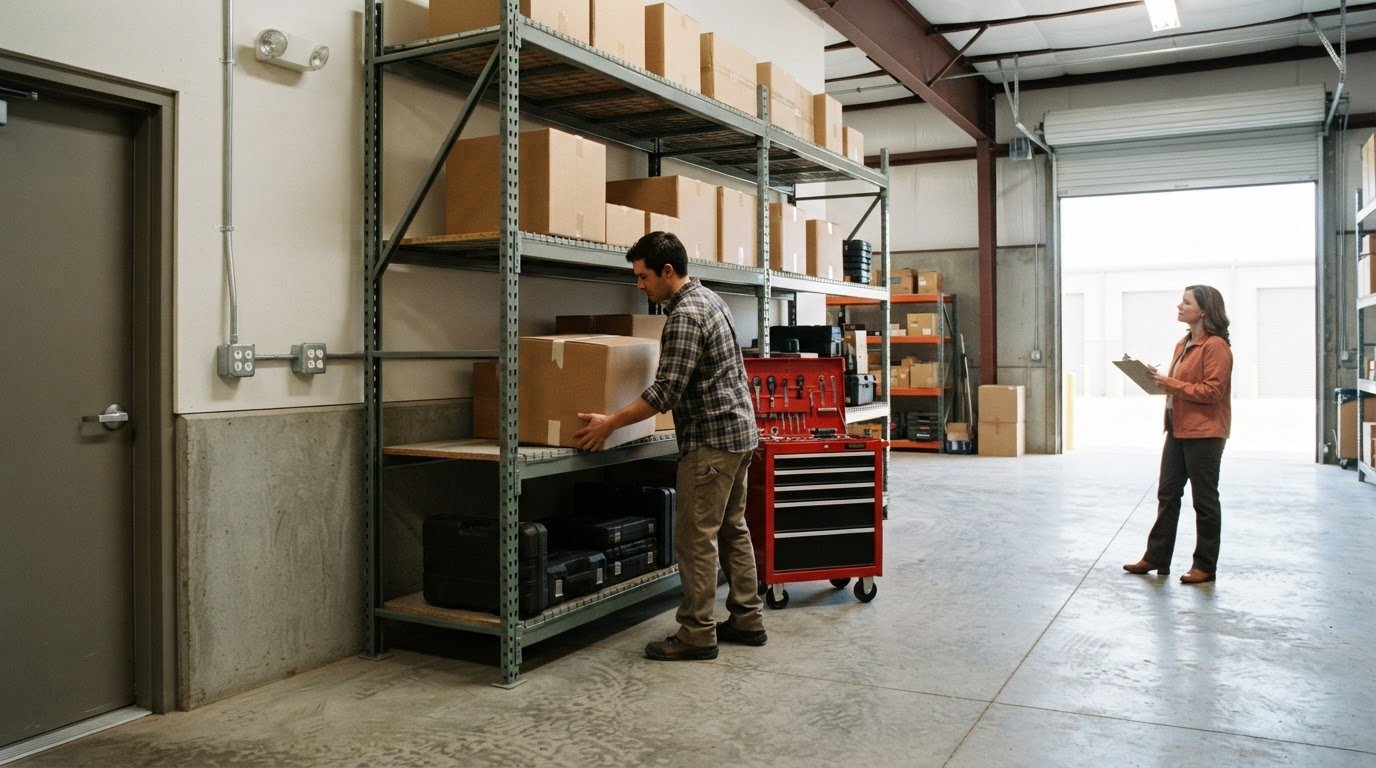
For inventory, group cartons by product type or order cycle. Face labels outward and keep fast-moving stock near the entrance. For example, a small distributor might separate seasonal goods from items picked weekly. Leave a clear route to each group so retrieving one carton doesn’t mean moving a stack.
Plan how you’ll retrieve records. Sort boxes by year, client, or project, then use the same category labels on the boxes and your inventory list. An office holding closed project files can group those boxes together while keeping active folders within easier reach. Avoid mixing paper records with heavy equipment or loose stock.
Start equipment storage with the largest item. Measure a compressor, tool chest, or display unit, then map its position before adding smaller items. Keep accessories with the equipment they belong to. A labeled container beside a machine is easier to find than loose parts spread across several boxes.
Office furniture can take up space in awkward shapes. Desks, chairs, and filing cabinets may not stack like cartons. Photograph each piece before storing it, remove detachable parts where practical, and keep screws or fittings in labeled bags. A floor plan can reveal whether furniture will block access to boxes or equipment.
If storage is becoming a long-term need, compare it with owning a dedicated property. The Colorado garage condo buyer’s guide can help explain that ownership option. For either approach, begin with the items, their retrieval frequency, and the layout each requires.
Available commercial listings offer different footprints and formats for business belongings. An office space and industrial lot in Brighton, Colorado, measuring 2,400 square feet is listed for $2,250; a Westminster, Colorado, office and flex space measuring 2,400 square feet is listed for $4,026.
Northglenn has a 4,000-square-foot warehouse, office space and storage listing for $4,290, plus a 2,622-square-foot warehouse, office space and storage listing that advertises no CAM charges. Near Frederick, a 1,500-square-foot workshop/light industrial space is listed for $1,552, while an Erie warehouse space measuring 13,850 square feet is listed for $26,546.
What zoning, insurance, and licensing rules apply to storing business goods in Dacono?
For a Dacono business, consider three separate questions: whether the property use is permitted, whether insurance covers your belongings, and what business activity will take place there. Storing boxed retail stock is different from receiving customers, repairing equipment, or dispatching a daily work crew.
Start with the specific address and intended use. Describe what you’ll store, how items arrive, how often staff visit, and whether any work will take place onsite. A company storing office chairs, for example, has a different activity description from a contractor storing tools and loading a vehicle each morning. Ask the relevant local planning authority whether the proposed use fits the property’s zoning and applicable conditions. Get an answer based on the address and activity you describe.
Next, review coverage with your business insurer or broker. Provide the inventory categories, approximate replacement values, and storage arrangement. Ask whether business property kept away from your main premises is covered and whether coverage differs during transport. Paper records, boxed merchandise, and a compressor are distinct property categories. Don’t assume one policy section treats them identically; request the applicable terms in writing.
Licensing depends on the business activity, not simply on storing items in a unit. Distinguish storage from customer transactions, equipment servicing, or production. Ask the appropriate licensing authority which requirements apply to the activity and location. A retailer storing packaged goods for later delivery should describe that process clearly rather than calling it simply “storage.”
Use: Record the address, goods, staff visits, deliveries, and onsite work.
Coverage: Identify stored property and ask about offsite and transit protection.
Licensing: Describe the actual business activity and location before relying on an existing license.
Keep the property-use response, insurance terms, and licensing guidance with your lease documents. This address-specific file helps distinguish permitted storage from business operations that may require separate review.
Storage units
Dacono business-storage listings show 223 available units, with rentals offered month-to-month. That arrangement can suit businesses needing temporary space without a long-term property commitment. For example, a retailer could store seasonal stock between sales periods. A company clearing an office could temporarily hold furniture during a move.
A storage unit is for holding belongings, not automatically for running business operations. Receiving customers, producing goods, or servicing equipment differs from storing cartons. Define your intended use before choosing a lease. If staff need frequent access, include visits and loading routines in your plan. If items will remain untouched, you may need less frequent access.
Month-to-month rental can offer flexibility as inventory changes, but you may need to move if your storage needs grow. Track what enters and leaves, and review whether the space still fits. A business that keeps adding stock may eventually need a larger commercial property rather than another storage unit.
Temporary overflow: Use a unit for seasonal goods, office relocation items, or equipment between projects.
Ongoing storage: Consider whether repeated access, changing inventory, and loading routines suit a storage arrangement.
Growing operations: Reassess if stored goods start requiring work, customer visits, or regular dispatch onsite.
Before signing, compare the unit’s permitted use and lease terms with your actual plan. Write down what you intend to store, who needs access, and how often deliveries or collections will occur. This helps distinguish simple storage from a need for workspace or a dedicated commercial property. Don’t treat a storage listing as permission to conduct every business activity onsite.
If a recurring need makes ownership worth exploring, use the Colorado garage condo buyer’s guide to understand that property option. A storage unit and an owned commercial property serve different needs. The right comparison starts with how your business uses the space, not merely how much it can hold.
The Garage Condo Guy
Businesses can assess whether leasing storage still fits or whether buying a garage condo merits consideration. The decision depends on how the space will be used, property plans, and whether ownership suits business goals. A storage unit and a garage condo serve different purposes, so consider these factors together when comparing the options.
Buying a garage condo is a property decision, not a substitute for temporary storage when you only need room for inventory or records. Whether ownership suits your business depends on how you’ll use the space and your property plans. For reference, contact information is available on The Garage Condo Guy’s website.
Set a Clear Direction for Your Space
A search for commercial storage for lease in Dacono may reflect a temporary space need or a larger property decision. Consider the expected duration, business plans, and intended role of the space when comparing options. If your needs change, review the arrangement and assess whether it still fits.
For a property decision, consider how ownership relates to your business goals, intended use, and investment plans. A garage condo is one alternative to renting storage. Before moving forward, identify the property’s intended use and the factors that will affect your decision.
For more information about ownership, consult the Colorado garage condo buyer’s guide. Compare the available options against your expected use, timeline, and business needs.
Frequently Asked Questions
Do Dacono commercial storage facilities allow business inventory, vehicle, or equipment storage?
What you can store depends on the facility’s lease terms and rules, as well as the specific items you have in mind. Boxed inventory and tools differ from a vehicle or equipment used for onsite work. Storing a work van, for example, is different from servicing it at the property. Describe the items and intended use clearly, distinguishing storage from customer visits, deliveries, or business operations.
What lease terms, deposits, and fees apply to commercial storage in Dacono?
Commercial storage rentals in Dacono are month-to-month; deposit and fee amounts aren't provided and vary by facility.

Comments