Can You Live in a Garage Condo? Front Range Regulations
A garage condo is a specialized industrial asset, not a creative loophole for the Front Range housing market. As residential prices in Denver and Boulder climb, many people look at a climate-controlled unit with a mezzanine and ask: Can you live in a Garage Condo? It's a common question, but the legal reality is often a sharp wake-up call for those who confuse the term "condo" with a residential home.
You're likely feeling the pressure of high real estate costs and seeking a functional space that works for your lifestyle. This guide provides the legal, zoning, and HOA-specific reasons why these units aren't residential properties and what uses are actually permitted in Colorado. We'll examine the 2026 HOA financial planning requirements, the impact of House Bill 24-1152 on garage conversions, and why a certificate of occupancy for storage is non-negotiable. You'll learn how to navigate local regulations in cities like Commerce City and avoid costly code enforcement fines. This data-driven breakdown ensures you understand the boundaries of your investment before you sign a contract.
Table of Contents
Defining the Garage Condo: Industrial Asset vs. Residential Housing
A garage condo is a deeded commercial property zoned for non-residential use. It consists of an individually owned unit within a larger industrial or commercial complex. While the term "condo" often implies a home, in this niche, it refers strictly to the fee simple ownership structure. Owners hold a deed to their specific unit and share interest in common elements like drive aisles and security gates. These units are engineered for vehicle storage, hobby workshops, and small business inventory. They are industrial assets first.
Prospective buyers often ask: Can you live in a Garage Condo? This question usually stems from the high cost of residential real estate in the Front Range. However, the legal definition of these properties prevents them from being used as primary residences. They aren't housing; they're specialized real estate for high-end storage and professional utility.
Common Features That Cause Confusion
High-end finishes and climate control create a lifestyle atmosphere that can feel residential. Many units include mezzanines, bathrooms, and kitchenettes to support hobbyists and entrepreneurs. These amenities don't legally transform the space into a dwelling unit. Unlike a traditional garage apartment, which is a residential Accessory Dwelling Unit (ADU), a garage condo lacks the infrastructure and permits required for overnight stays. They are designed for active use during the day, not for sleeping quarters.
Commercial vs. Residential Deeding
The Industrial Flex designation is the standard classification for these properties across Colorado. This status dictates how the property is taxed and insured. Commercial property tax rates in Denver and Boulder differ significantly from residential rates. For example, Commerce City garage condos follow strict industrial zoning patterns that exclude residential use. Title insurance policies also reflect this, offering no residential protections. Buyers must understand that their deed represents a commercial interest. Violating this by living in the unit contradicts the legal deeding and the zoning intent of the development.
Zoning Laws and Certificates of Occupancy in Colorado
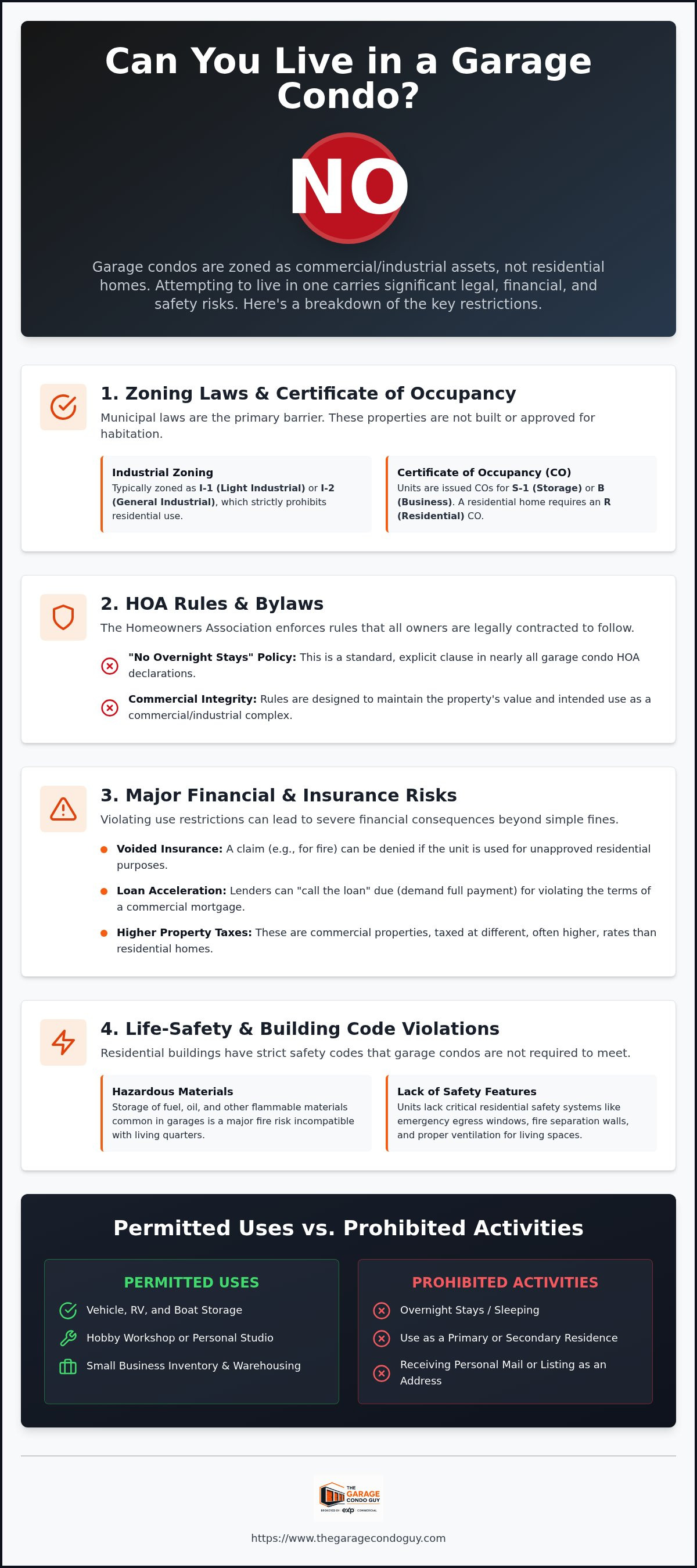
Municipalities across the Front Range utilize specific zoning codes such as I-1 (Light Industrial) or I-2 (General Industrial) to categorize garage condos. These designations are strictly incompatible with residential use. A Certificate of Occupancy (CO) serves as the definitive legal document specifying a building's permitted utility. Most garage condos receive COs for S-1 (Moderate-hazard storage) or B (Business) occupancy. Residential living requires an R (Residential) classification. Transitioning between these requires meeting rigorous International Building Code standards for fire separation and emergency egress.
The presence of hazardous materials like fuel, oil, and vehicles makes "habitable space" a life-safety violation. Fire codes for residential units require specific ventilation and life-safety systems that storage units lack. If you're wondering, "Can you live in a Garage Condo?" the answer lies in these safety protocols. Zoning boards prioritize the separation of living quarters from industrial hazards. Attempting to bypass these rules puts both your safety and your investment at risk.
Front Range Municipal Variations
Denver garage condos face intense oversight regarding fire suppression and drainage requirements. Local officials are vigilant about preventing illegal conversions in high-density areas. Commerce City garage condos often operate within industrial flex zones where heavy traffic and noise are legally protected. This environment is unsuitable for residential peace and quiet. Understanding these local nuances is critical before purchasing.
The Legal Definition of Residency
Code enforcement officers identify illegal residency through specific behavioral patterns. Overnight stays are the most common red flag. Other indicators include mail delivery to the unit and unusual utility consumption spikes. There's a clear legal difference between a 12-hour workshop session and 24-hour occupancy. If you need help identifying the specific use restrictions for a potential investment, contact a specialist to review the fine print before you close.
HOA Rules and the 'No Overnight' Policy
Garage condo Homeowners Associations (HOAs) act as the primary enforcement arm for land use restrictions. Their bylaws aren't suggestions. They are legally binding contracts designed to safeguard the community's commercial integrity and property values. Standard declarations across the Front Range explicitly prohibit overnight stays and the installation of permanent sleeping quarters. If an HOA ignores these violations, it risks the entire complex losing its commercial status or facing municipal rezoning.
Security measures like license plate readers and 24/7 camera surveillance are standard in these developments. These tools allow the board to monitor activity patterns and ensure the facility remains a professional environment. Frequent vehicle presence between 2:00 AM and 5:00 AM usually triggers an investigation. When people ask, "Can you live in a Garage Condo?" they must realize that the HOA is legally obligated to say no to protect the collective investment of all owners.
Enforcement and Penalties
Violations lead to aggressive penalties. Boards typically issue a series of escalating fines that can reach thousands of dollars. If the owner doesn't comply, the HOA can seek a legal injunction through the court system. Unauthorized residential use can also spike the community's insurance premiums. This financial burden often leads the HOA to pursue a judicial foreclosure or forced sale to remove the non-compliant owner from the complex.
Permitted Business and Hobby Use
There is a functional distinction between active use and residency. Working late on a project or taking a brief rest on a mezzanine sofa is generally acceptable. This differs from maintaining a primary residence with mail delivery and daily domestic activity. For Longmont garage condos, specific standards govern noise levels, chemical fumes, and exterior appearance. The goal is to maintain a high-end workspace, not a residential neighborhood. Before you commit to a unit, get a professional review of the HOA bylaws to ensure your intended use remains compliant.
Why Living in a Garage Condo Risks Your Investment
Illegal residential use transforms a secure asset into a massive liability. Property insurance for industrial units is written specifically for storage and workspace. If a fire or accident originates in an unpermitted living area, carriers often deny the claim entirely. This leaves the owner personally liable for damages to their unit and the entire complex. Beyond physical repairs, you risk losing the protection of your liability coverage when you violate the policy's use terms.
Can you live in a Garage Condo? Doing so puts your financing at stake. Commercial lenders issue loans based on the property’s industrial status. If a lender discovers the unit serves as a primary residence, they can call the loan immediately. This creates a financial crisis, forcing a rapid refinance or a distressed sale. Consulting a garage condo buyer representation specialist ensures you understand these use-case restrictions before you sign a contract.
Insurance and Liability Gaps
Residential title insurance won't cover an industrial storage unit. There is no legal crossover between these two property types. If you install unpermitted sleeping quarters, you create a permanent gap in your protection. You face a high risk of personal lawsuits if your unauthorized occupancy impacts the community's master insurance policy or safety rating. Industrial policies simply aren't designed to handle domestic accidents.
Long-Term Value Retention
Resale value is tied directly to the unit's legal status. Unapproved modifications for living decrease marketability and often require expensive remediation before a transfer of ownership. Adhering to zoning ensures the asset remains a viable car storage investment opportunity. A storage condo real estate agent plays a critical role in vetting HOA documents to confirm the unit's long-term utility matches your goals. Protecting the deed's integrity is the only way to ensure the property appreciates as intended.
Protecting Your Front Range Property Investment
Zoning designations like I-1 and Certificates of Occupancy for storage are the legal foundation of these properties. While the question of Can you live in a Garage Condo? is frequent, the answer is tied to life-safety codes that prohibit residential use. Ignoring these boundaries risks insurance denials, loan recalls, and aggressive HOA fines. Adhering to the intended commercial use preserves the legal standing and marketability of your unit. You're investing in a professional asset, and maintaining its compliance is the best way to secure its value.
Navigating the fine print of Front Range developments requires specialized knowledge of local bylaws. As Colorado's only dedicated garage condo specialist, I provide expert buyer representation across all major developments from Fort Collins to Castle Rock. I ensure you don't overlook critical use restrictions before you close on your investment. Protecting your equity starts with accurate data and professional guidance on industrial flex zoning. Get expert guidance on Front Range garage condo regulations today to secure an asset that fits your lifestyle perfectly.
Frequently Asked Questions
Can I stay overnight in my garage condo if I am working on a project?
Generally, no. Most HOA bylaws and municipal zoning codes for industrial flex space prohibit overnight stays entirely. While working late is permitted, sleeping in the unit violates fire safety regulations and the Certificate of Occupancy. Security systems and gated access often monitor activity during late-night hours. Consistent overnight presence usually triggers an investigation by the association board to ensure the commercial status of the complex remains intact.
Do garage condos have bathrooms and showers?
Yes, many units include rough-in plumbing or fully finished bathrooms. Showers are also permitted in some developments to support owners who use the space for physical hobbies or mechanical work. However, the presence of a shower does not grant residential status. These amenities are considered convenience features for active use during the day. They must comply with commercial building codes rather than residential standards to maintain legal standing.
Can I register my business address at a garage condo?
Yes, you can typically use a garage condo as a registered business address if local zoning allows for industrial flex use. This is common for entrepreneurs who use the unit for inventory storage or a private office. However, you cannot use it as your primary residential address for tax purposes or voter registration. The unit's utility must remain centered on business operations rather than domestic residency to stay compliant.
What happens if I get caught living in my garage condo in Colorado?
You will face escalating fines from the HOA and potential legal action from the municipality. Code enforcement can issue cease and desist orders for illegal occupancy. If you're asking, "Can you live in a Garage Condo?" the consequences of trying include voided insurance policies and the risk of your lender calling your commercial loan. In extreme cases, the HOA can pursue a judicial foreclosure to remove non-compliant owners from the property.
Are there any garage condos in Denver that allow residential living?
No, there are currently no garage condo developments in the Denver metro area zoned for residential living. These properties are classified as Industrial Flex or Light Industrial assets. To allow residency, a developer would need to secure a residential Certificate of Occupancy. This requires meeting strict International Building Code standards for life safety and emergency egress. These requirements are fundamentally different from the engineering used in standard vehicle storage facilities.


Comments