Garage Condos in Colorado: Market Trends and Benefits
The label on a Colorado garage condo listing won’t tell you what you own or what you’re allowed to do inside it.
That uncertainty is reasonable: “garage condo,” “car condo,” “storage condo,” and “personal warehouse” are marketing terms. The underlying property may involve fee-simple condominium ownership or a leasehold, and permitted uses, utilities, access, and alteration rules can differ by community. A feature that works in one unit isn’t proof it’s approved in another.
This guide explains the ownership distinctions and local factors that can shape a property’s fit, from usable unit specifications to HOA/COA rules and zoning. You’ll also learn which governing documents and property details to verify before comparing options across the Front Range and other Colorado communities.
Whether you’re considering space for vehicles, equipment, or business use, start with what the records and specifications confirm, not the listing label. The details determine whether a property matches your intended use.
General educational information only. Verify property-specific zoning, HOA/COA documents, taxes, financing, and legal requirements before purchase.
Table of Contents
What a Colorado Garage Condo Is, and What Its Name Does Not Tell You
A garage condo is a property marketed for private vehicle, equipment, hobby, or storage use; its legal ownership structure is determined by recorded documents, not its label. “Garage condo,” “car condo,” “storage condo,” and “private storage suite” are marketing terms. They don’t establish whether you own a unit, lease space, or hold rights to the land. Review the deed or title documents, declaration, and any lease before deciding what the property includes. The condominium model of ownership generally combines ownership of an individual unit with shared rights in common areas.
How fee-simple and leasehold ownership differ
In a fee-simple condominium structure, the owner holds title to the defined unit and a shared interest in common elements, as set out in the governing documents. A leasehold or land-lease arrangement is different: the buyer may own or control an interest in the unit while leasing the underlying land. Check the lease for payment obligations, escalation terms, duration, and transfer conditions. These terms can affect financing options and resale. Don’t assume a listing’s use of “condo” confirms fee-simple ownership.
Who considers Colorado garage condos
Potential buyers include RV and motorhome owners, vehicle collectors, boat and toy owners, small businesses, hobbyists, and people seeking personal storage. Their needs differ: one buyer may prioritize room for a large vehicle, while another may need space for equipment or business use. These profiles describe possible buyers, not guaranteed permitted uses. Confirm the specific property’s zoning and HOA/COA rules; another owner’s activities don’t prove yours are allowed. For a local example, review Denver garage condos and verify each property’s documents independently.
General educational information only. Verify property-specific zoning, HOA/COA documents, taxes, financing, and legal requirements before purchase.
How Colorado Location and Unit Specifications Shape the Fit
Compare a property’s location with your routine: distance from home, highway access, peak-hour drive time, and nearby growth can all affect how practical a unit is to use. When comparing market listings, note the date, asking price per square foot, unit size, location, and documented features. Compare similar properties rather than treating a broad regional average as a reliable value for an individual unit. For a city-specific starting point, review Denver garage condo listings.
Match the unit's usable dimensions to your vehicle or equipment
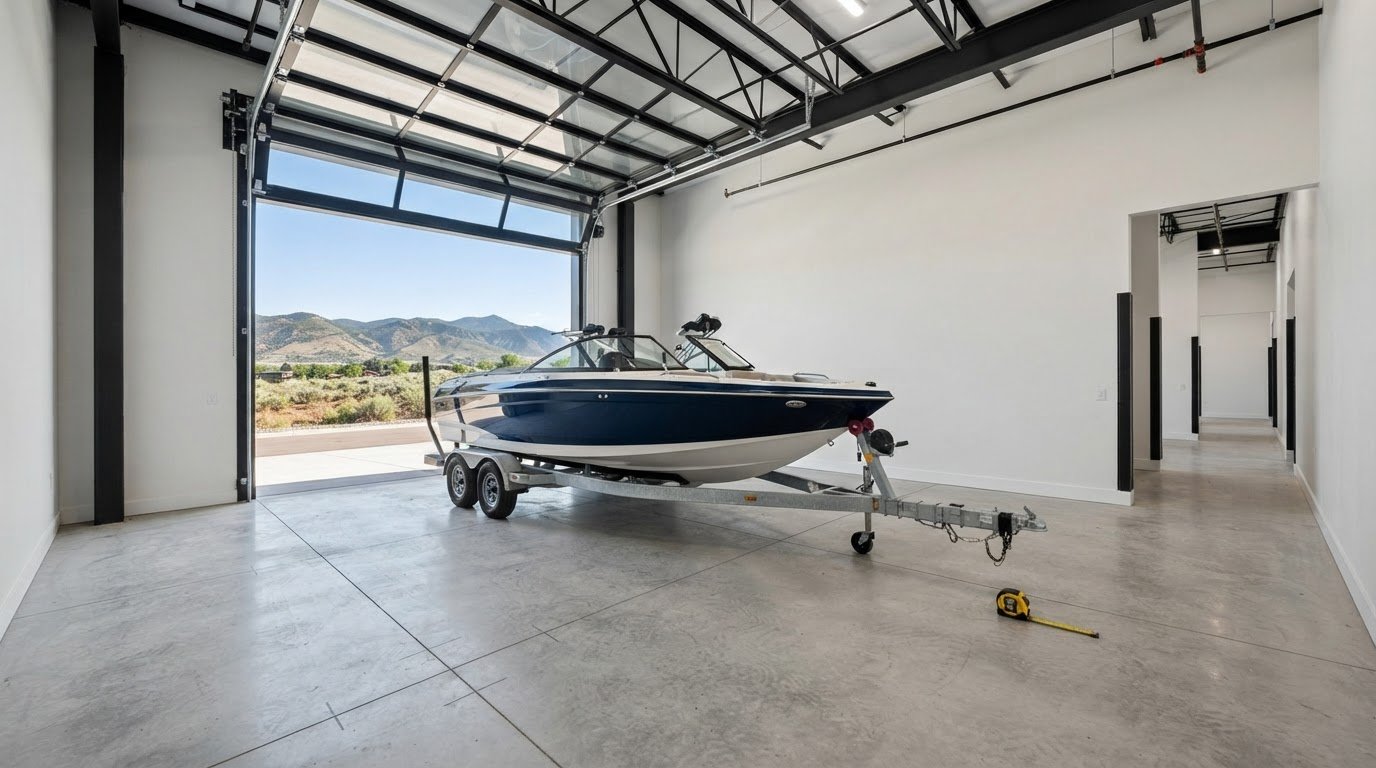
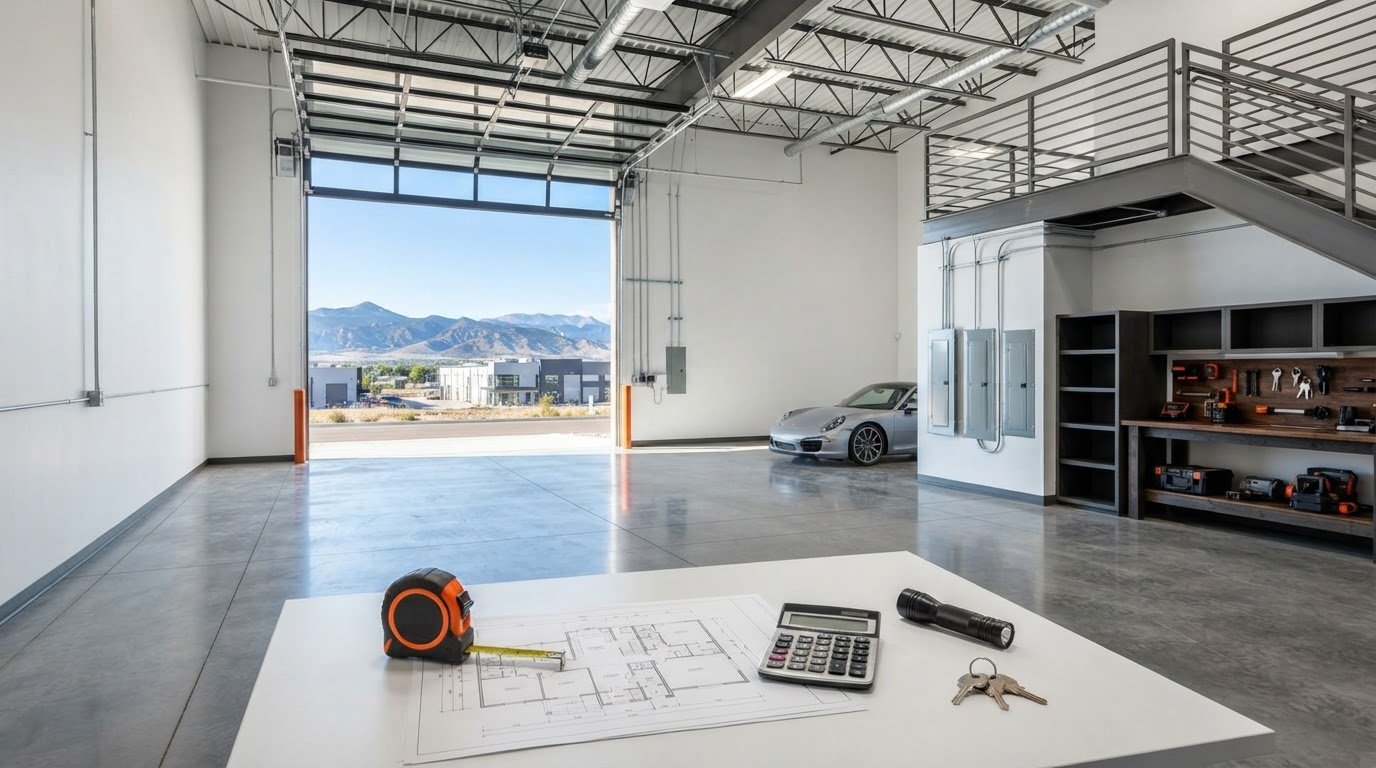
Compare each unit’s documented measurements with the vehicle, RV, boat, or equipment you plan to store. Check the overhead door’s actual width and height, interior clearances, and turning space. Many Colorado garage condos have overhead doors in the 12-14-foot height range, but dimensions vary by community and unit. A unit that works for a car may not suit an RV or boat. Confirm usable clearance beneath any mezzanine separately from the building’s total ceiling height.
Compare Front Range access and community features
Evaluate gated entry, cameras, drive aisles, verified access hours, and highway routes against how you expect to use the property. Amenities vary by community; confirm security features, bathrooms or showers, Wi-Fi, and service areas for the specific property. If you need RV access, check whether the drive aisles and approach work for your vehicle. For another city-level comparison, see Longmont garage condo information. The Colorado Condominium Ownership Act provides state-law context, while governing documents specify community rules. Use the Colorado garage condo buyer’s guide to organize property-specific checks.
Which Utilities, Uses, and Documents Should You Check?
A utility shown in a listing or present in a neighboring unit isn’t proof it’s available in yours. In Colorado, verify the unit’s specifications and written HOA/COA rules before relying on a feature or planning a particular activity. Check capacity as well as presence: a connection may not provide the service your intended equipment requires.
Review HOA/COA documents and permitted uses
Read the declaration, covenants, bylaws, rules, budget, financial statements, meeting minutes, insurance information, reserve details, and records of special assessments. Check whether your intended use is allowed, including business activity, customer visits, noise, automotive work, and rentals. Look for specific restrictions on employees, hazardous materials, outdoor storage, signage, overnight stays, pets, vehicle lifts, mezzanines, plumbing, HVAC, and unit alterations. Don’t treat another owner’s activities as confirmation that a use is permitted.
Confirm utilities and improvements for the specific unit
Ask for documented details on available service and capacity. Possible utilities include:
120 V power and 30 A or 50 A RV service
220 V or 240 V power, and three-phase power
Water, plumbing, heating, and air-conditioning
EV charging, if installed or proposed
Availability varies by community and unit. HOA/COA approval may be required for EV charging, plumbing, or other changes. Confirm whether existing upgrades were approved and whether applicable permits were obtained. Before planning new work, get written approval and verify installation requirements; another unit’s plumbing or electrical setup doesn’t establish that you can add the same features.
For broader market context, consult the Colorado real estate market trends, but use property-specific documents to confirm a unit’s utilities, permitted uses, and restrictions. For a structured review, use the Colorado garage condo buyer’s guide.
General educational information only.

A Practical Colorado Garage Condo Evaluation, and Where to Go Next
Use the same review process for each property, then compare listings on a like-for-like basis. Record the date, location, asking price per square foot, unit size, ownership structure, and documented features. Compare units with similar locations and specifications, then investigate differences in permitted uses, carrying costs, condition, access, and community amenities. Asking prices are not completed-sale values or appraisals, so don’t rely on price alone to judge value.
Define your intended use and confirm it is permitted by zoning and HOA/COA rules.
Confirm ownership and identify any land-lease terms, including payments, escalation provisions, and transfer conditions.
Measure fit against the actual unit dimensions, overhead door, turning space, and clearances.
Review rules and costs, including taxes, dues, insurance, utilities, maintenance, special assessments, and any land-lease payments.
Inspect condition and verify financing terms directly with lenders. Options may include commercial real-estate loans, local bank or credit-union financing, SBA financing for qualifying owner-occupied business uses, seller financing, or cash. Eligibility and approval aren’t guaranteed, and lender approval may depend on the specific project.
Connect the inspection and ownership review
Check the roof and structure, concrete slab, overhead door and opener, electrical system, heating and air-conditioning, plumbing, fire sprinklers, drainage, windows and doors, and any mezzanine and stairs. Compare inspection findings with records, and verify existing upgrades were approved and permitted. If the unit has a mezzanine, confirm its actual usable clearance rather than estimating it from the building’s ceiling height.
Use local specialist guidance without skipping verification
A garage condo specialist can help assess property fit and niche-market factors, but buyers still need to verify legal and property-specific requirements. For a detailed question checklist covering ownership, association review, utilities, financing, inspections, and resale, review the Colorado garage condo buyer’s guide.
General educational information only.
Make Your Next Property Review Document-First
In Colorado, a garage condo’s marketing name doesn’t confirm what you own or how you may use it. Check the recorded ownership structure, then compare the unit’s actual dimensions, access, and utilities with your intended use. HOA/COA documents and local requirements matter too. Verify them directly rather than relying on listing language or what other owners do.
A careful review also considers the property’s condition, financing terms, and ongoing ownership costs. The Garage Condo Guy focuses exclusively on garage condo and car condo real estate in Colorado, providing buyer and seller representation across the Front Range. Its buyer guidance covers ownership, HOA/COA review, utilities, financing, inspections, and resale, helping readers organize the questions to ask. That guidance can inform your review, but it doesn’t replace legal, zoning, lender, or inspection advice.
Use a clear checklist before comparing properties.Review the Colorado garage condo buyer’s guide for detailed questions to take into your property research. With the right documents and specifications in hand, you can assess your options with greater clarity.
General educational information only.
Frequently Asked Questions
What is a garage condo in Colorado, and how is ownership structured?
A garage condo is a property marketed for vehicle, equipment, hobby, or storage use, but the name doesn’t establish the legal ownership. Colorado properties may have fee-simple condominium ownership, where you own a unit and an interest in shared common elements, or a leasehold or land-lease structure. Review title and governing documents to confirm what you own, any land-lease obligations, and terms that could affect financing or resale.
Are utilities such as EV charging, water, or three-phase power standard in Colorado garage condos?
No. Utilities vary by community and unit. Possible features include EV charging, water or plumbing, three-phase power, 120 V outlets, 30 A or 50 A RV service, 220 V or 240 V power, heating, and air-conditioning. Verify the specific unit’s service and capacity in writing. Installation or upgrades may require HOA/COA approval, and plumbing in another unit doesn’t prove it can be added to yours.
What overhead door height do Colorado garage condos typically have?
Many Colorado garage condos have overhead doors in the 12-14-foot height range, but dimensions vary by community and unit. Confirm the actual door height and width, then compare them with your vehicle or equipment, including roof accessories. Check interior clearance as well. A mezzanine can reduce usable height; for example, a building with 20-foot ceilings may have only 10-11 feet of clearance below a mezzanine. Verify measurements on site or in unit specifications.
Can you stay overnight in a Colorado garage condo?
Don’t assume overnight stays are allowed. A garage condo isn’t automatically a residential property, and overnight use may be restricted by local zoning, building codes, and HOA/COA rules. Review the property’s permitted uses and association documents, then confirm requirements with the relevant local authority. Other owners’ practices aren’t proof that overnight stays are permitted. Verify the rules for the specific unit before making plans or treating overnight use as part of its intended function.
What documents should I review before buying a Colorado garage condo?
Review the title and ownership documents, declaration, covenants, bylaws, rules, budget, financial statements, meeting minutes, insurance information, reserve details, and records of special assessments. Check restrictions on your intended use, alterations, utilities, rentals, and overnight stays. If the property includes a land lease, review its payment, escalation, and transfer terms. Also verify zoning and financing details. A complete review helps identify property-specific conditions before you commit.
Across the Front Range, property details may differ in Denver, Boulder, Longmont, Lakewood, Superior, Dacono, Golden, Centennial, Aurora, Castle Rock, Broomfield, Englewood, Highlands Ranch, Littleton, and Commerce City.
General educational information only.
Ready to evaluate a garage condo in Colorado?Start with the Colorado garage condo buyer’s guide, then contact The Garage Condo Guy for buyer representation and guidance on your property search.

Comments