Garage Condo vs. Home Garage: Which Denver Option is Best?
Updated: Aug 16
Your home garage is likely costing you more in frustration and lost equity than you realize. While a residential setup seems convenient, it often fails once your collection grows or the HOA starts sending letters about your RV. This Garage Condo vs. Traditional Home Garage Comparison explores why a deeded unit is often the superior choice for Denver enthusiasts. You probably already know the struggle of juggling limited floor space with the need for climate control and privacy. We promise to show you how a specialized garage condo offers the security, equity, and dedicated workspace that a standard residential garage simply cannot match.
With Colorado ranking as the 4th largest market for these units in the country, the shift toward ownership is accelerating. We will dive into the specific data, from the $235 per square foot average in Denver to the 25% commercial tax assessment rates. You'll learn the differences in security, community benefits, and long term value. This guide provides the factual breakdown you need to determine which storage solution serves your assets best. We cover everything from local zoning impacts to the specific financial variables of commercial real estate ownership.
Table of Contents
Beyond the Driveway: Core Differences Between Garage Condos and Home Garages
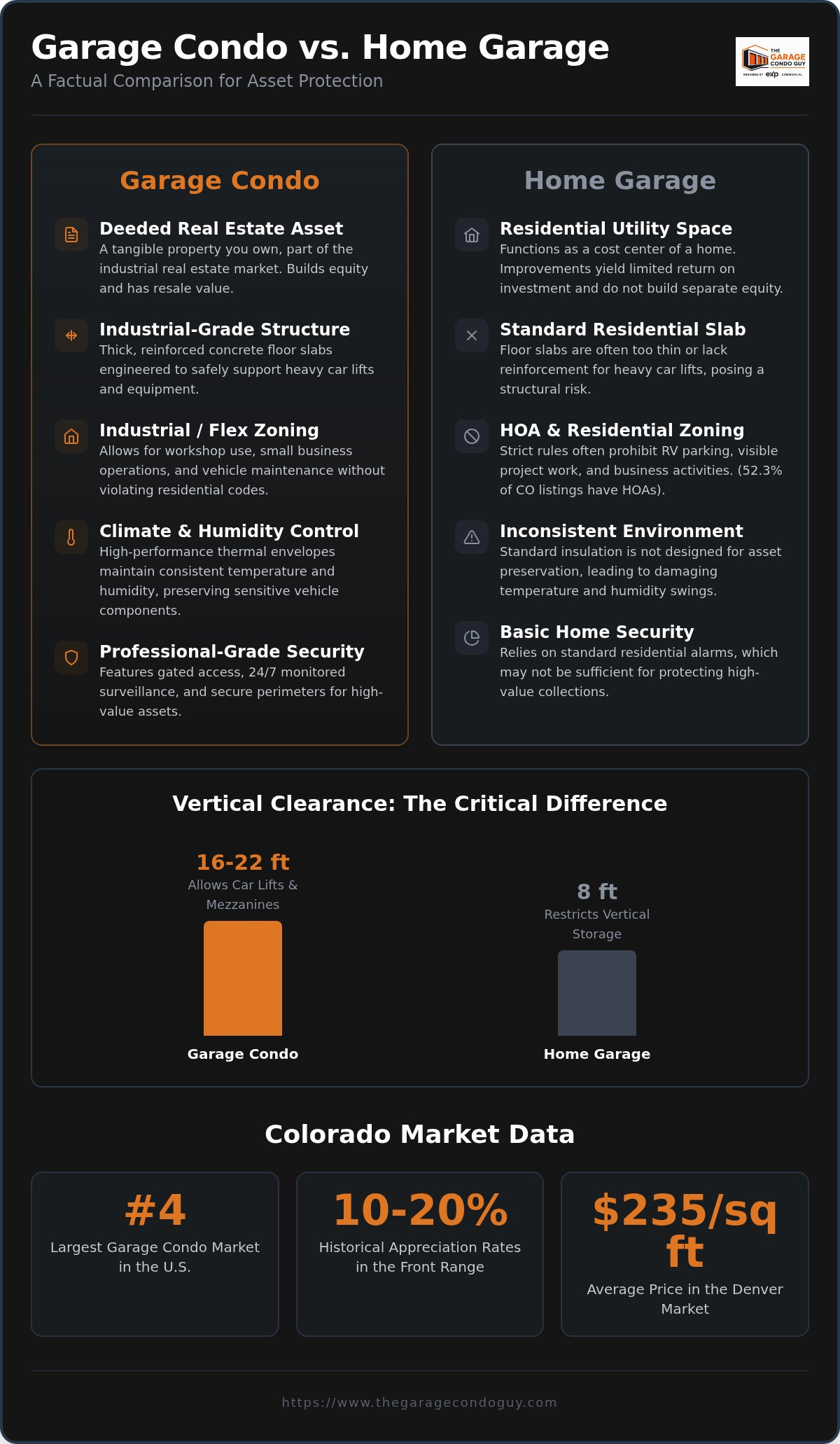
A garage condo is a deeded real estate asset similar to a residential townhome but for vehicles. This marks a fundamental shift from simple residential storage to owning industrial real estate. In a Garage Condo vs. Traditional Home Garage Comparison, the primary difference is the intent of the space. Home garages provide basic utility. Condos prioritize preservation. Standard residential units often lack the infrastructure to protect high-value collections from Colorado's extreme temperature swings. Specialized condos provide climate-controlled environments that maintain consistent humidity and heat levels year-round.
Space and Dimensions
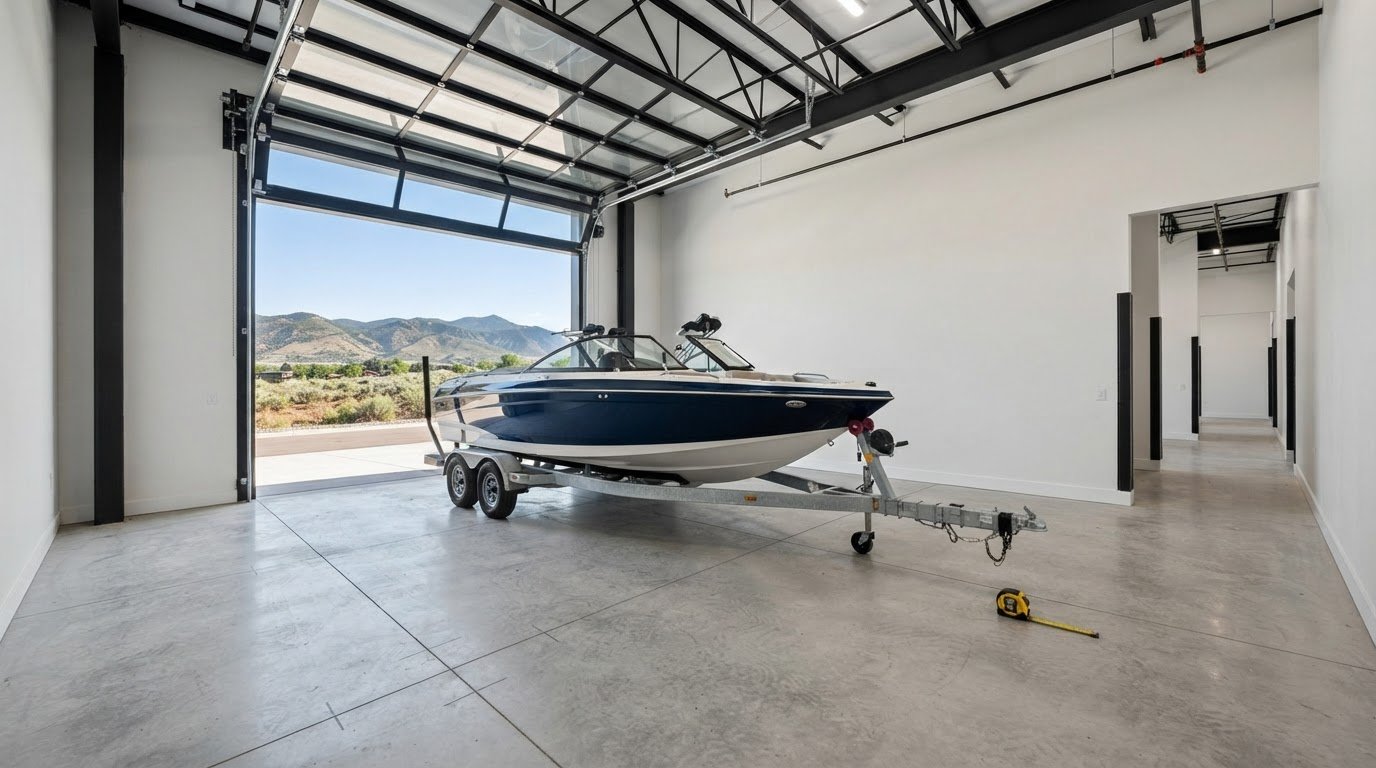
Vertical height is a major differentiator. Most home garages offer 8-foot ceilings, which restrict the use of car lifts. In contrast, garage condos provide 16 to 22 feet of vertical clearance. This height allows owners to install stackers or build mezzanine levels for additional square footage. Navigating a 40-foot RV into a suburban cul-de-sac is often a logistical nightmare. Industrial complexes are built with wide-turn radiuses and oversized bay doors to accommodate large trailers and motorhomes safely.
Ownership vs. Rental
Choosing a condo moves you away from the cycle of self-storage rentals. These units utilize a condominium ownership model, granting you deeded rights to the specific property. You're acquiring a tangible asset rather than paying for a temporary service. Security also shifts from basic home alarms to professional-grade systems. Most complexes feature gated access and 24/7 monitored surveillance. This level of oversight significantly exceeds what typical residential neighborhoods provide. For details on navigating these transactions, you can reach our team through the contact page.
The Breaking Point: Why Your Home Garage Isn't Enough Anymore
Homeowners often hit a wall when the "spillover" effect takes over. Daily drivers, lawn equipment, and seasonal storage eventually crowd out vehicle collections. A Garage Condo vs. Traditional Home Garage Comparison reveals that residential spaces lack the structural integrity for serious enthusiasts. Residential floor slabs often lack the thickness or reinforcement required for industrial-grade car lifts. These limitations force owners to choose between their hobby and their home's functionality.
HOA Restrictions and Zoning
Neighborhood rules create significant friction for collectors. In Colorado, 52.3% of home listings are governed by HOAs that frequently fine owners for parking RVs in driveways or leaving garage doors open during project work. Deeded condos sit on land zoned for industrial or flex use. This legal status allows for legitimate small business activity and heavy workshop use that residential zoning prohibits. Beyond just storage, these units carry proven investment potential that standard home improvements rarely match.
Climate Control and Preservation
Colorado's extreme temperature swings are hard on classic car seals, gaskets, and paint. Standard home insulation is designed for residential comfort, not for the strict climate control required for automotive preservation. Specialized condos utilize high-performance thermal envelopes to maintain consistent humidity and temperature levels. If you're ready to move beyond the limitations of residential storage, you can contact our experts to explore available units. These facilities offer the privacy and protection that a two-car suburban stall simply cannot provide.
Ownership vs. Utility: The Investment Case for Garage Condos
A home garage is a cost center. A garage condo is a deeded asset. When conducting a Garage Condo vs. Traditional Home Garage Comparison, the primary financial difference lies in equity. While home improvements often return only a fraction of their cost, specialized garage units in the Front Range maintained appreciation rates of 10% to 20% through 2024. Owners aren't just buying space; they're acquiring a share of a limited industrial real estate market.
Equity and Resale Value
Supply and demand dynamics drive value in the Colorado market. Strict zoning laws in cities like Boulder and Lakewood have limited the development of new industrial land. This scarcity increases the value of existing units. Colorado is currently the 4th largest market for these assets, with approximately 1,950 units across the state. You can explore more about Car Storage Investment Opportunities to see why these units are becoming a staple for local portfolios.
The Lifestyle Advantage
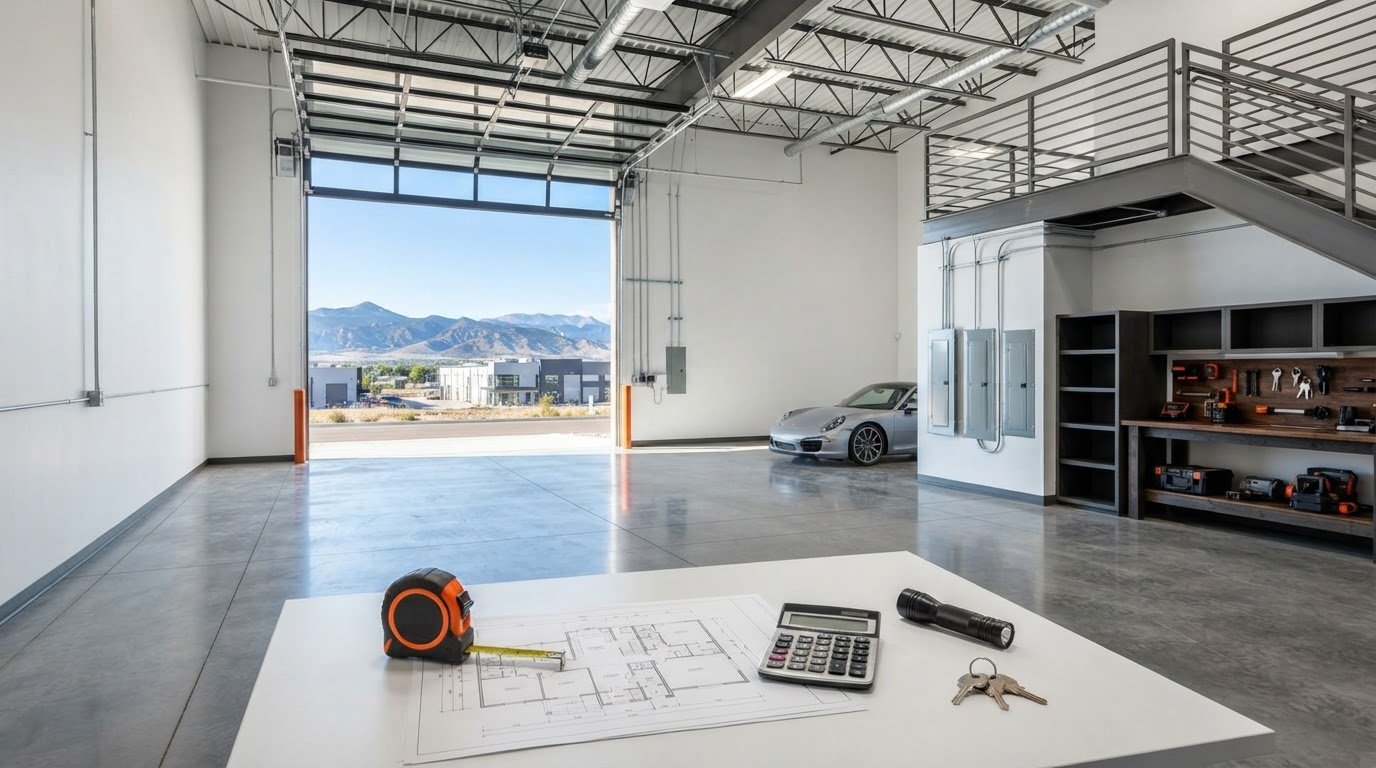
The social ROI of a condo often outweighs the financial gains. These complexes operate like a "country club for cars," offering a community of like-minded enthusiasts that a solitary driveway cannot provide. Customization options allow you to build more than a storage stall. Owners frequently install:
Polished epoxy flooring and custom cabinetry.
Full wet bars and luxury lounge areas.
Industrial-strength mezzanines for private offices.
Small business owners may also leverage tax strategies like Section 179 deductions, though you should always verify these with a CPA. If you're looking for specialized units in high-demand hubs, contact our advisory team for current market availability. This move shifts your vehicle storage from a basic utility to a strategic real estate position.
Navigating the Colorado Front Range Garage Condo Market
The Colorado Front Range is currently the 4th largest market for garage condos in the United States. With 43 tracked developments and roughly 1,950 units statewide, the sector is rapidly expanding. For those conducting a Garage Condo vs. Traditional Home Garage Comparison, location and zoning are the primary drivers of long-term value. Pre-construction remains the most strategic entry point, particularly with new developments planned through 2026 in Superior and Dacono. Securing a unit early allows for maximum customization before the slab is even poured.
Key Locations: Denver to Boulder
Proximity is a critical variable. Most buyers prioritize units within a 20-minute drive of their primary residence. Denver metro hubs often focus on luxury car storage with higher price points, such as the $315 per square foot seen in Broomfield. In contrast, markets like Dacono lean toward utility RV condos with larger footprints and different clearance specs. This geographic diversity ensures that whether you need climate-controlled preservation or massive storage for an off-road fleet, the Front Range has a specific product type to match.
Finding Your Perfect Unit
Niche real estate requires a specialist who understands industrial zoning and owner associations. General residential agents often lack the data to navigate commercial-grade contracts or off-market opportunities. This is why you need a garage condo buyer representation specialist. We track inventory in the Boulder and Longmont corridors that never reaches the public MLS. If you're ready to secure a unit in the next wave of development, you can contact The Garage Condo Guy for a curated list of available units. Expert guidance ensures you don't miss out on high-demand hubs before they reach 100% occupancy.
Selecting Your Ideal Front Range Storage Strategy
Deciding on the right facility depends on the scale of your collection and your long term financial objectives. This Garage Condo vs. Traditional Home Garage Comparison clarifies that while a residential setup offers convenience, it lacks the 16 to 22 foot clearances and industrial climate control necessary for high-value preservation. Owners along the Front Range are increasingly moving toward deeded assets to bypass restrictive HOAs and secure property in a market with historically strong appreciation. This shift transforms storage from a basic monthly expense into a tangible real estate position.
Finding the right unit requires a specialist who understands industrial zoning and has access to pre-construction inventory. As an exclusive Front Range specialist, Ryan offers niche automotive and RV expertise to guide you through these specialized real estate transactions. You can Secure Your Specialized Buyer Representation Today to explore off-market opportunities in hubs like Superior and Dacono. Taking this step ensures your collection is housed in a secure, professional environment tailored to your specific requirements.
Frequently Asked Questions
Is a garage condo a better investment than a traditional storage unit?
A garage condo is generally a superior investment because it's a deeded real estate asset rather than a monthly expense. Traditional storage units offer no equity growth. In contrast, specialized garage units in the Colorado Front Range maintained appreciation rates of 10% to 20% through 2024. This ownership model allows you to build wealth while securing a specialized space for your vehicle collection or hobby gear.
Can I legally run a business out of my garage condo in Colorado?
Legal business operations depend entirely on the specific zoning of the complex. Many developments are situated on land zoned for light industrial or flex use. This classification often permits small business activities that residential zoning prohibits. You can use the space for e-commerce fulfillment, specialty workshops, or private offices. However, you must always verify the specific association bylaws and municipal codes before beginning operations.
What are the typical HOA fees for a car condo in the Front Range?
Typical fees for these units vary based on the specific amenities and location of the complex. While the average monthly fee for traditional residential condominiums in Colorado is $475, garage condo fees are structured to cover industrial-grade needs. These usually include gated security, exterior maintenance, and common area insurance. This structure creates a "Triple Net" management style where the association handles the heavy lifting of property upkeep.
Are garage condos climate-controlled by default?
Most high-end developments include climate control to protect assets from Colorado's extreme weather. In a Garage Condo vs. Traditional Home Garage Comparison, the ability to maintain consistent humidity and temperature is a major advantage. These units feature high-performance thermal envelopes and dedicated HVAC systems. Some entry-level or utility-focused developments in areas like Dacono might only offer roughed-in utilities, so verifying the specific build-out is essential.
How do I finance a garage condo purchase?
Financing for these units usually involves commercial lending rather than a standard residential mortgage. Because garage condos are classified as commercial real estate, lenders apply different interest rates and down payment requirements. You won't find these products through traditional home loan channels. It's best to work with a specialist who can connect you with local lenders familiar with the niche garage condo market in the Denver metro area.

Comments