Equipment Storage Solutions for Denver & Boulder Contractors
Updated: Aug 16
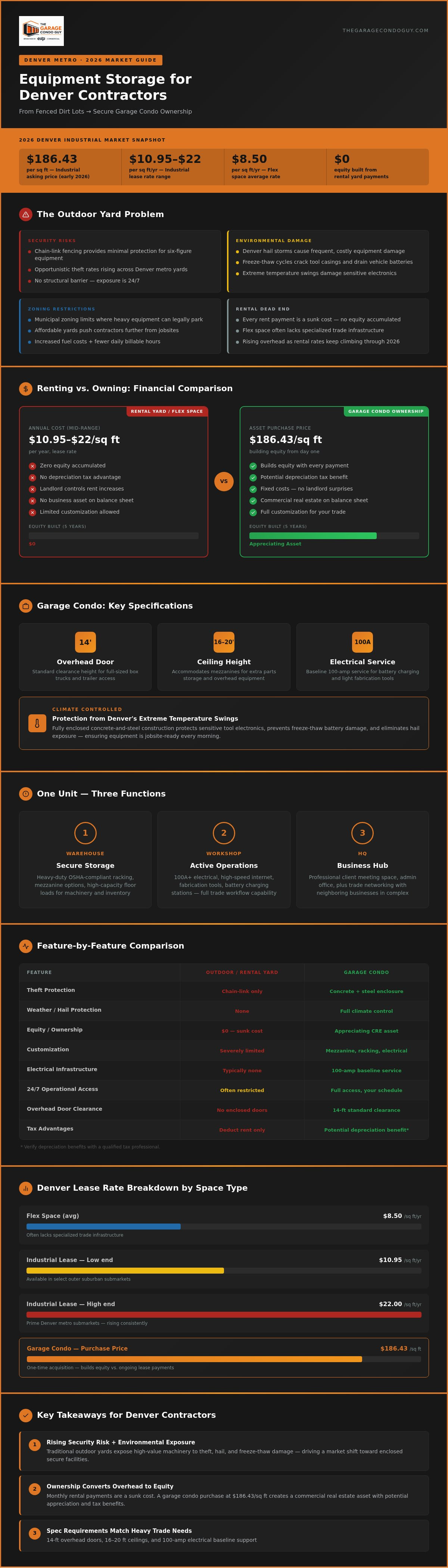
How much of your profit is currently sitting in a fenced-in dirt lot exposed to the elements and opportunistic theft? Finding reliable Equipment Storage for Denver Contractors/Businesses involves more than just finding a vacant corner in an industrial park. You've likely noticed the local market is tightening. Industrial property asking prices reached $186.43 per square foot in early 2026. Meanwhile, rental rates for flex space average around $8.50 per square foot per year. It's frustrating to watch monthly overhead climb while your expensive machinery sits in a risky outdoor yard.
This guide explains how to move beyond temporary rentals into secure, climate-controlled garage condos that function as professional operational hubs. You'll learn how to transition from being a tenant to an owner in the Denver metro area. We'll examine the shift toward asset ownership, compare current market data, and outline the specific building code requirements for specialized contractor facilities in Boulder County.
Table of Contents
Denver’s Contractor Storage Crisis: Beyond the Fenced Yard
High-value trades across the Front Range are facing a significant bottleneck. Traditional outdoor yards, once the standard for Equipment Storage for Denver Contractors/Businesses, are increasingly viewed as operational liabilities. Relying on a chain-link fence to protect six figures' worth of machinery is no longer a viable strategy in a market where theft and environmental damage are on the rise. For many, the "dirt lot" model has become a drain on resources rather than a support system.
The Reality of Denver's Rental Market in 2026
Industrial lease rates in the Denver metro area have climbed to between $10.95 and $22.00 per square foot per year, depending on the specific submarket. This rent inflation is compounded by restrictive municipal zoning that limits where heavy equipment can be legally parked. Many contractors find themselves pushed further from their primary jobsites to find affordable space, which increases fuel costs and reduces daily billable hours. Flex space remains an option at roughly $8.50 per square foot, but these units often lack the specialized infrastructure required for heavy-duty trade operations.
Security vs. Access: The Trade-off
While the broader self-storage industry provides basic units, they rarely accommodate the 24/7 operational flow a busy contractor requires. Most rental yards offer accessibility at the expense of true security. A concrete-and-steel condo provides a structural barrier that a standard fenced lot cannot match. Beyond theft prevention, these fully enclosed units mitigate the risk of hail damage, which is a frequent and costly reality for Denver businesses. Transitioning to a professional garage condo eliminates the vulnerability of outdoor storage while providing a climate-controlled environment for sensitive tools and electronics. This shift allows businesses to move away from zero-equity rental agreements and toward a model where the storage facility serves as a legitimate, secure corporate headquarters.
Why Denver Businesses are Swapping Rental Yards for Garage Condos
Denver's extreme temperature swings pose a constant threat to specialized tools and vehicle electronics. Standard rental lots offer zero protection from the freeze-thaw cycles that can crack casings or drain batteries. In contrast, garage condos provide a climate-controlled environment that ensures your gear is ready for the jobsite every morning. These spaces also allow for extensive customization. You can install mezzanines for extra parts storage, set up high-speed internet for administrative tasks, or build out heavy-duty racking systems that comply with OSHA's general requirements for storage. This level of utility is rarely found in basic Equipment Storage for Denver Contractors/Businesses, which often lacks the infrastructure for high-performance operations.
Owning vs. Renting: The Financial Breakdown
Monthly rent in a traditional yard is a sunk cost. It provides access but builds zero value. Transitioning to a garage condo changes the financial dynamic. You're acquiring a commercial real estate asset with potential for appreciation. Many contractors find ownership offers tax advantages like depreciation; verify these benefits with a tax professional. Exploring Car Storage Investment Opportunities reveals how this shift impacts long-term business valuations.
The 'Flex' Advantage for Small Businesses
A garage condo serves as more than just Equipment Storage for Denver Contractors/Businesses; it functions as a comprehensive headquarters. These units act as a warehouse, workshop, and professional office for meeting clients. The social environment also matters. Complexes often house various trades, creating a networking hub for referrals. If you're ready to evaluate available units, you can consult with a local specialist to find a location that fits your trade.
Key Features: Tailoring Your Space to Your Trade’s Needs
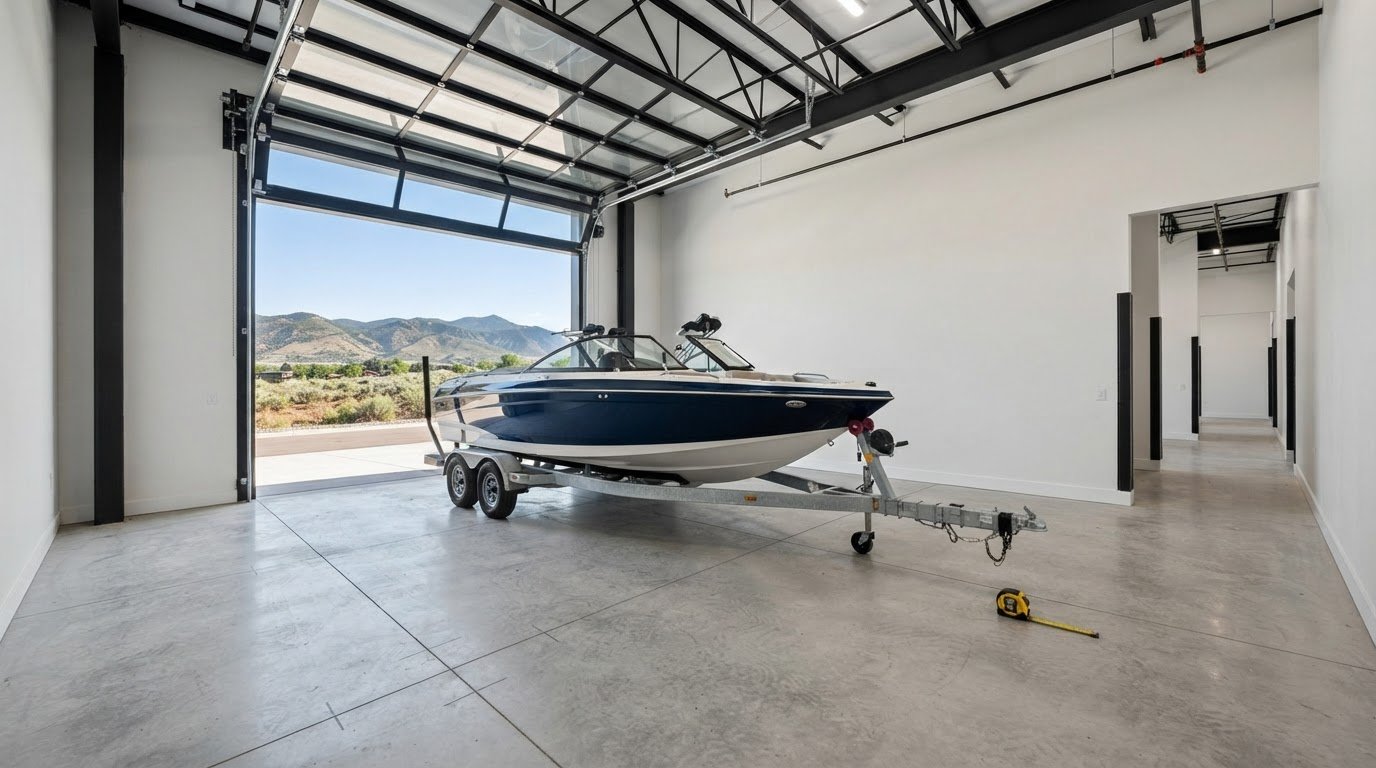
High-performance trade work requires more than a simple box. Specialized Equipment Storage for Denver Contractors/Businesses must accommodate specific vehicle dimensions. Standard units often feature 14-foot overhead doors and 16-to-20-foot ceilings, allowing for full-sized box trucks and trailer storage. Beyond height, electrical capacity is vital. Many units offer 100-amp service as a baseline, supporting battery charging stations and light fabrication tools. This shift toward high-utility space aligns with broader self-storage growth trends where businesses increasingly drive demand for premium, functional assets.
Must-Have Amenities for Denver Contractors
Floor drains and interior water access are essential for maintenance. They allow teams to wash down equipment or rinse off winter road salt without leaving the unit. Security is equally critical. Professional complexes utilize gated entries, high-definition surveillance, and on-site management to protect high-value inventory. These features distinguish a professional hub from a standard rental yard.
Designing Your Professional Workshop
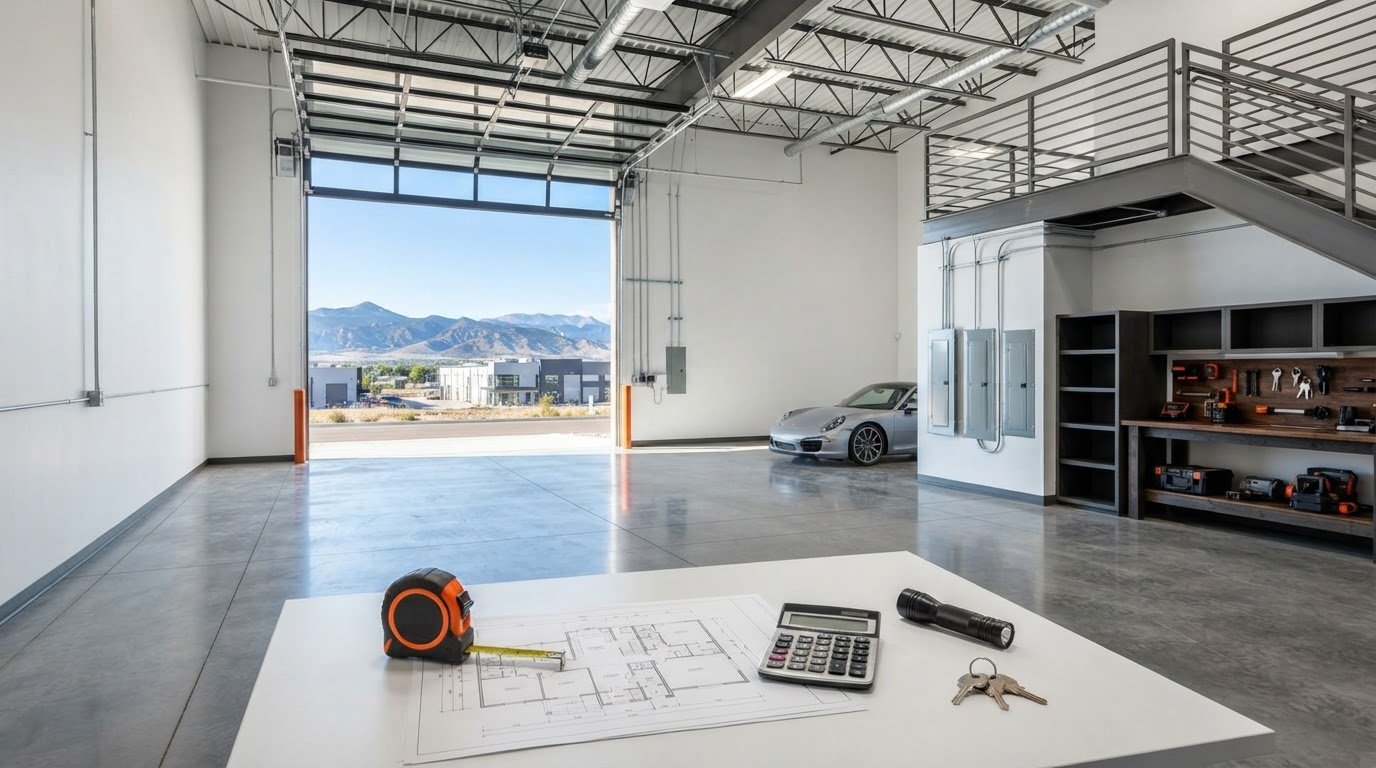
A climate-controlled environment does more than keep staff comfortable. It prevents the rapid degradation of lithium-ion batteries and sensitive electronics caused by Colorado’s temperature fluctuations. Mezzanine levels can double your usable square footage, providing a dedicated office space above your equipment. This separation keeps administrative tasks clean and organized away from the main floor. Strategic placement along the I-25 or Highway 287 corridors provides a central pivot point between Denver, Boulder, and Longmont. If you need a space that fits your specific operational requirements, you can request a consultation for buyer representation.
How to Secure Your Equipment Storage Asset in 2026
Securing high-quality Equipment Storage for Denver Contractors/Businesses requires a structured approach in a stabilizing market. In Q1 2026, commercial inventory in Denver was 9.12% above its 12-month average, providing a favorable window for buyers. Industrial properties sold for an average of $147.48 per square foot during this period. To successfully navigate this landscape, follow these four steps:
Step 1: Define your long-term footprint, including specific needs for 3-phase power and overhead clearance.
Step 2: Access niche market listings that aren't typically found on residential platforms.
Step 3: Review the specific CC&Rs of the complex to ensure your trade's activities are permitted.
Step 4: Analyze the resale data of similar units to confirm the asset's long-term value.
Why a Niche Specialist Matters
General residential agents often lack the technical knowledge required for industrial transactions. They might overlook critical details like floor load capacities or municipal zoning restrictions that vary between Denver and Boulder County. Specialized Garage Condo Buyer Representation ensures that your due diligence covers electrical infrastructure and specialized HVAC requirements. This expertise prevents costly mistakes during the acquisition phase.
Ready to Move Your Business In?
The timeline for identifying and closing on a Denver-area storage condo typically ranges from 45 to 90 days. This includes the search period, property inspections, and finalizing commercial financing. Securing a unit now allows your business to lock in operational costs while inventory levels are higher than average. It's time to transition toward a permanent, professional hub. Contact The Garage Condo Guy to find your professional hub and start the evaluation process today.
Establishing Your Operational Headquarters in the Front Range
Transitioning from a vulnerable rental yard to a secure garage condo provides more than just a physical space; it secures your company's operational future. By shifting away from high-cost industrial leases, you convert a monthly expense into a tangible real estate asset. Protecting your machinery from hail and extreme temperature fluctuations ensures your tools remain in peak condition for every jobsite. Optimizing Equipment Storage for Denver Contractors/Businesses through ownership allows for customization that standard rentals cannot match, including specialized power and mezzanine office spaces.
Navigating the niche market of industrial condos requires a specialist with an exclusive focus on these transactions. As part of Loop Commercial Real Estate, I provide expert guidance across the Colorado Front Range to help you identify facilities that meet your trade's specific requirements. Whether you're expanding your fleet or moving out of a home garage, the current 2026 market inventory offers a strategic window for acquisition. Secure your Denver business hub—Contact the Specialist today to begin your search. Your business deserves a permanent, professional home that builds value over time.
Frequently Asked Questions
Can I legally run my business out of a garage condo in Denver?
Legality depends on the specific municipal zoning and the association's Covenants, Conditions, and Restrictions (CC&Rs). Most units are zoned for industrial or commercial use, permitting storage and light trade operations. However, retail businesses with frequent customer foot traffic are typically restricted. Since general contractors in Colorado are licensed at the municipal level, you must ensure your specific business license aligns with the local city's land-use regulations for that facility.
How do garage condo prices compare to traditional small industrial warehouses?
Industrial properties in Denver sold for an average of $147.48 per square foot in early 2026. While traditional warehouses often require purchasing large footprints, garage condos provide smaller, more accessible units starting around 1,000 square feet. With flex space lease rates averaging $8.50 per square foot per year, ownership offers a stable alternative for Equipment Storage for Denver Contractors/Businesses by locking in long-term operational costs and avoiding annual rent hikes.
Is there a mezzanine included in most contractor storage condos?
Many modern units are designed with 20-foot ceilings to accommodate an optional or pre-installed mezzanine. These secondary levels usually cover approximately one-third of the total floor area. They're frequently used for administrative offices or light inventory storage. Because the mezzanine utilizes vertical space, it allows contractors to separate their workshop activities from their office work without increasing the unit's ground-level footprint or property tax assessment.
What are the monthly HOA fees for a storage condo and what do they cover?
Monthly HOA fees vary by facility but typically cover building insurance, common area maintenance, and professional security monitoring. In the Front Range, these fees also generally include snow removal and trash services, which are vital for daily operations. These costs ensure the entire complex maintains a professional appearance for client meetings. Owners should review the association's reserve study to understand how future roof or pavement repairs are funded.
Are these units climate-controlled for year-round equipment storage?
Most premium units used for Equipment Storage for Denver Contractors/Businesses feature individual climate control systems. These setups usually include high-efficiency heaters and full insulation to protect sensitive tools and lithium-ion batteries from Colorado's sub-zero winter temperatures. Maintaining a consistent internal environment prevents the freezing of specialized chemicals and the cracking of plastic casings. Some facilities also offer cooling options to mitigate high summer heat for businesses storing temperature-sensitive materials.
Comments