RV Storage with Power for Sale: Colorado Buyer’s Guide
What if a listing’s “power available” won’t support your RV’s electrical needs? A property advertised as rv storage with power for sale can still leave key details unclear: outlet type, amperage, circuit capacity, and whether upgrades are allowed.
You need more than a plug inside the unit. Your RV’s electrical requirements, length, height, turning access, and intended use all matter. So do ownership terms, zoning, and HOA/COA rules. A neighboring owner’s setup doesn’t establish what’s permitted in your unit.
This guide explains which electrical details to verify before making an offer, how to compare your RV’s dimensions and access needs with a unit, and which ownership documents, costs, and Colorado Front Range purchase details to review. Advertised measurements and utility labels need property-specific verification before you commit.
General educational information only. Verify property-specific zoning, HOA/COA documents, taxes, financing, and legal requirements before purchase.
Table of Contents
What “RV Storage with Power for Sale” Means in Colorado
Searching for rv storage with power for sale means looking to purchase a property that includes electrical service, not simply renting an RV parking space. Listings may use labels such as “garage condo,” “car condo,” or “personal warehouse,” but marketing language doesn’t establish the legal ownership structure or permitted use. Review the governing documents, zoning information, and unit specifications.
A fee-simple condominium purchase generally gives the owner an individual unit and an interest in common elements. A leasehold or land-lease arrangement grants rights under a lease instead. It may involve recurring lease payments or escalation provisions, which can affect financing and resale. Confirm what the deed and purchase documents transfer, and how the property’s rules apply to storing and accessing your RV.
What does “power” mean for an RV storage unit?
“Power” can describe different services. A unit might have a 120 V outlet, 30 A or 50 A RV service, or other electrical capacity. Some communities may also offer 220 V/240 V service, three-phase power, or EV charging. These options are not interchangeable, and an EV charger or higher-voltage service doesn’t by itself establish that the unit has the outlet and circuit your RV needs. A listing description alone doesn’t verify capacity. Compare your RV documentation with the unit’s electrical details, including outlet type, amperage, and panel information.
Why Colorado buyers should assess the specific unit
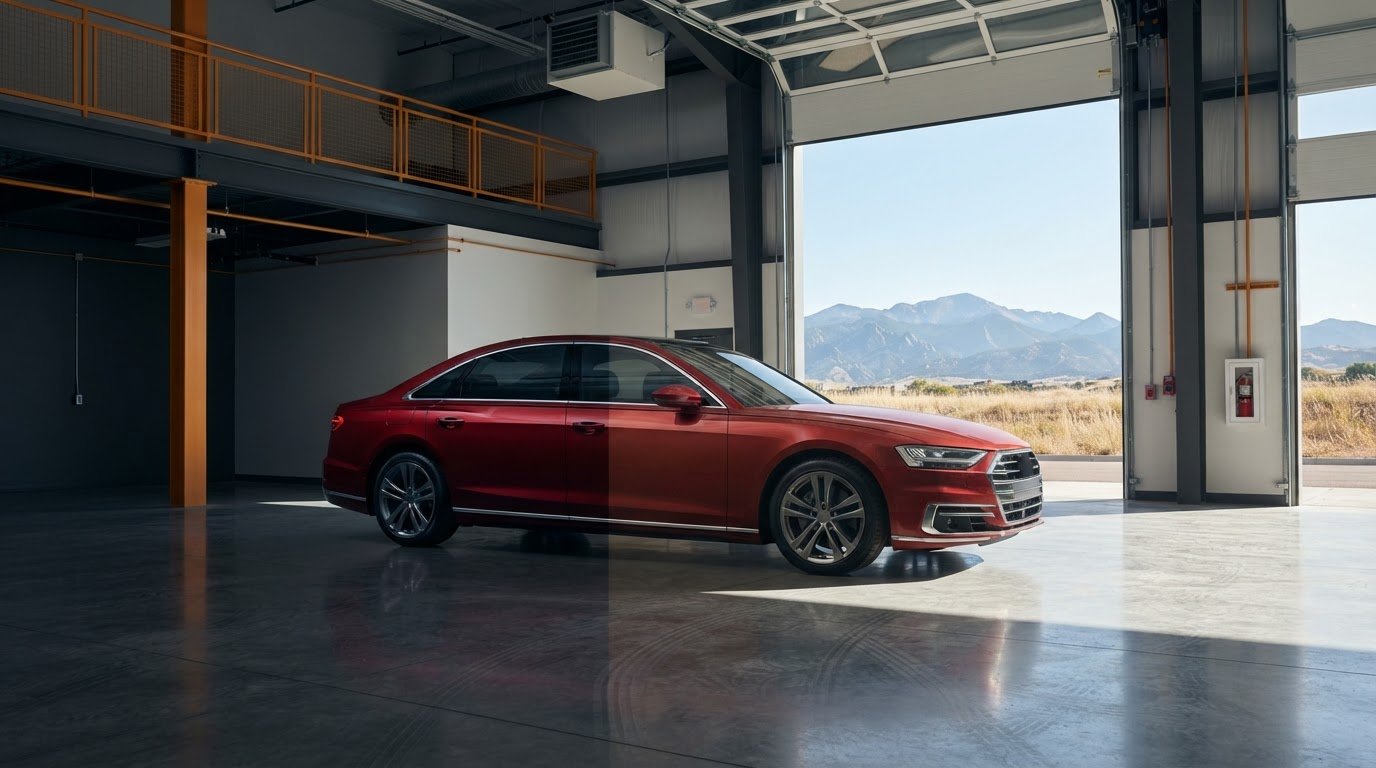
Start with your RV’s actual height, length, and width, then compare them with the unit’s usable dimensions, door opening, and approach. Many Colorado garage condos have overhead doors in the 12-14-foot height range, but communities vary, and door height doesn’t guarantee interior clearance. If the unit has a mezzanine, verify the clear height beneath it. RV types and onboard amenities differ, as outlined in this overview of the Recreational Vehicle (RV).
For Front Range RV storage condos, verify the specific unit’s electrical service and any upgrade permissions, along with ownership and use rules. Those details determine whether a property fits your RV and intended use.
Match the Front Range Unit’s Electrical Service to Your RV
Start with your RV’s owner’s manual or electrical documentation. Compare its stated requirements with the service installed in the individual unit, not a description of utilities elsewhere in the building. For rv storage with power for sale, “power” is useful only if the outlet and available capacity suit your RV and intended use.
Questions to ask about RV outlets and electrical capacity
Record the unit’s outlet type, amperage, and panel details from property documents and an inspection. Then compare those details with your RV’s requirements. A 120 V outlet, 30 A service, and 50 A service are different configurations. Don’t assume a general-purpose outlet, an available circuit, or service in a neighboring unit can support your RV or accessories.
Service present: Identify the outlet type and amperage in the unit.
Panel details: Record the unit’s panel information and what the inspection establishes about its electrical service.
Permitted use: Check property documents for rules affecting the intended electrical use.
Upgrade permissions: Treat added or changed service as subject to property-specific review. HOA/COA approval may be required.
This comparison separates what the RV needs, what the unit has, and what the property allows. Don’t treat a proposed upgrade as available until its feasibility and permissions are established.
Check vehicle fit alongside electrical service
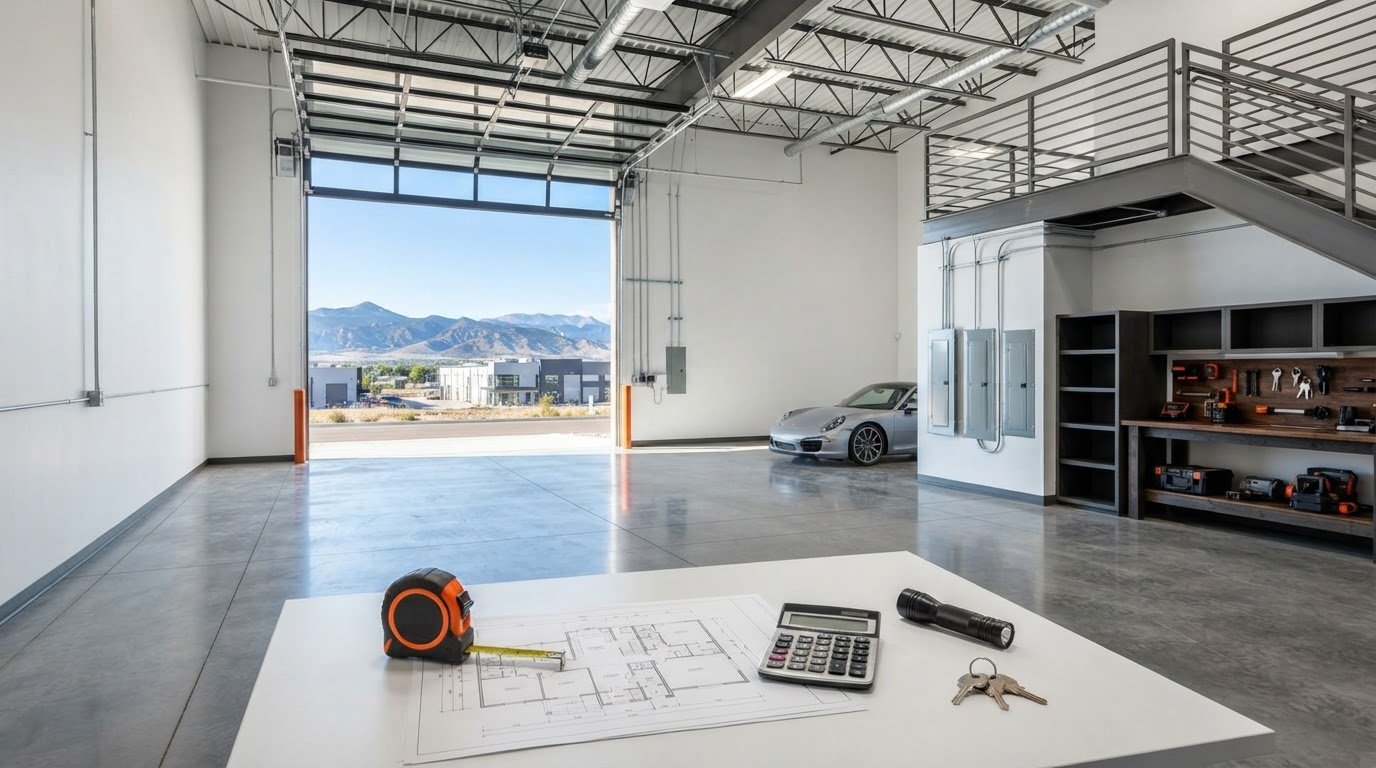
Measure your RV, including its height and any equipment that affects clearance. Compare those measurements with the unit’s door dimensions and usable interior space. If a mezzanine is present, verify the actual clearance beneath it; ceiling height elsewhere in the unit doesn’t establish usable vehicle clearance.
Heating and air-conditioning also vary by unit, so don’t assume that climate-controlled RV storage comes with the property. For a broader look at property-specific checks, use this Colorado garage condo buyer guide.
Colorado RV Storage Due Diligence: Documents, Inspection, and Ownership Costs
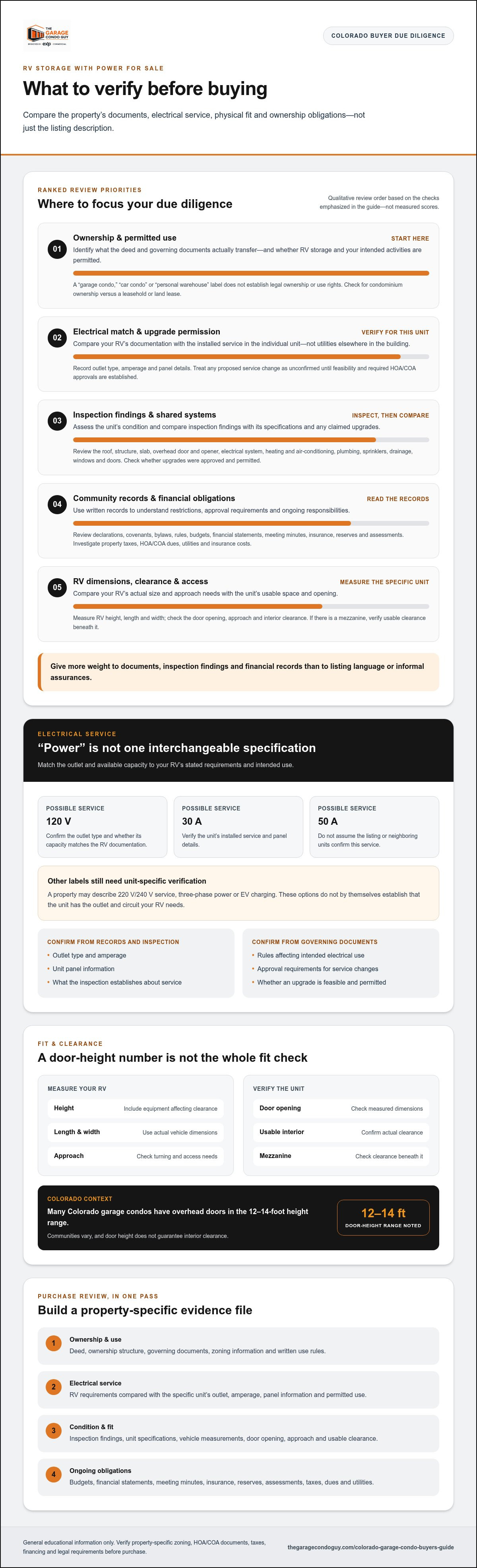
Before making an offer on rv storage with power for sale, evaluate each property against the same criteria: ownership, permitted use, physical condition, utilities, and ongoing obligations. Give more weight to governing documents, inspection findings, and financial records than to listing language or informal assurances. For each item, note what the available records confirm and what still needs to be resolved.
Confirm ownership and permitted use. Review the deed and governing documents to identify whether the unit is a condominium or subject to a leasehold or land lease. Compare the written use rules with your intended RV storage and activities.
Review community records. Examine declarations, covenants, bylaws, rules, budgets, financial statements, meeting minutes, insurance, reserves, and assessments. These records help explain restrictions, financial obligations, and approval requirements for changes.
Inspect the unit and shared systems. Assess the roof, structure, concrete slab, overhead door and opener, electrical system, heating and air-conditioning, plumbing, sprinklers, drainage, windows, and doors. Check any mezzanine’s actual usable clearance. Compare inspection findings with the unit’s specifications, and review whether upgrades were approved and permitted.
Map ownership costs. Investigate property taxes, HOA/COA dues, utilities, insurance, maintenance, assessments, and any land-lease obligations. Use property-specific records to compare ongoing costs rather than relying on general estimates.
Verify utility access and use restrictions in writing
Review the documents for rules on electrical service, EV charging, plumbing, HVAC, lifts, and unit alterations. Don’t assume plumbing can be added because another unit has it; verify the installation permissions for the unit you’re considering. Also check restrictions that may apply to business activity, customer traffic, employees, automotive work, noise, hazardous materials, outdoor storage, signage, renting, pets, or overnight stays. Another owner’s activity is not proof of permission. Use the written rules to evaluate your intended use.
Understand ownership and financing before proceeding
Commercial real-estate loans, local bank financing, credit-union financing, SBA financing for qualifying owner-occupied business uses, seller financing, and cash may be options to consider. Lender approval can depend on the specific project and ownership structure. Review the Colorado garage condo buyer’s guide to organize the documents and financing questions relevant to your purchase.
General educational information only. Verify property-specific zoning, HOA/COA documents, taxes, financing, and legal requirements before purchase.
Choose and Pursue an RV Storage Property with Power in Longmont or the Front Range
Build a shortlist around the requirements that determine whether a unit works for your RV: dimensions, verified electrical service, access, security, amenities, and distance from home. Compare properties in Longmont and across the Denver Front Range, including Boulder, Lakewood, Superior, Dacono, Golden, Centennial, Aurora, Castle Rock, Broomfield, Englewood, Highlands Ranch, Littleton, and Commerce City. Travel time and property features can vary across these locations, so compare each candidate against your own route and priorities.
Use a property-specific shortlist before making an offer
For each candidate, record ownership type, electrical service, unit dimensions, access, utilities, and approval requirements. Compare security and amenities such as gated entry, cameras, bathrooms or showers, Wi-Fi, an RV dump, a wash area, compressed air, and wide drive aisles where offered. For Longmont garage condos and nearby properties, consider highway access, surrounding growth, competing supply, and actual drive time from home. Check the route during your usual travel time to understand whether peak-hour traffic affects access.
Compare fit today with ownership and resale factors
Consider how location, size and layout, door dimensions, utilities, community condition, carrying costs, permitted uses, and unit condition may affect future appeal. HOA/COA financial health, taxes, dues, insurance, land-lease costs, and flexibility can also matter to resale. A unit’s dimensions or services are useful only if they fit your RV and the property rules. Comparing these factors side by side helps separate essential requirements from preferences.
The Garage Condo Guy provides buyer representation for garage condos and car condos in Colorado. Buyer representation can help organize property comparisons and transaction questions around your priorities. Review the Colorado garage condo buyer’s guide as you prepare to evaluate ownership, utilities, and purchase details. Bring your RV dimensions, power requirements, target area, and ownership priorities to the conversation.
Turn Your RV Requirements Into a Clear Purchase Plan
Turn your must-haves into a decision framework before comparing listings. Separate requirements from preferences: electrical service and vehicle fit may be essential, while certain amenities or a shorter drive may be negotiable. Record each candidate’s verified electrical service, usable dimensions, access, ownership structure, permitted uses, and ongoing obligations. This makes it easier to compare properties consistently instead of relying on listing language.
For buyers considering rv storage with power for sale, property-specific guidance can bring the ownership documents, utility details, and intended use into one purchase conversation. The Garage Condo Guy focuses exclusively on garage condos and car condos in Colorado, with buyer representation and guidance on ownership structures, utilities, HOA/COA review, financing, inspections, and resale considerations.
For help evaluating a Colorado garage condo purchase, contact The Garage Condo Guy by phone or email. Share your RV dimensions, power needs, target area, and ownership priorities to get started with buyer representation.
Frequently Asked Questions
Can I buy RV storage with 30-amp or 50-amp power in Colorado?
Some Colorado communities may offer units with 30 A or 50 A RV service, but availability varies by community and individual unit. Before purchase, compare your RV’s electrical requirements with the outlet and service installed in the unit. Review unit specifications and HOA/COA conditions, including limits on use or upgrades. A listing that mentions power doesn’t confirm either configuration.
How do I know whether a garage condo’s power will work for my RV?
Compare your RV’s manufacturer documentation with the unit’s confirmed electrical service, including outlet type and amperage. For example, if your manual specifies 50 A service, verify that the unit has that service instead of relying on a nearby outlet or building-level description. Record the setup during property review and inspection. “Power available” in an rv storage with power for sale listing doesn’t establish capacity or compatibility.
Can I add or upgrade electrical service in an RV storage condo?
Upgrade options depend on the property’s electrical system, governing documents, and HOA/COA approval. Before relying on a planned change, establish what work is permitted for that specific unit and what project requirements apply. Another unit’s electrical setup doesn’t prove yours can be upgraded. Don’t treat proposed service changes as available until the property-specific permissions and requirements are clear.
Are garage condos in Colorado fee-simple ownership or land lease?
Either structure may apply, so the marketing label alone won’t tell you what you’ll own. Fee-simple condominium ownership includes the unit and an interest in common elements. A leasehold or land lease may involve recurring payments and escalation provisions, which can affect financing and resale. Read the governing documents to identify the structure, lease terms, and obligations tied to the specific property.
What should I verify before buying an RV storage condo with power?
Verify ownership, zoning, dimensions, electrical service, use limits, inspection findings, and ongoing obligations. Across Denver and the Front Range, including Boulder, Longmont, Lakewood, Superior, Dacono, Golden, Centennial, Aurora, Castle Rock, Broomfield, Englewood, Highlands Ranch, Littleton, and Commerce City, utility access and rules remain property-specific. Review taxes, dues, insurance, utilities, maintenance, and possible assessments. General educational information only.
Comments