Roof Deterioration: Protect Your Denver Garage Condo Value
Could roof deterioration you can’t see from inside a Denver garage condo affect its value or future costs? Water stains, damaged roof edges, debris near drains, or reports of leaks are reasons to investigate. None proves the roof has failed, but each can point to questions to resolve before a purchase or sale.
To understand the roof’s condition and who makes repair decisions, look beyond the unit itself. A garage-condo label alone doesn’t establish roof responsibility. The ownership structure and governing documents do.
This article explains what to observe safely, what an inspection can establish, and which records to review, including budgets, financial statements, reserves, insurance information, meeting minutes, and special-assessment history. Together, physical findings and ownership records help show how roof condition fits into due diligence and transaction planning. General educational information only. Buyers must verify property-specific zoning, HOA/COA documents, taxes, financing, and legal requirements before purchase.
Table of Contents
Roof Deterioration in a Colorado Garage Condo: What to Notice First
Roof deterioration describes changes or damage to roof components. An observation alone doesn’t confirm its cause or severity. Roof designs and materials vary, so understanding types of roofs and their construction can help explain why visible signs differ between properties. An inspection is needed to assess the specific roof.
Which roof changes should prompt a closer inspection?
From a safe viewing point, note roofing material that appears damaged, displaced, or missing. Record visible debris near roof edges or drains if you can see it without climbing or entering a restricted area. These are observations to follow up on, not proof of a particular defect.
Inside the unit, staining, dampness, or a musty odor can also prompt investigation, though each may have a cause unrelated to the roof. Note where and when you noticed the sign, and take photographs when safe and permitted. Include context, such as whether a mark is on the ceiling or near a wall, so it can be located during an inspection.
Why a garage-condo roof is not just a unit-level issue
A roof may be classified as an individual unit component or a common element. Responsibility for maintenance, decisions, and costs depends on the ownership structure and governing documents. Review the declaration, covenants, bylaws, and applicable rules rather than relying on the garage-condo label. In Denver and across the Front Range, use the same approach: document what you can observe, then establish responsibility from the property records.
Visible roof deterioration is a reason to investigate, not a standalone diagnosis. For a purchase, include the roof in broader due diligence. General educational information only. Buyers must verify property-specific zoning, HOA/COA documents, taxes, financing, and legal requirements before purchase.
How Roof Deterioration Develops and What an Inspection Can Establish
Roof deterioration is wear or damage to roof components. To evaluate a concern, separate what is visible from what an inspection establishes and what may need further assessment. A surface change can be documented, but it doesn’t by itself identify the cause, the condition of hidden materials, or the repair scope. The roof, structure, and drainage are parts of the building, so conclusions should account for the inspection’s scope and access.
What a roof inspection can and cannot tell you
A garage-condo inspection can include the roof and structure among its focus areas. Read the report in stages: identify the locations and conditions observed, note any limits on access or visibility, then distinguish findings from recommendations for further evaluation. For example, an inspector may record a visible concern without determining whether concealed materials are affected or what work is required. An estimate or repair plan is a separate conclusion, not something every inspection provides.
This approach keeps evidence separate from assumptions. If the report recommends follow-up, use the specific recommendation to guide the next assessment rather than treating the initial observation as a complete diagnosis.
How roof findings relate to the rest of the building
The roof is part of the building envelope, and its condition should be considered alongside the structure and drainage. An interior condition noted during an inspection doesn’t prove the roof caused it. Compare location-specific observations in the report with relevant repair records or association notices. If the source remains unclear, further evaluation may be needed.
An inspection records observed conditions; governing documents establish ownership obligations. Review both for a property-specific picture. The Colorado garage condo buyer guide covers inspections and ownership records. General educational information only. Buyers must verify property-specific zoning, HOA/COA documents, taxes, financing, and legal requirements before purchase.
How to Evaluate Roof Deterioration Before Buying or Selling a Colorado Garage Condo
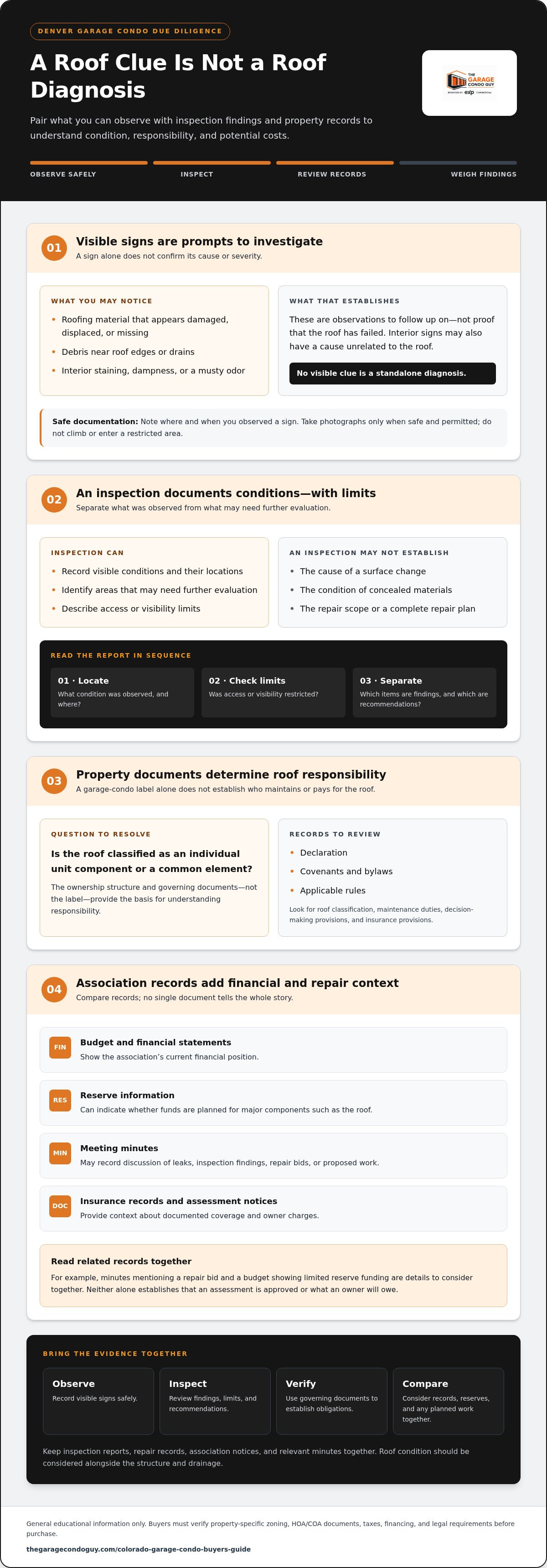
Use a consistent sequence: observe safely, obtain an inspection, review governing documents and association records, then weigh the findings in the context of the transaction. For example, a report noting a visible concern near a drain is an observation to compare with maintenance records, not proof of the cause or repair scope. Roof deterioration can matter differently depending on the documented condition, who is responsible, the available reserve funds, and whether work or an assessment is planned.
Which HOA/COA records help clarify roof responsibility?
Start with the declaration, covenants, bylaws, and rules. These records help show how the roof is classified and describe applicable maintenance, decision-making, and insurance provisions. Then compare them with association records:
A budget and financial statements show the association’s current financial position.
Reserve information can indicate whether funds are planned for major components such as the roof.
Meeting minutes may record discussion of leaks, inspection findings, repair bids, or proposed work.
Insurance records and assessment notices provide context about documented coverage and owner charges.
For example, minutes mentioning a repair bid and a budget showing limited reserve funding are relevant details to consider together. Neither alone establishes that an assessment is approved or what an owner will owe. Another owner’s repair choices don’t establish your responsibility.
What buyers and sellers should document
Keep inspection reports, repair records, association notices, and relevant minutes together. Buyers can compare specific inspection recommendations with the association’s documented plans and finances, then consider possible carrying costs without assuming a future amount. Sellers can use dated repair records and notices to describe known work and outstanding items accurately. Complete records provide context, but they don’t determine a buyer’s conclusions.
For broader ownership and due-diligence context, see the Colorado garage condo buyer guide.
Roof Deterioration, Garage Condo Value, and Your Next Due-Diligence Steps
Roof condition is one part of a garage condo’s resale picture, not a standalone measure of value. Its relevance depends on documented condition, governing documents, and the association’s financial health. Location, layout, utilities, permitted uses, and community finances also matter. Roof deterioration doesn’t automatically reduce value, and a dollar impact shouldn’t be assumed without property-specific evidence.
How roof condition fits into garage-condo resale
Consider inspection findings alongside association records. Documented concerns, planned repairs, reserve funding, and assessments may each shape a buyer’s understanding of carrying costs and the transaction. Their effect depends on the property and its records. Broader resale factors are covered in the garage condo ownership due diligence guide.
A practical next step for Front Range buyers
Before making a decision, bring the physical findings and ownership records together. Review:
Inspection reports and recommendations for further evaluation
Governing documents that address roof classification and responsibility
Association budgets, financial statements, reserves, insurance, minutes, and assessments
Property-specific zoning, permitted uses, taxes, financing, and legal requirements
Assess these details in the context of the transaction rather than assuming a particular repair, cost, or value outcome. Garage condos differ, so verify the records for the specific property.
General educational information only. Verify property-specific zoning, HOA/COA documents, taxes, financing and legal requirements before purchase.
Make Roof Review Part of a Clear Ownership Decision
Roof deterioration deserves attention, but visible changes alone don’t establish the cause, responsibility, or effect on resale. An inspection can document observed conditions. Governing documents and association records help clarify how the roof is handled and whether financial planning or assessments may affect ownership costs.
Assess those findings alongside the garage condo’s location, layout, utilities, permitted uses, and community health. The Garage Condo Guy represents garage-condo buyers and sellers across Colorado’s Front Range. Its buyer guide covers inspections, ownership, HOA/COA records, and resale considerations, providing a framework for organizing property-specific due diligence.
General educational information only. Buyers must verify property-specific zoning, HOA/COA documents, taxes, financing, and legal requirements before purchase. For a broader framework, review the Colorado garage condo buyer guide. Contact The Garage Condo Guy to discuss buyer or seller representation for a garage condo.
Frequently Asked Questions
What are the signs of roof deterioration on a garage condo?
Possible signs include roofing materials that look damaged, displaced, or missing, as well as interior staining or dampness. These are reasons to investigate, not a roof diagnosis: moisture marks can have causes unrelated to the roof, and surface appearance can’t show hidden conditions. Note where and when you see a change, take photos from a safe location, and use an inspection to establish what can be concluded.
Can roof deterioration affect a garage condo's resale value?
Yes, roof condition can be relevant to resale, but roof deterioration doesn’t automatically reduce a garage condo’s value. Buyers may weigh documented inspection findings, repair history, association reserves or assessments, and ongoing carrying costs alongside location, layout, utilities, permitted uses, and community condition. The effect depends on the specific property and records. Don’t assign a dollar impact based on a visible sign alone.
Who is responsible for a garage condo roof?
Responsibility depends on the property’s governing documents and ownership structure, not simply the garage-condo label. Review the declaration, covenants, bylaws, and association rules to determine whether the roof is classified as a common element or addressed another way, and what the maintenance and insurance provisions say. Budgets, minutes, reserve information, and assessment records add context. Another owner’s repair choices don’t establish your obligations.
Should I get a roof inspection before buying a Colorado garage condo?
An inspection can document accessible roof and structural conditions and flag concerns for further evaluation, but may not establish hidden conditions or repair scope. For a unit in Denver and the Front Range area, including Boulder, Longmont, Lakewood, Superior, Dacono, Golden, Centennial, Aurora, Castle Rock, Broomfield, Englewood, Highlands Ranch, Littleton, or Commerce City, review property records as well. General educational information only. Verify property-specific zoning, HOA/COA documents, taxes, financing and legal requirements before purchase.
Does roof deterioration automatically mean a garage condo needs a new roof?
No. Signs of roof deterioration don’t, by themselves, show that full replacement is needed. An inspection documents visible conditions and may recommend further evaluation; access and scope limit what it can establish. Compare the findings with repair records, association plans, governing documents, reserve funding, and any approved assessments before making a transaction decision.


Comments