Personal warehouse for sale colorado
A personal warehouse for sale in Colorado can offer dedicated space for business operations and storage. A notable option is located at 2274, 2276, 2278, and 2280 Manatt Ct, Castle Rock, Colorado 80104, which offers a 99-year ground lease. Units include 100/150-amp, 3-phase electrical service, and mezzanines can expand a unit by up to 30%.
Choosing space for equipment, inventory, or personal storage takes more than comparing square footage. Access, layout, electrical service, permitted uses, and ownership structure all affect whether a flexible industrial unit fits your plans.
This guide explains what these spaces are, how their features may support storage and business needs, and what to consider when evaluating a Colorado property. The Castle Rock property's ground lease, electrical service, and mezzanine options illustrate why you should assess each property against your intended use and ownership plans, with guidance from The Garage Condo Guy.
Key Takeaways
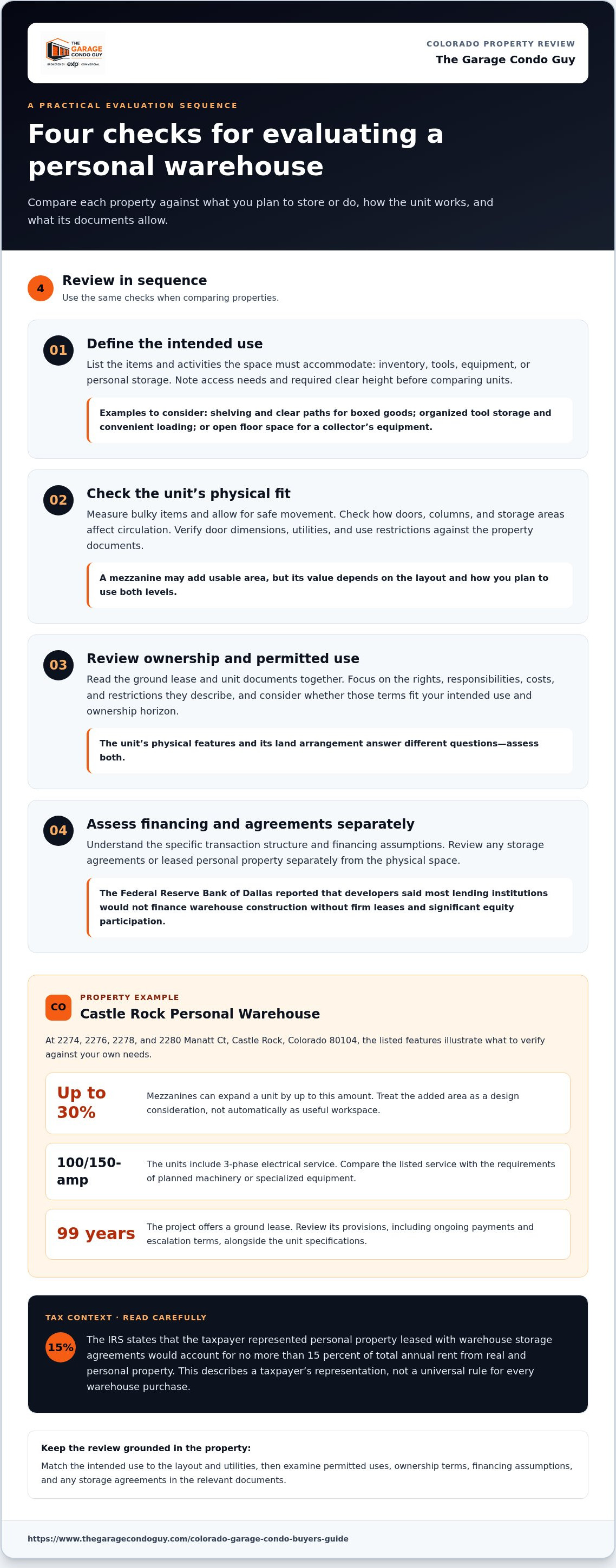
Match a warehouse’s layout and features to the work, equipment, or belongings you plan to store there.
Consider how the ownership structure and permitted uses fit your business and storage plans.
The Internal Revenue Service states that the taxpayer represented personal property leased with warehouse storage agreements would account for no more than 15 percent of total annual rent from real and personal property.
If you’re evaluating a garage condo purchase, Garage Condo Buyer Representation can help you navigate the buying process.
Table of Contents
Personal warehouse for sale colorado
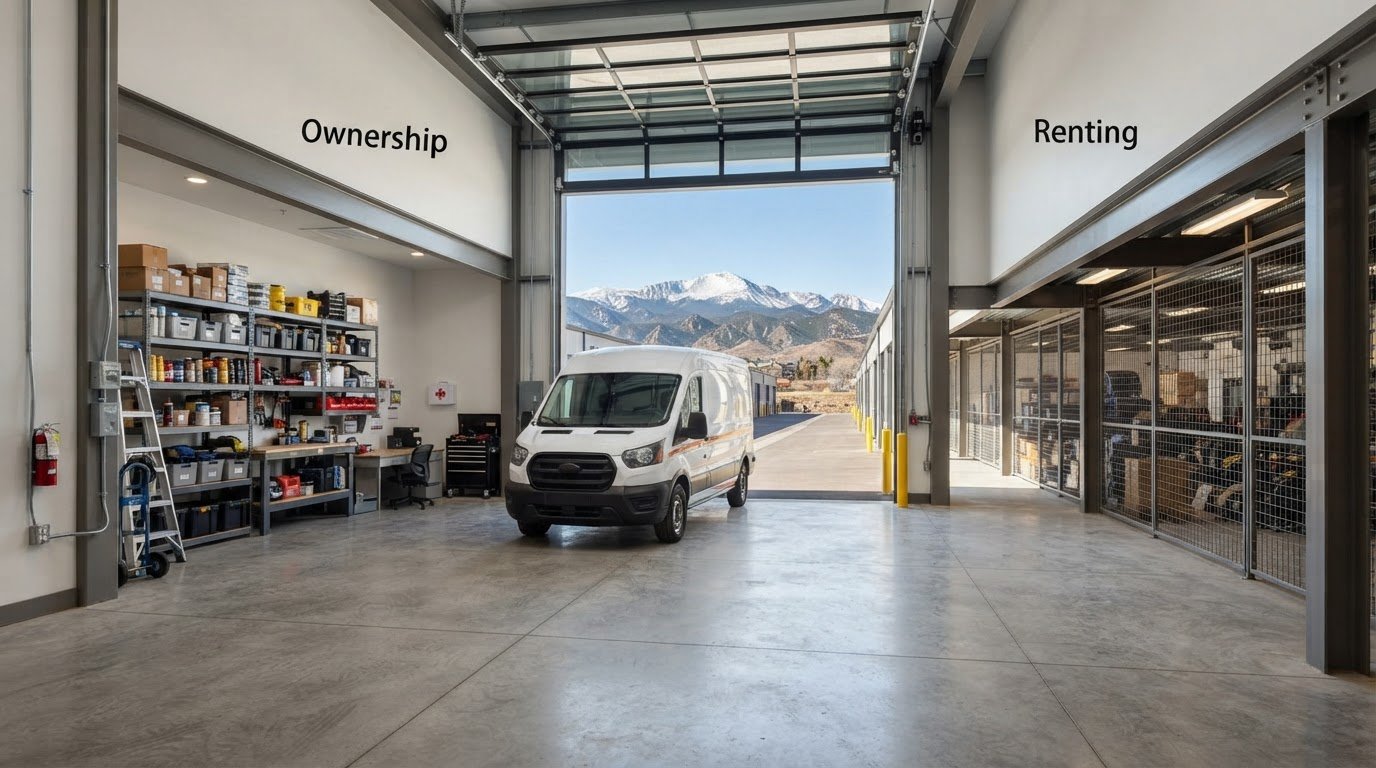
A personal warehouse gives an owner dedicated space for business inventory, equipment, or personal storage. In Colorado, buyers should assess the unit as both a physical workspace and a property interest. The Castle Rock Personal Warehouse project is one local example. Its features matter only when they match the owner’s intended use, operating needs, and ownership plans.
Start by listing what the space must accommodate. A small business storing boxed inventory may need shelving and clear paths for moving goods. A tradesperson storing tools may prioritize organized storage and convenient loading. A collector may need open floor space and room for specialty equipment. Note the items, activities, access needs, and required clear height before comparing units. Then verify door dimensions, available utilities, and any use restrictions against the actual property documents.
Next, compare the interior layout with those tasks. Measure bulky items and account for the space needed to move them safely. Look at how doors, columns, and storage areas affect circulation. A mezzanine may add usable area, but its value depends on the layout and how the owner plans to use both levels. The Castle Rock project offers mezzanines that can expand a unit by up to 30 percent. Treat that capacity as a design consideration, not automatically as useful workspace.
Electrical service is another practical filter. The Castle Rock units are offered with 100/150-amp, 3-phase electrical service. Compare that specification with the equipment you expect to run, such as workshop machinery or specialized business equipment. The listed service describes an important property feature; it doesn’t establish that every device or planned use will fit. Match equipment requirements to the unit’s actual configuration before making the space part of an operating plan.
Ownership structure deserves equal attention. The Castle Rock Personal Warehouse project offers a 99-year ground lease. A ground lease makes the land arrangement a central part of evaluating the property. Read the lease provisions alongside the unit documents, focusing on the rights, responsibilities, costs, and restrictions they describe. Consider how those terms align with your intended use and ownership horizon. The unit’s physical features and its land arrangement answer different questions, so assess both.
Financing can shape how warehouse projects are developed and offered. The Federal Reserve Bank of Dallas reported that developers said most lending institutions would not finance warehouse construction without firm leases and significant equity participation. That context illustrates why warehouse financing can differ from a typical business purchase. For buyers, the practical step is to understand the specific property’s transaction structure and financing assumptions, rather than infer terms from its features.
Tax treatment also depends on how an arrangement is structured. According to the Internal Revenue Service, the taxpayer represented that personal property leased with warehouse storage agreements would account for no more than 15 percent of total annual rent from real and personal property. This is a statement about a taxpayer’s representation, not a universal rule for every warehouse purchase. Keep the distinction clear when reviewing a property that includes storage agreements or leased personal property.
Use a consistent review sequence for each property:
List the intended storage or business activities, such as inventory storage or tool organization.
Compare the unit layout, access, electrical service, and any mezzanine with those needs.
Review the ground lease and property documents for the terms that shape use and ownership.
Evaluate the financing structure and any storage agreements separately from the physical space.
A property’s features matter only if they support a workable plan. When considering a personal warehouse for sale in Colorado, assess what you need to store or do, how the unit is configured, and what the ownership documents permit. The Castle Rock example highlights how interior function, ground lease terms, and financing considerations connect. Review the lease provisions, including ongoing payments and escalation terms, alongside the unit’s specifications and permitted uses.
The Garage Condo Guy: Garage Condo Buyer Representation
The Garage Condo Guy provides Garage Condo Buyer Representation for people evaluating a garage condo purchase. If you’re comparing properties for business use, storage, or investment, this representation can help you assess options and work through the purchase process. Owners preparing to sell can also explore Garage Condo Seller Representation.
To learn more about buying garage condos in Colorado, visit the Colorado garage condo buyers guide or contact The Garage Condo Guy.
Make your next property decision deliberate
Before moving from browsing to a purchase decision, turn your plans into a written brief: what the space must enable, how you expect to hold it, and which trade-offs you can accept. That brief gives each property review a purpose and helps separate practical fit from features that simply catch your eye. If you’re evaluating a personal warehouse for sale in Colorado as part of a business or investment plan, keep your intended use at the center of each decision. Treat the ownership structure as part of the asset, not an afterthought.
For an investment-focused perspective, Investment Advisory for Garage Condos can help frame the decision around your goals. A clear plan also makes it easier to identify the questions that matter before taking the next step. Explore the Colorado garage condo buyer guide to continue your research. A thoughtful approach can help you move forward with greater clarity.


Comments